Common causes of swelling in the legs
Common causes of swelling in the legs

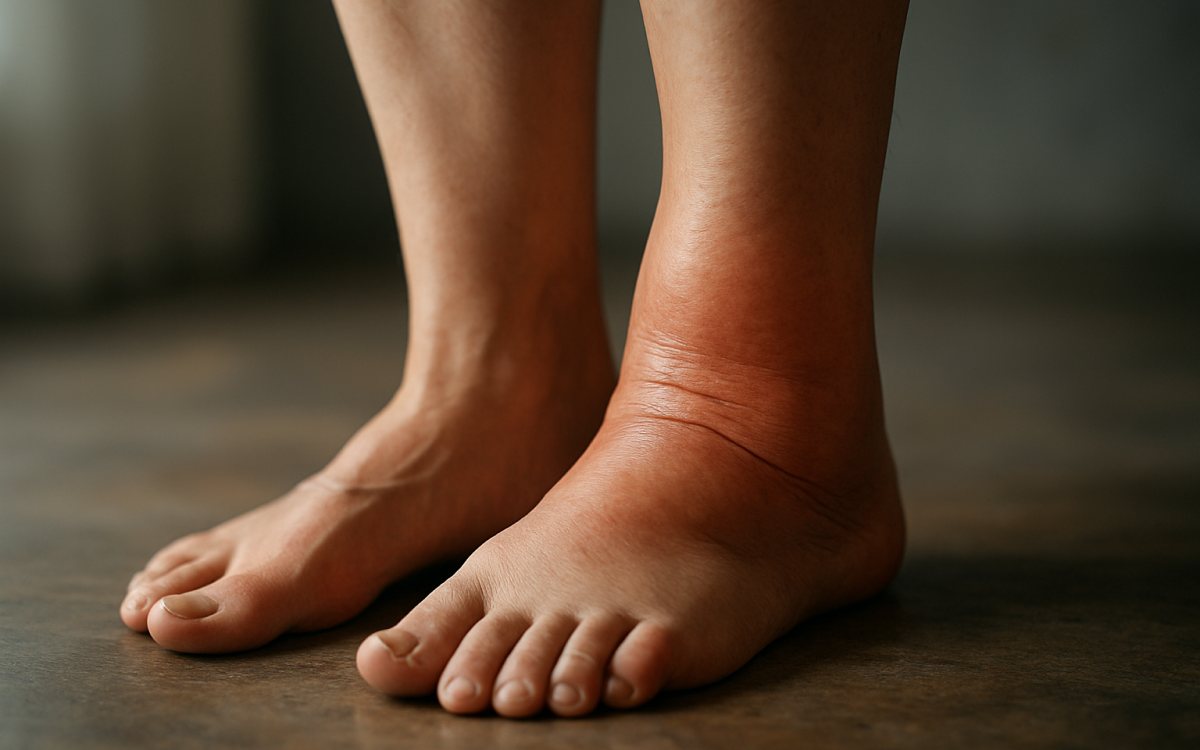
Swelling in the legs is a common concern, but the cause can vary. In some cases, the swelling develops due to excess fluid buildup in the legs, a condition known as edema. In another instance, it can be linked to some form of inflammation caused by an injury, infection, or an underlying health condition. Knowing about the specific reason behind the swelling can help address the root cause and determine the need for expert attention.

Kidney issues

The main function of the kidneys is to filter and remove excess fluid and waste from the blood. But when the organs are unable to carry out this function due to an underlying condition or disease, their ability to complete the elimination process gets disrupted. As a result, fluid begins to accumulate in the body, eventually leading to fluid retention, particularly in the legs.

Congestive heart failure

When the heart becomes too weak to pump blood efficiently, circulation slows down. As a result, the blood can flow back up in the veins, leading to fluid accumulation in the surrounding tissues, including the legs. In the case of congestive heart failure, individuals may notice other symptoms such as shortness of breath, difficulty breathing while lying down, and persistent fatigue. These symptoms may require immediate medical care.

Affected veins

There are many vein issues, such as deep vein thrombosis, or DVT, that can also cause fluid retention in the legs. In this condition, a blood clot forms in a deep vein of the leg, thereby blocking normal blood flow, causing painful swelling, particularly in the calves. In addition to the swelling and pain, individuals may also experience chest pain, breathlessness, or dizziness. These symptoms may indicate that the clot has traveled to the lungs, causing pulmonary embolism.

Liver issues

Advanced liver conditions, such as cirrhosis, can also interfere with normal blood flow. Due to this, pressure builds up in the veins connected to the liver, causing fluid to leak into nearby tissues. This process can eventually lead to swollen legs and abdomen.

Additionally, if the liver is unable to function properly, it may fail to produce enough proteins that help retain fluid within the blood vessels. This deficiency can further cause fluid retention in the legs.

Joint issues

Inflammatory joint conditions, like arthritis, can lead to leg swelling. In osteoarthritis, a type of degenerative arthritis, the area around the knees can swell due to inflammation that causes fluid buildup. 

Autoimmune conditions such as rheumatoid arthritis can also trigger swelling because the immune system attacks joint tissues. Other inflammation-related causes of leg swelling include knee bursitis, in which the cushioning sacs around the joint become inflamed, and gout, which results in sudden, painful swelling due to the buildup of uric acid crystals.

Injuries

One of the most common causes of swollen legs and feet is injuries. Swelling is often the body’s natural response to any physical trauma. Injuries such as a sprained ankle, fractured bone, or torn ligament can lead to noticeable swelling. This occurs because fluid and white blood cells are rushed to the injured area. Additionally, even cuts or deep bruises can cause localized swelling.

Additionally, internal injuries, such as an Achilles tendon rupture, may cause sudden pain followed by swelling in the lower leg or ankle.

Lifestyle factors

Swollen legs may not always indicate an underlying health issue. Certain lifestyle factors can also cause leg swelling. For example, sitting or standing for long periods without movement can cause fluid to accumulate in the legs. Additionally, wearing tight clothing, such as pants, can restrict blood circulation and contribute to swelling.


Popular Articles

01

Balding – Warning signs, causes, and management options

Losing around 50 to 100 strands of hair daily is quite normal. However, large clumps of hair on the pillow, in the shower drain, or on the brush can be a cause for concern and lead to balding in men and women. Fortunately, knowing the warning signs, causes, and management methods can help one slow hair loss and restore their confidence. Signs of balding  There are many early signs that can be observed before bald spots become visible. Knowing about these common indicators can be helpful. Receding hairline in men The hair along the temples appears to pull back, forming an M-shape. This usually starts in the 20s or 30s as hair along the front begins to thin gradually. Crown thinning The scalp becomes more visible at the top of the head. This happens when the hair density in this area drops. Many may see visible patches when brushing their hair or in bright light. Widening of the part in women  The central line along which hair is usually parted widens over time. Along with this, the hair starts to lose its overall thickness, appearing finer over time. Diffuse thinning Hair volume starts to decrease throughout the scalp. So, when running fingers through it or styling it in ponytails, one may notice that their hair feels less full.
Read More
02

Hemorrhoids – Symptoms, causes, and management

Hemorrhoids are swollen and enlarged veins that develop inside and outside of the rectum, which may cause a lot of discomfort and pain during stool passage. This condition results from several factors, including straining during bowel movements, inadequate fiber intake, chronic constipation, and prolonged sitting on the toilet. The good news is that the symptoms of hemorrhoids can improve over time by simply making small habit changes in daily life.​ Signs and symptoms Internal hemorrhoids typically do not cause any pain or obvious symptoms until they move outside the rectum. Since these develop inside the rectum, there is no way of knowing whether a person has the condition. Meanwhile, external hemorrhoids have several telltale signs that occur over time. A person can see small amounts of bright red blood during bowel movements. This is because swollen veins bleed easily, even with minimal friction. There is noticeable swelling around the outer area of the rectum, followed by a persistent uneasy feeling. A tender lump develops around the anus, causing pain and making it difficult to sit for extended periods. Stool or mucus leakage can worsen the discomfort. Sometimes, a person with the condition may experience a persistent feeling of incomplete bowel movement, resulting in frequent trips to the bathroom.
Read More
03

Causes and management options of hand tremors

Hand tremors or shaky hands are a symptom of a neurological disorder called essential tremor (ET), characterized by involuntary, rhythmic shaking, most commonly affecting the hands. These tremors gradually worsen, making daily tasks challenging. The onset of essential tremor can happen at any age, but it’s most commonly seen in individuals aged 40 and older. The best approach to managing the condition is to determine a suitable management plan through expert consultation. Causes Hand tremors are a symptom caused by various health conditions, including essential tremor. Other possible reasons for hand tremors include emotional stress, exposure to extreme temperatures, fatigue, and an excessive intake of stimulants like caffeinated drinks. Enhanced physiologic tremor This is one of the most commonly observed postural tremors (i.e., tremors that occur when a position is maintained against gravity). Enhanced physiologic tremor (EPT) usually affects the hands and fingers on both sides of the body. A few factors, such as chronic stress, lack of sleep, excessive caffeine intake, and vigorous exercise, can worsen EPT in some individuals. Anxiety and fatigue may also lead to shaky hands. Neurological conditions Sometimes, tremors, including shaky hands, are caused when deep parts of the brain that control movement don’t work as they should.
Read More