
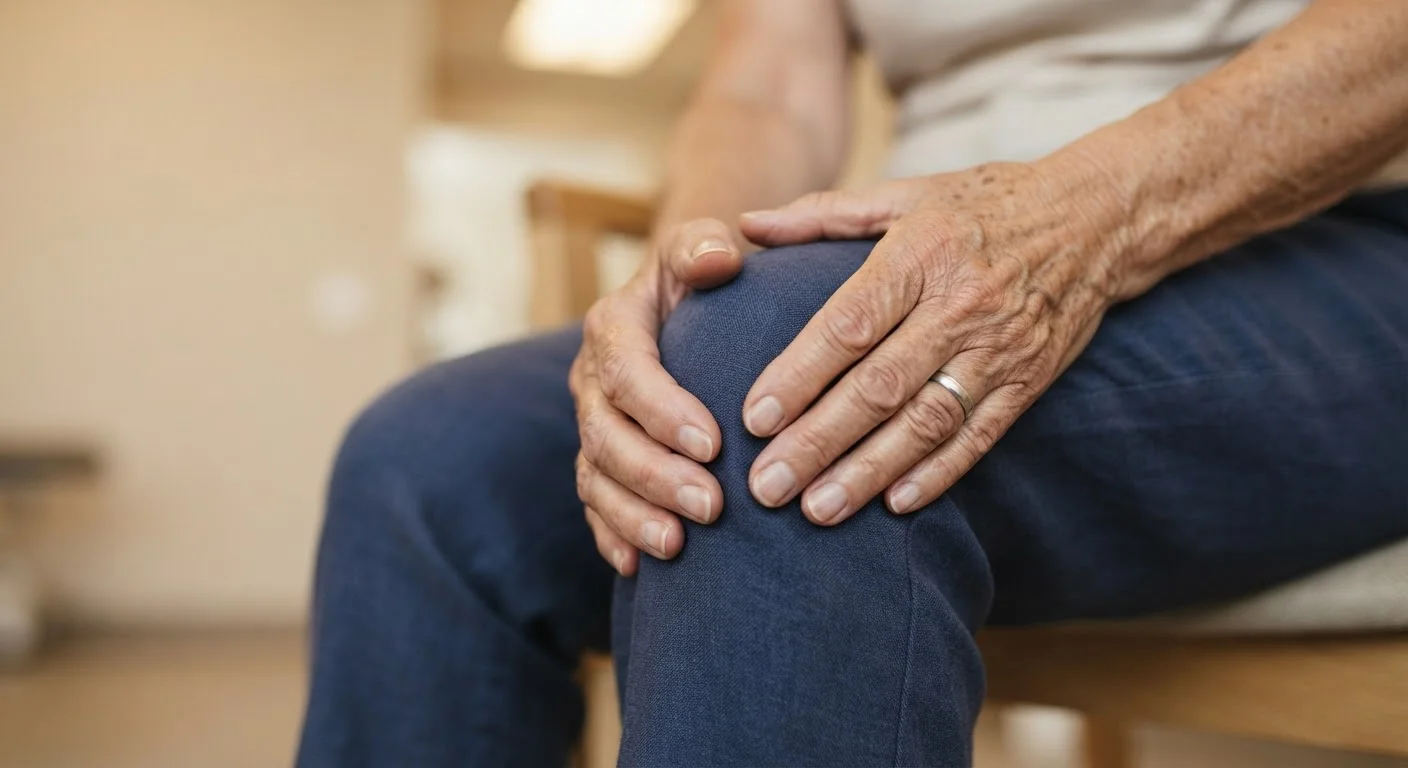
What's Actually Happening Inside an Aging Joint
A healthy joint is a precisely engineered system. Smooth cartilage cushions the ends of bones, synovial fluid lubricates every movement, and a network of ligaments and muscles keeps everything stable. With age, this system undergoes gradual but meaningful changes.
The most significant shift is in articular cartilage — the rubbery tissue covering bone ends. Cartilage has limited capacity to repair itself, and decades of use cause it to thin, crack, and lose its resilience. As this cushion erodes, bones begin to move closer together, increasing friction and pressure. In some joints, small bony outgrowths called osteophytes (bone spurs) can develop in response to this stress, further limiting comfortable movement.
Simultaneously, the synovial membrane — which produces joint-lubricating fluid — may become less efficient. The result is a joint that feels stiffer and moves less freely, particularly after periods of inactivity.
Cartilage Cannot Feel Pain Directly
Cartilage itself has no nerve supply, which is why joint damage can progress silently before pain becomes noticeable. The pain signals in arthritis come from the surrounding bone, joint capsule, and inflamed synovial tissue — not from the cartilage itself. This also helps explain why imaging findings don't always correlate neatly with pain severity.
The Role of Inflammation
Not all joint pain stems from mechanical wear alone. Inflammation plays a central role in many forms of arthritis. When cartilage breaks down, small fragments can irritate the surrounding synovial tissue, triggering an inflammatory response. This produces the warmth, swelling, and aching that many older adults recognize.
In rheumatoid arthritis — an autoimmune condition — the immune system mistakenly attacks the joint lining. This leads to persistent inflammation that can damage cartilage and bone even when mechanical load is minimal. Rheumatoid arthritis often presents with symmetrical joint involvement (both hands or both wrists, for example) and prolonged morning stiffness lasting more than an hour.
Osteoarthritis, by contrast, was long viewed as purely degenerative, but research now recognizes that low-grade inflammation contributes here too. This helps explain why some people with relatively mild cartilage loss on imaging still experience significant pain.
Understanding which process is driving your discomfort matters, because the management strategies differ. A rheumatologist or primary care physician can help clarify the diagnosis. For a closer look at why stiffness is often worst in the morning, see why joint pain often feels worse in the morning.
“Arthritis is not a single disease — it's an umbrella term for more than 100 conditions affecting joints and surrounding tissues. Accurate diagnosis is the foundation of effective management.”
— Arthritis Foundation, Leading U.S. nonprofit dedicated to arthritis research and education
What This Means for Daily Movement
Understanding the biology of joint pain reframes how we approach it. The instinct to rest painful joints is understandable, but prolonged inactivity often worsens stiffness and weakens the muscles that support joint stability. Low-impact movement — walking, swimming, cycling, or tai chi — helps distribute synovial fluid, maintains cartilage nutrition, and keeps surrounding muscles strong.
Weight management also matters considerably. Each extra pound of body weight places roughly three to four pounds of additional force on the knee joint during walking, according to biomechanical research. Reducing that load can meaningfully ease daily discomfort.
1 in 4
U.S. adults with diagnosed arthritis
According to the Centers for Disease Control and Prevention (CDC), approximately 58.5 million U.S. adults have been diagnosed with some form of arthritis.
3–4x
Force multiplier on knees per pound of body weight
Biomechanical research suggests that each additional pound of body weight places roughly three to four pounds of extra force on knee joints during walking.
Over 65
Age group most affected by osteoarthritis
The CDC and NIH report that osteoarthritis prevalence rises sharply after age 65, making it one of the leading causes of disability in older adults.
For practical strategies on protecting joints during everyday tasks, the everyday joint protection framework offers a structured starting point. And for the lifestyle habits with the strongest evidence base, explore evidence-based principles for keeping joints healthy as you age.
Strengthen the Muscles Around Your Joints
Strong quadriceps, for example, reduce the load transferred directly to the knee joint during movement. Resistance exercises targeting key muscle groups — guided by a physical therapist — can be one of the most effective non-surgical approaches to managing joint pain. Ask your healthcare provider whether a referral to physical therapy is appropriate for your situation.
This article is for general informational purposes only and does not constitute medical advice. Always consult a qualified healthcare professional for guidance specific to your health situation.