
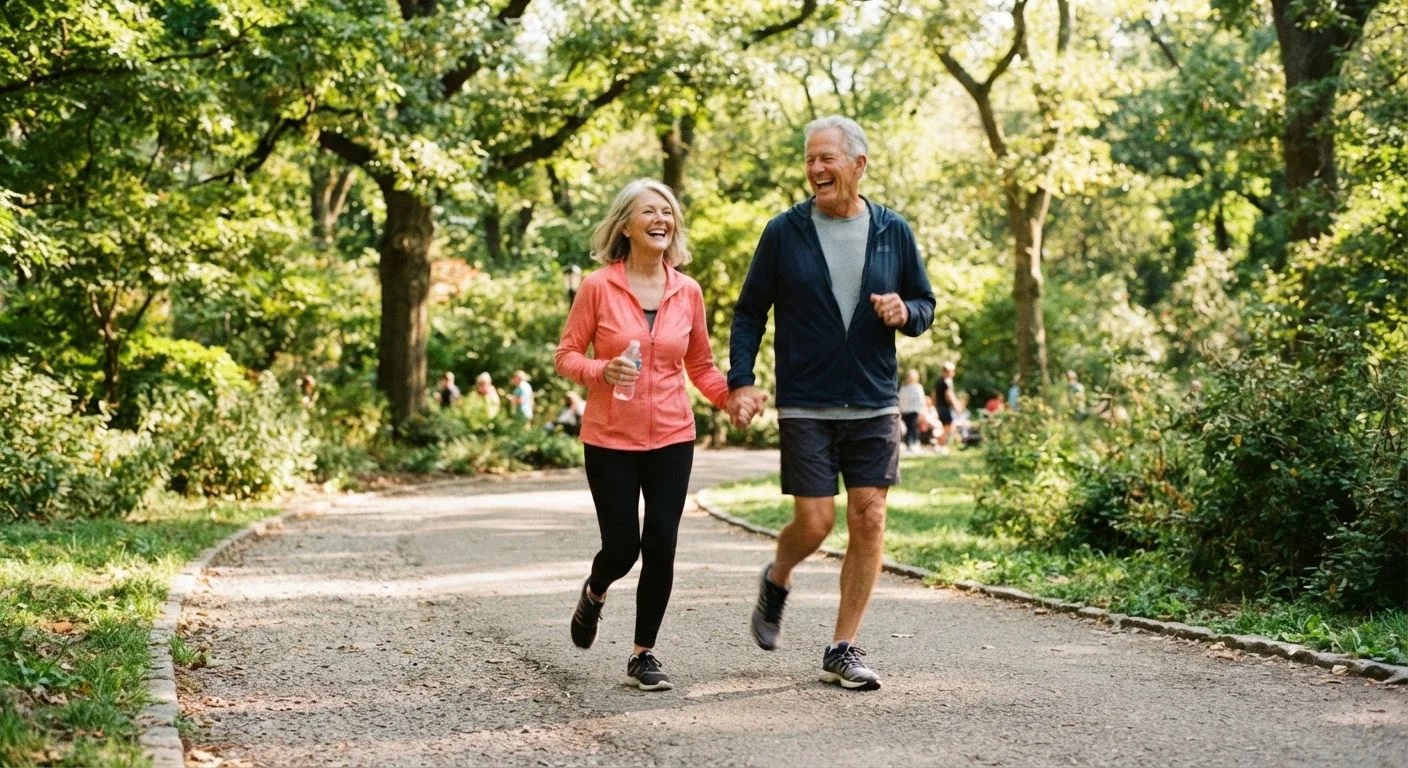
Why Exercise Matters More After 60
Physical activity has well-documented health benefits at every stage of life, but the stakes grow notably higher after 60. Beginning in middle age, adults lose an estimated 3–8% of muscle mass per decade — a process called sarcopenia — with the rate accelerating after age 60. Simultaneously, bone density, joint flexibility, and cardiovascular capacity all decline without deliberate effort to maintain them.
The consequences are tangible: reduced independence, higher fall risk, slower recovery from illness, and a measurably lower quality of life. Yet a large and consistent body of evidence confirms that regular, appropriately structured exercise can slow or partially reverse many of these changes, regardless of when a person starts.
Exercise in later life also supports cognitive health. Research published in peer-reviewed journals has linked regular aerobic activity to reduced risk of cognitive decline. For more on how daily habits connect to brain wellness, see everyday habits that support long-term brain health.
3–8%
Muscle mass lost per decade after 30
According to research cited by the American College of Sports Medicine, the rate of loss accelerates significantly after age 60.
36 million
Falls among older adults each year in the U.S.
The Centers for Disease Control and Prevention reports approximately 36 million falls annually among adults 65 and older.
150 min
Weekly moderate aerobic activity recommended
The U.S. Department of Health and Human Services Physical Activity Guidelines for Americans set this target for older adults.
The Four Pillars of Fitness for Older Adults
Exercise science and clinical guidelines consistently identify four categories of fitness that matter most for older adults. Neglecting any one of them creates vulnerabilities the others cannot fully compensate for.
- Muscular strength: Maintaining the ability to lift, carry, rise from a chair, and perform daily tasks independently.
- Cardiovascular endurance: Supporting heart, lung, and metabolic health through sustained movement.
- Balance and coordination: Reducing fall risk and preserving safe, confident movement.
- Flexibility and mobility: Keeping joints functional and reducing stiffness that limits everyday motion.
For a focused look at why joint mobility often declines and how to address it, see the role of flexibility and mobility in aging well. Similarly, lifestyle practices with the strongest research support for joint health are covered in evidence-based principles for keeping joints healthy as you age.
Strength Training: Protecting Muscle and Bone
Resistance training — using body weight, resistance bands, free weights, or machines — is the most effective intervention for countering sarcopenia. The American College of Sports Medicine recommends that older adults engage in muscle-strengthening activities targeting all major muscle groups at least two days per week.
Bone health is an equally important reason to prioritize resistance work. Weight-bearing and resistance exercises apply mechanical load to bones, stimulating the remodeling process that maintains density. This is particularly relevant for older women, who face greater osteoporosis risk after menopause.
Prioritize compound movements — exercises that work multiple joints at once, like squats and rows — over isolated single-muscle exercises. They build functional strength that translates directly to everyday tasks like climbing stairs and carrying groceries.
Compound exercises recruit larger muscle groups and require balance and coordination simultaneously, making them more time-efficient and functionally relevant for older adults.
When starting resistance training, err on the side of too easy rather than too hard for the first two to three weeks. Delayed onset muscle soreness is amplified in older muscles and can derail a new routine before it takes hold.
Research on exercise adherence shows that pain or excessive fatigue in the early phase is one of the most common reasons older adults discontinue a new program.
Beginners should start with light resistance and focus on controlled movement and full range of motion before progressing. Progressive overload — gradually increasing the challenge over time — is the principle that drives continued adaptation. A certified fitness professional with experience in senior populations can help design a safe starting program.
Common accessible exercises include sit-to-stand repetitions from a chair, wall push-ups, resistance band rows, and step-ups. None of these require a gym membership or special equipment.
Balance, Flexibility, and Fall Prevention
Falls are the leading cause of injury-related death among adults 65 and older in the United States, according to the Centers for Disease Control and Prevention (CDC). The encouraging finding from research is that balance training is a well-supported, modifiable way to lower that risk.
Balance Training Requires a Safe Environment
When practicing balance exercises at home — such as single-leg stands — always position yourself near a sturdy chair, countertop, or wall you can reach immediately. Attempting challenging balance moves in open space without a support nearby increases rather than decreases fall risk during training. Supervision from a physical therapist or certified trainer is advisable when first learning balance exercises.
Balance exercises work by challenging the body's proprioceptive system — the network of sensory signals from muscles and joints that tells the brain where the body is in space. Standing on one foot, heel-to-toe walking, and tai chi are all widely used and evidence-supported approaches.
Flexibility, meanwhile, determines how well joints can move through their intended range of motion. Regular stretching — particularly for the hips, hamstrings, calves, and shoulders — reduces the stiffness that leads to compensatory movements and eventual injury. Gentle yoga and dedicated stretching routines are both practical options for most older adults.
Unfamiliar with some of the terminology around stretching and movement? The plain-language glossary of senior fitness terms is a useful reference.
Cardiovascular Health and Daily Movement
The U.S. Department of Health and Human Services' Physical Activity Guidelines for Americans recommend that older adults aim for at least 150 minutes of moderate-intensity aerobic activity per week — roughly 30 minutes on five days — or 75 minutes of vigorous-intensity activity. Walking remains one of the most practical, low-impact, and accessible ways to meet this target.
Moderate intensity means activity that raises heart rate and breathing noticeably but still allows conversation. Brisk walking, cycling on flat terrain, water aerobics, and dancing all qualify. The specific activity matters far less than consistency and appropriate effort level.
It is worth noting that even movement that falls short of formal exercise guidelines carries benefit. Breaking up prolonged sitting with short walks, climbing stairs, or gardening all contribute to cardiovascular and metabolic health. The evidence consistently shows that some movement is better than none, and that the gap between sedentary and lightly active is larger than the gap between lightly active and highly active.
Small Bouts of Movement Add Up
You do not need to complete 30 minutes of walking all at once. Three 10-minute walks spread across the day have been shown in research to deliver comparable cardiovascular benefits to a single continuous session. This makes it far easier to fit movement into a full day without blocking out a dedicated workout window.
Building Lasting Habits: Practical Strategies
The most physiologically ideal exercise program delivers no benefit if it is not actually followed. Habit formation — not motivation — is what sustains physical activity over years and decades.
Research on behavior change suggests several reliable strategies for older adults:
- Anchor to existing routines: Linking a new activity (a 10-minute walk) to an established one (morning coffee) reduces the cognitive effort of remembering and deciding.
- Start smaller than feels necessary: Modest, consistently completed goals build the identity and momentum that support long-term adherence better than ambitious plans that are quickly abandoned.
- Social accountability: Exercise partners, group fitness classes, and walking clubs have been shown to improve adherence, and social connection carries its own well-documented health benefits.
- Track and acknowledge progress: Simple logs — even notes on a calendar — create a visible record that reinforces continuation.
Rest and recovery are also part of the equation. Older adults generally require more recovery time between vigorous sessions, and sleep quality directly affects physical performance. For a broader view of wellness factors that support active aging, explore the Mind & Wellness hub.
Exercise, Nutrition, and the Bigger Picture
Physical activity and nutrition are most effective as a pair. Adequate protein intake is essential for muscle repair and growth — yet many older adults consume less than optimal amounts. The body's ability to synthesize muscle protein from dietary protein also becomes somewhat less efficient with age, making consistent intake across meals more important. For a detailed look at this topic, see protein after 60 and why it matters more than you think.
A well-structured diet also supports the energy levels needed to sustain regular activity. For practical guidance on building nutritious meals suited to older adult needs, see the older adult's roadmap to a balanced plate, and for digestive health that supports nutrient absorption, building meals around fiber for digestive health offers evidence-based guidance.
Always Consult Your Healthcare Provider First
Before starting any new exercise program, particularly if you have cardiovascular disease, osteoporosis, arthritis, a history of falls, or any chronic condition, speak with your doctor or a qualified healthcare professional. They can identify any precautions specific to your health situation and help ensure the activities you choose are safe and appropriate for you.
Active aging is not a single program or a performance goal — it is an ongoing, adaptable commitment to keeping the body capable and resilient. The specific activities matter less than the combination of consistency, variety across the four fitness pillars, and alignment with individual health circumstances. Working with a healthcare provider or certified exercise professional to build a personalized plan is always the most reliable starting point.
This article is for general informational purposes only and does not constitute medical advice. Always consult a qualified healthcare professional before beginning or modifying any exercise program, particularly if you have existing health conditions or have been inactive for an extended period.