
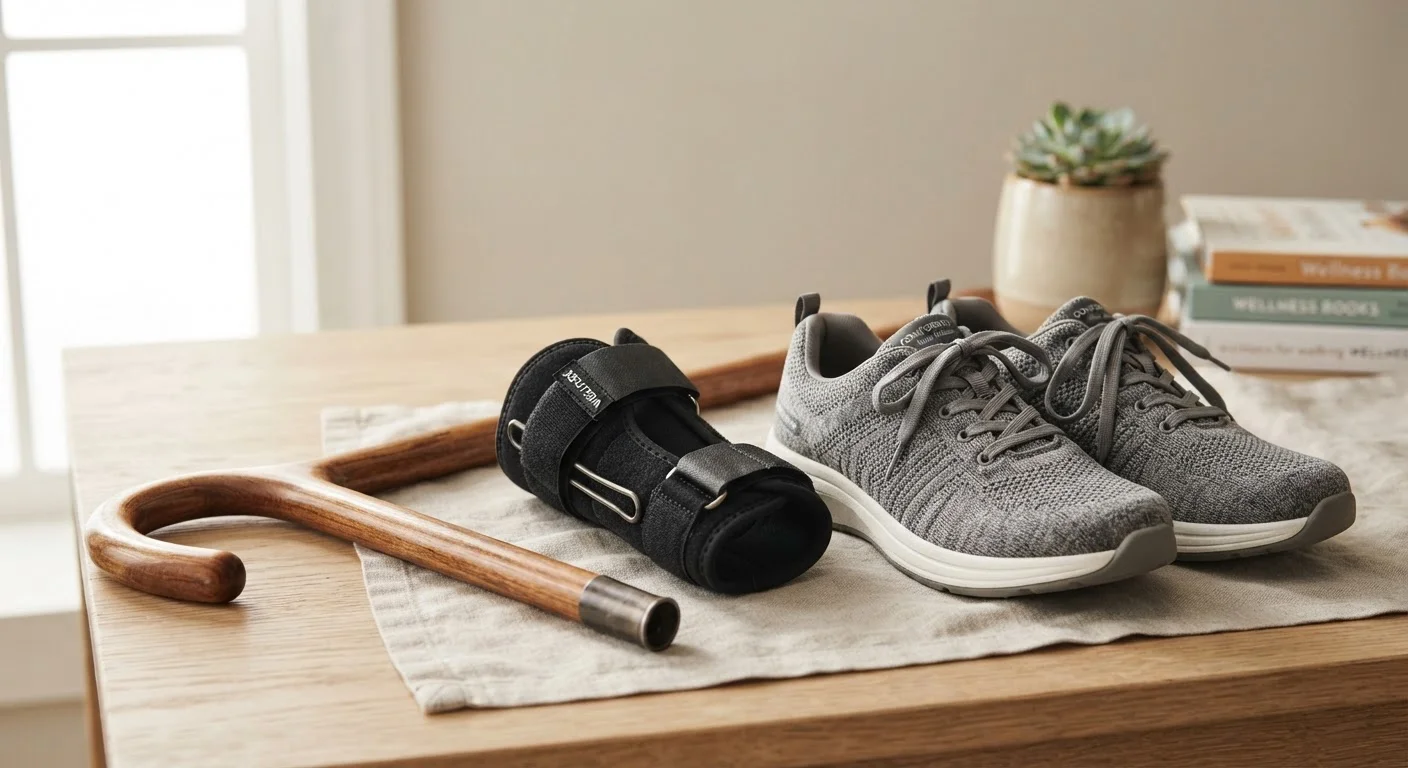
Why Assistive Devices Matter for Joint Pain
For older adults living with arthritis or chronic joint discomfort, assistive devices are not a sign of giving up — they are a practical strategy for maintaining independence and reducing daily strain. Each category of device works through a different mechanical principle: redistributing load, limiting harmful movement, or improving alignment underfoot.
Choosing the right device — and using it correctly — depends on which joints are affected, the severity of symptoms, and your daily activity demands. A healthcare provider or physical therapist is best placed to make specific recommendations. This article offers a clear overview of the most common options so you can have a better-informed conversation with your care team.
For broader strategies on protecting joints during daily tasks, see our practical framework for moving with less pain.
| Primary device categories | Canes, crutches, walkers; splints and braces; supportive footwear and orthotics |
| Most common prescribing professionals | Rheumatologists, orthopedic specialists, physical therapists, occupational therapists |
| Joints most commonly supported by splints | Wrist, thumb (CMC), knee, ankle |
| Cane held on | Opposite side from the affected joint (Standard clinical guidance from physical therapy practice) |
| Footwear features that aid joint health | Cushioned midsole, firm heel counter, wide toe box, rocker sole |
Canes: Offloading Weight-Bearing Joints
A cane reduces the load placed on a painful hip or knee by transferring a portion of body weight through the arm and into the ground. Research published in rheumatology literature consistently shows that a correctly sized and properly held cane can meaningfully reduce joint contact forces during walking.
Key Points
- Which hand: A cane is typically held in the hand opposite the affected joint — this distributes load more effectively than holding it on the same side.
- Correct height: When standing upright, the cane handle should reach your wrist crease. An ill-fitting cane can worsen posture and increase strain.
- Types: Standard single-tip canes suit most users. Quad canes (with a four-point base) provide greater stability for those with significant balance concerns.
Because body weight directly affects joint load, some individuals find that addressing weight alongside cane use amplifies the benefit — our article on weight and joint load explains the mechanical connection in detail.
Getting a Proper Cane Fitting
Many pharmacies and medical supply stores offer adjustable canes, but correct height and handle type are not one-size-fits-all. A physical therapist can assess your gait, recommend the most appropriate cane style, and ensure the fit is safe. An incorrectly fitted cane can alter posture and redistribute load in unintended ways.
Splints and Braces: Stabilizing Vulnerable Joints
Splints and braces limit excessive or harmful joint movement, reducing both pain and the risk of further strain. They are most commonly used for the wrist, thumb, knee, and ankle.
Orthotic
An insert or device placed inside a shoe to support, align, or improve the function of the foot. Orthotics can be custom-made or purchased prefabricated.
Carpometacarpal (CMC) joint
The joint at the base of the thumb where it connects to the wrist. It is a frequent site of osteoarthritis, causing pain during gripping and pinching.
Resting splint
A rigid or semi-rigid support worn — typically overnight — to hold a joint in a neutral, strain-free position. Often used during arthritis flares.
Overpronation
Excessive inward rolling of the foot during walking or running. It can alter alignment of the ankle, knee, and hip, potentially worsening joint pain over time.
Quad cane
A walking cane with a four-point base that provides greater stability than a standard single-tip cane. Often recommended for users with significant balance impairment.
Common Types and Their Uses
- Resting splints
- Worn at night to hold a joint (often the wrist or hand) in a neutral, low-stress position. Frequently recommended for rheumatoid arthritis flares.
- Functional braces
- Worn during activity to support a joint while still allowing movement. Knee braces for osteoarthritis fall into this category and may help redistribute load across the joint.
- Thumb splints
- Support the carpometacarpal (CMC) joint at the base of the thumb — a common site of osteoarthritis pain that interferes with gripping and pinching.
Fit matters considerably. An ill-fitting splint can create pressure points or restrict circulation. A certified hand therapist or occupational therapist can ensure proper fit and provide guidance on wear schedules.
Pairing splint use with awareness of daily habits that strain joints can also help — see habits that quietly worsen joint pain for practical context.
Supportive Footwear and Orthotics: Building From the Ground Up
The foot is the foundation of the entire lower-body kinetic chain. Footwear that lacks adequate cushioning, arch support, or a stable sole can amplify stress at the ankle, knee, and hip with every step.
What to Look For in Supportive Footwear
- Cushioned midsole: Absorbs impact forces before they travel up the leg.
- Firm heel counter: The cup that surrounds the heel should resist inward collapse (overpronation), which stresses the knee.
- Rocker-bottom sole: A curved sole profile can reduce forefoot pressure, beneficial for those with metatarsal or toe-joint pain.
- Wide toe box: Accommodates swollen or deformed toes without added friction.
Orthotics
Orthotics are custom or prefabricated insoles inserted into footwear to improve alignment and redistribute plantar pressure. Custom orthotics, prescribed and fitted by a podiatrist, are shaped to the individual's foot. Prefabricated options are widely available and may suffice for mild alignment issues, though they are not a substitute for professional assessment.
For a fuller picture of managing joint discomfort day-to-day, explore our joint health habits hub.
~80%
Adults over 65 with some degree of knee osteoarthritis
According to estimates from the Arthritis Foundation, the majority of adults in this age group show radiographic signs of knee OA.
Up to 20%
Reduction in knee joint load with cane use
Studies in clinical biomechanics literature suggest a correctly used cane can reduce compressive forces on the knee joint by this margin.
This article is for general informational purposes only and does not constitute medical advice. Always consult a qualified healthcare professional — such as a physician, physical therapist, or occupational therapist — before selecting or using assistive devices for joint pain.