
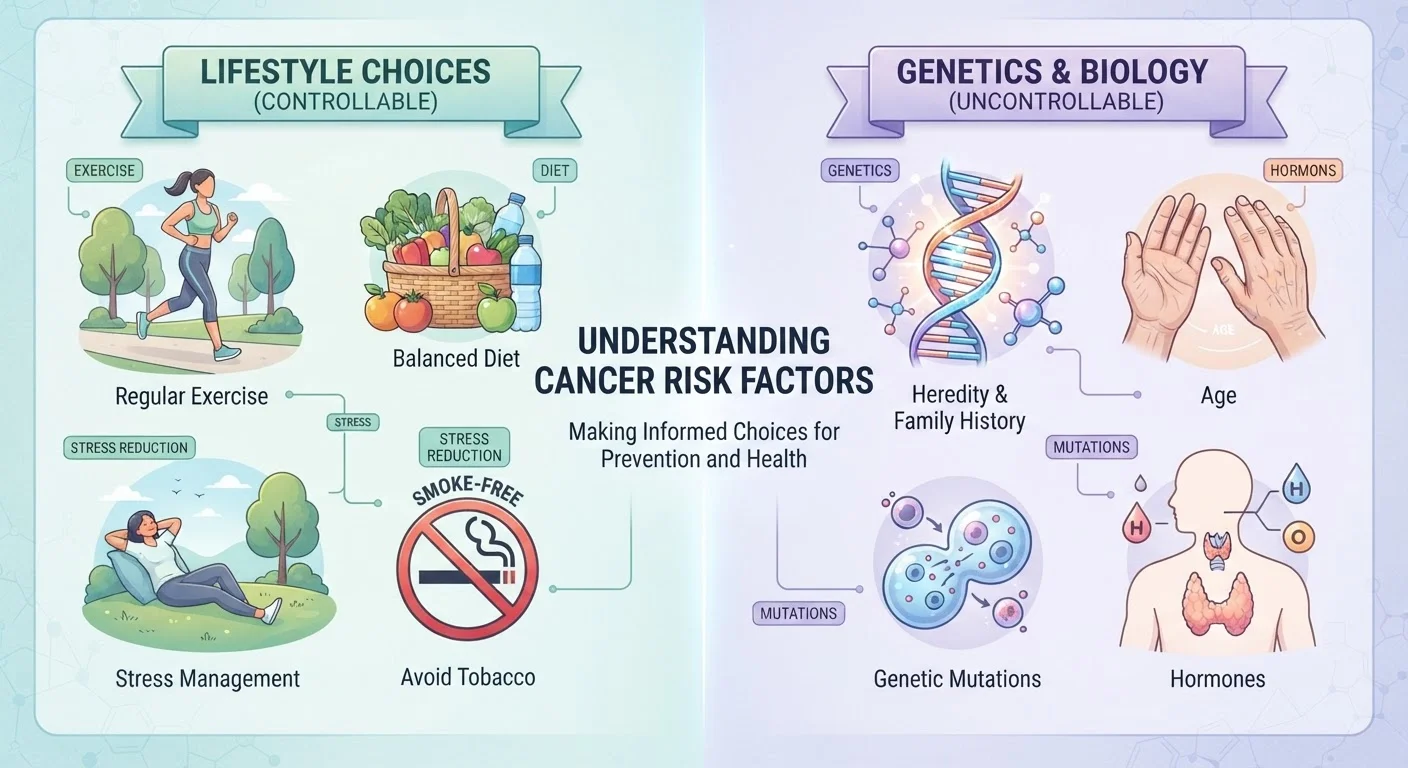
Understanding the Two Categories of Cancer Risk
Cancer risk is rarely a single on-or-off switch. Instead, it reflects a combination of factors — some rooted in biology and inheritance, others tied to daily habits and environmental exposures. Researchers and clinicians group these into two categories: modifiable risk factors, which you can change, and non-modifiable risk factors, which you cannot.
Understanding both categories is essential for older adults. It helps separate what is within your control from what is not, prevents unnecessary anxiety about fixed traits, and supports smarter conversations with your healthcare provider about screening and prevention. As our guide on understanding cancer probability explains, having a risk factor raises your statistical likelihood — it does not guarantee a diagnosis.
| Criterion | Modifiable Risk Factors | Non-Modifiable Risk Factors |
|---|---|---|
| Definition | Factors you can change or reduce | Factors outside your control |
| Examples | Smoking, alcohol, diet, UV exposure | Age, inherited gene variants, sex |
| Prevention potential | High — directly actionable | None — but informs screening strategy |
| Clinical relevance | Guides lifestyle counseling | Guides screening frequency and type |
| Impact on overall risk | Significant — many cancers are linked to lifestyle | Significant — especially for hereditary cancers |
| Reader action | Make evidence-based behavior changes | Discuss with provider; consider genetic counseling |
Modifiable Risk Factors: Where Prevention Lives
Modifiable risk factors are those tied to behaviors, exposures, and conditions that can be changed. According to the American Cancer Society, a significant proportion of cancers diagnosed in the United States are linked to modifiable factors — making this a critical area of focus for public health and individual prevention.
Key Modifiable Factors
- Tobacco use: Smoking is the leading preventable cause of cancer in the US, linked to cancers of the lung, throat, mouth, bladder, kidney, and more.
- Alcohol consumption: Regular alcohol use is associated with increased risk for breast, colon, liver, and esophageal cancers, among others.
- Body weight and physical activity: Excess body weight and physical inactivity are linked to at least 13 cancer types, according to the National Cancer Institute (NCI).
- Diet: Diets high in processed meats and low in fruits, vegetables, and fiber are consistently associated with elevated colorectal cancer risk.
- UV radiation exposure: Prolonged sun exposure without protection and tanning bed use are primary drivers of skin cancer.
- Certain infections: Infections such as human papillomavirus (HPV) and hepatitis B and C are linked to specific cancers and can often be prevented through vaccination or treatment.
For a deeper look at evidence-based habits associated with reduced cancer risk, see the lifestyle factors most consistently linked to lower cancer risk.
40%
US cancers linked to modifiable risk factors
The American Cancer Society estimates that roughly 40% of all cancers diagnosed in the US are associated with preventable, modifiable risk factors.
13+
Cancer types linked to excess body weight
According to the National Cancer Institute, excess body weight is associated with at least 13 distinct cancer types, including breast, colon, and kidney cancers.
87%
Lung cancers attributable to smoking
The CDC attributes approximately 80–90% of lung cancer cases in the United States to cigarette smoking, making tobacco the single largest modifiable cancer risk factor.
Non-Modifiable Risk Factors: What Biology Determines
Non-modifiable risk factors are those a person is born with or that develop through processes outside voluntary control. These cannot be eliminated — but they can be understood and accounted for in a personalized prevention plan.
Key Non-Modifiable Factors
- Age: The risk of most cancers increases with age. The majority of cancers in the US are diagnosed in adults over 50, partly because cells accumulate more mutations over time.
- Sex assigned at birth: Certain cancers occur almost exclusively in one sex (e.g., ovarian, prostate), while others differ substantially in rates between sexes.
- Inherited gene variants: Mutations in genes such as BRCA1, BRCA2, and Lynch syndrome-related genes significantly elevate risk for specific cancers. These are passed down through families.
- Family history: A first-degree relative diagnosed with certain cancers raises an individual's risk, even without a confirmed inherited mutation.
- Race and ethnicity: Some cancers show different incidence and mortality rates across racial and ethnic groups, influenced by a combination of genetic, social, and structural factors.
If you have a family history of cancer, understanding what genetic risk means in practice can help you have more informed discussions with your doctor. More detailed information about hereditary cancer syndromes is also available in our overview of common cancer types affecting older adults.
Non-Modifiable Does Not Mean Inevitable
Having one or more non-modifiable risk factors — such as a family history of breast cancer or an inherited gene variant — raises the statistical probability of developing certain cancers, but it does not make a diagnosis certain. Many people with significant hereditary risk never develop cancer, while others without identifiable risk factors do. This is why personalized screening and ongoing conversations with a healthcare provider are more useful than risk factors alone in guiding health decisions.
Using Both Categories to Guide Your Health Decisions
The most effective approach to cancer risk combines awareness of both categories. Non-modifiable factors inform how closely you should be monitored; modifiable factors determine what you can do today. For example, an older adult with a family history of colorectal cancer (non-modifiable) who also smokes (modifiable) may face compounded risk — and has a clear opportunity to reduce that risk by addressing tobacco use.
Genetic counseling is an option worth discussing with a healthcare provider if you have multiple close relatives with the same cancer or if a known hereditary gene variant runs in your family. Our article on cancer risk and genetics for older adults offers further context on how inherited factors interact with prevention strategies. You can also explore broader resources on how genetic factors contribute to chronic disease susceptibility.
No one can eliminate cancer risk entirely — but understanding the distinction between what is fixed and what is changeable is a practical, empowering starting point. Always consult your healthcare provider to interpret your personal risk profile and determine what screening schedule is appropriate for you.
This article is for general informational and educational purposes only and does not constitute medical advice. Always consult a qualified healthcare professional for guidance specific to your health situation.