
What Separates Genetic Conditions from Lifestyle Diseases?
The distinction sounds straightforward: some diseases come from your genes, others come from how you live. In reality, the boundary is far more porous than most people expect.
Genetic conditions are caused by changes — called variants or mutations — in one or more genes that a person inherits from their parents, or that arise spontaneously during development. Huntington's disease, cystic fibrosis, and sickle cell disease are classic examples. In each case, the presence of a specific gene variant is the direct cause of the condition. No amount of exercise or dietary change will prevent these diseases, although supportive care can influence how they progress.
Lifestyle diseases, by contrast, develop primarily because of behavioral and environmental factors accumulated over time — smoking, physical inactivity, poor diet, chronic stress, and alcohol use. Type 2 diabetes, many forms of cardiovascular disease, and certain cancers are frequently cited examples. Here, the individual's daily choices are the primary engine of disease.
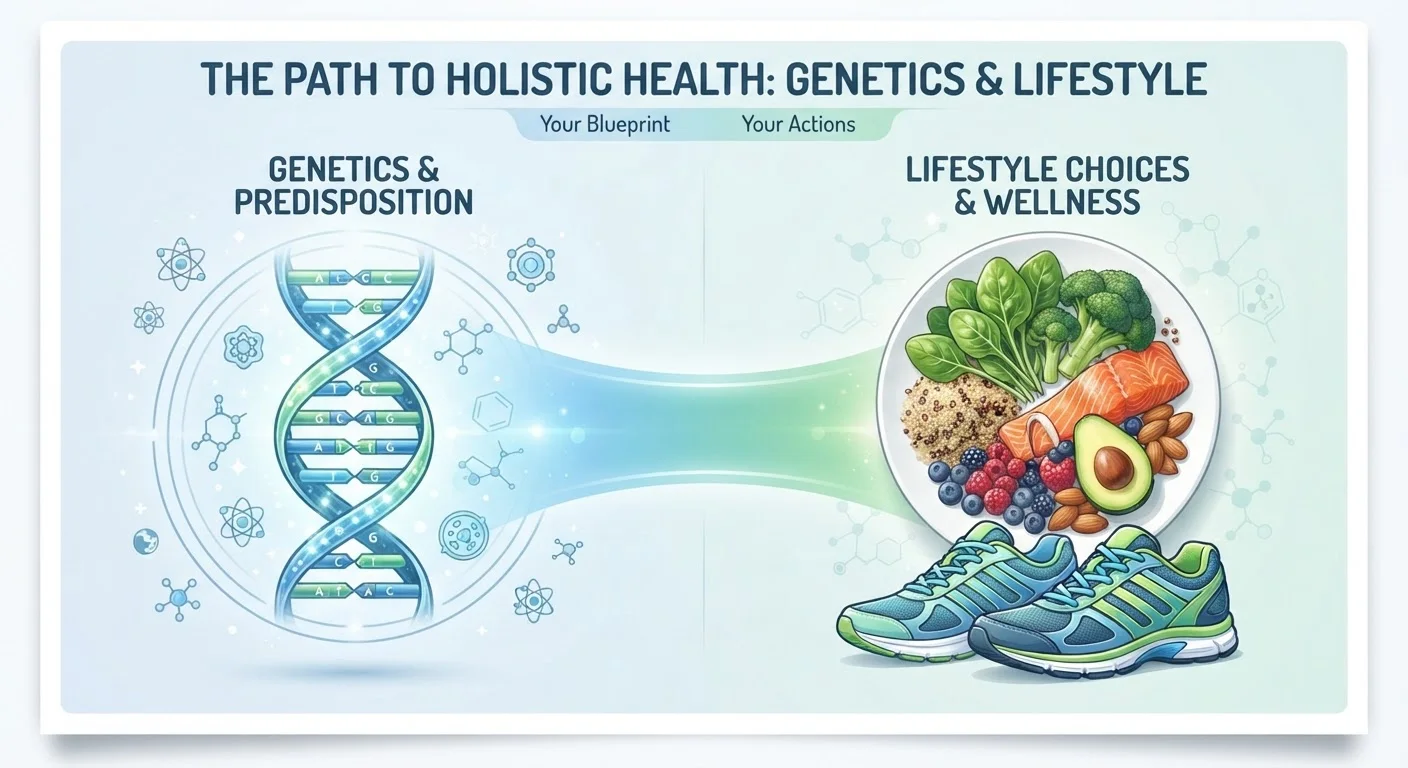
Yet even this clean division breaks down under scrutiny. Many conditions that are popularly called "lifestyle diseases" are also influenced by genetic susceptibility. Two people can follow identical diets and still have very different cholesterol levels or blood pressure readings — partly because of inherited differences in how their bodies process fats, salt, or stress hormones. For a deeper look at how these forces interact, see how lifestyle choices interact with genetic predispositions.
| Criterion | Genetic Conditions | Lifestyle Diseases |
|---|---|---|
| Primary cause | Inherited or spontaneous gene variants | Behavioral and environmental factors |
| Examples | Huntington's, cystic fibrosis, BRCA-linked cancers | Type 2 diabetes, atherosclerosis, smoking-related cancers |
| Preventability | Generally not preventable; management focused | Often substantially preventable with lifestyle changes |
| Role of family history | Central — inherited patterns are diagnostic clues | Relevant but secondary to personal behaviors |
| Genetic testing utility | High — can confirm diagnosis or assess risk | Limited — context for susceptibility only |
| Lifestyle impact | May influence progression, rarely prevents onset | Major — core driver of disease development |
| Age of onset | Varies — some lifelong, some emerge after 40 | Typically accumulates over decades; later onset common |
The Spectrum in Practice: Most Diseases Sit in the Middle
Researchers often describe disease causation as a spectrum rather than a binary. At one end sit conditions that are almost entirely genetic — single-gene disorders where inheriting one or two copies of a faulty gene essentially determines the outcome. At the other end are conditions almost entirely driven by environment and behavior, such as lung disease caused purely by long-term occupational chemical exposure.
Most of the chronic diseases that affect older adults — heart disease, type 2 diabetes, osteoporosis, some dementias, and several cancers — occupy the broad middle ground. Genes set a baseline of risk; lifestyle and environment determine whether that risk is realised, and to what degree.
~80%
Chronic diseases with lifestyle contributors
The World Health Organization estimates the vast majority of heart disease, stroke, and type 2 diabetes cases are attributable to modifiable risk factors.
~10,000
Known single-gene (monogenic) disorders
The U.S. National Library of Medicine's MedlinePlus catalog lists thousands of conditions caused by variants in a single gene — a small fraction of overall disease burden.
50%+
Reduced type 2 diabetes risk with lifestyle change
Landmark trials such as the U.S. Diabetes Prevention Program found that structured lifestyle interventions reduced type 2 diabetes incidence by more than 50% in high-risk adults.
This middle ground is important because it is where personal agency is most meaningful. A person who carries a genetic variant associated with elevated cardiovascular risk still benefits substantially from not smoking, maintaining a healthy weight, and managing blood pressure. As our guide on genetic risk versus genetic destiny explains, risk is a probability, not a sentence.
Equally, people without a strong family history are not immune to lifestyle diseases. Genes may lower the threshold at which harmful habits cause damage, but they are rarely the sole gatekeeper. For conditions that tend to emerge later in life specifically, see genetic conditions that tend to surface later in life.
Why the Distinction Matters for Your Health Decisions
Understanding whether a condition has a predominantly genetic or lifestyle basis shapes the kind of action that makes sense — and the expectations you hold around it.
For strongly genetic conditions, the focus shifts toward early detection, monitoring, family counseling, and targeted medical management. If a hereditary condition runs in your family, knowing its genetic nature can prompt timely screening that genuinely changes outcomes. Your family health history is one of the most accessible tools you have for identifying this kind of risk.
For lifestyle-driven diseases, the emphasis falls on modifiable factors — and there is real, evidence-based reason for optimism. Decades of research confirm that sustained changes in diet, physical activity, and smoking status can significantly reduce the risk of heart disease, type 2 diabetes, and certain cancers, even among people with moderate genetic susceptibility.
For the large category of conditions in between, the most effective approach typically combines both: understanding your inherited risk profile while actively managing the lifestyle factors within your control. Your healthcare provider can help you interpret your family history and determine whether genetic testing or specific screenings are appropriate for your situation. See also why family history is not destiny for a fuller picture of how these forces interact.
When to Discuss Genetic Testing with Your Doctor
Genetic testing is not appropriate or necessary for everyone. It tends to be most useful when a specific inherited condition runs strongly in the family, when a diagnosis is uncertain, or when test results would meaningfully change clinical management. A genetic counselor can help you weigh the benefits, limitations, and emotional implications before deciding. For more on how genetic conditions are identified, see how genetic conditions are diagnosed differently from other illnesses.
This article is for general informational and educational purposes only, and is not a substitute for professional medical advice. Always consult a qualified healthcare provider with questions about your health, family history, or genetic risk.