
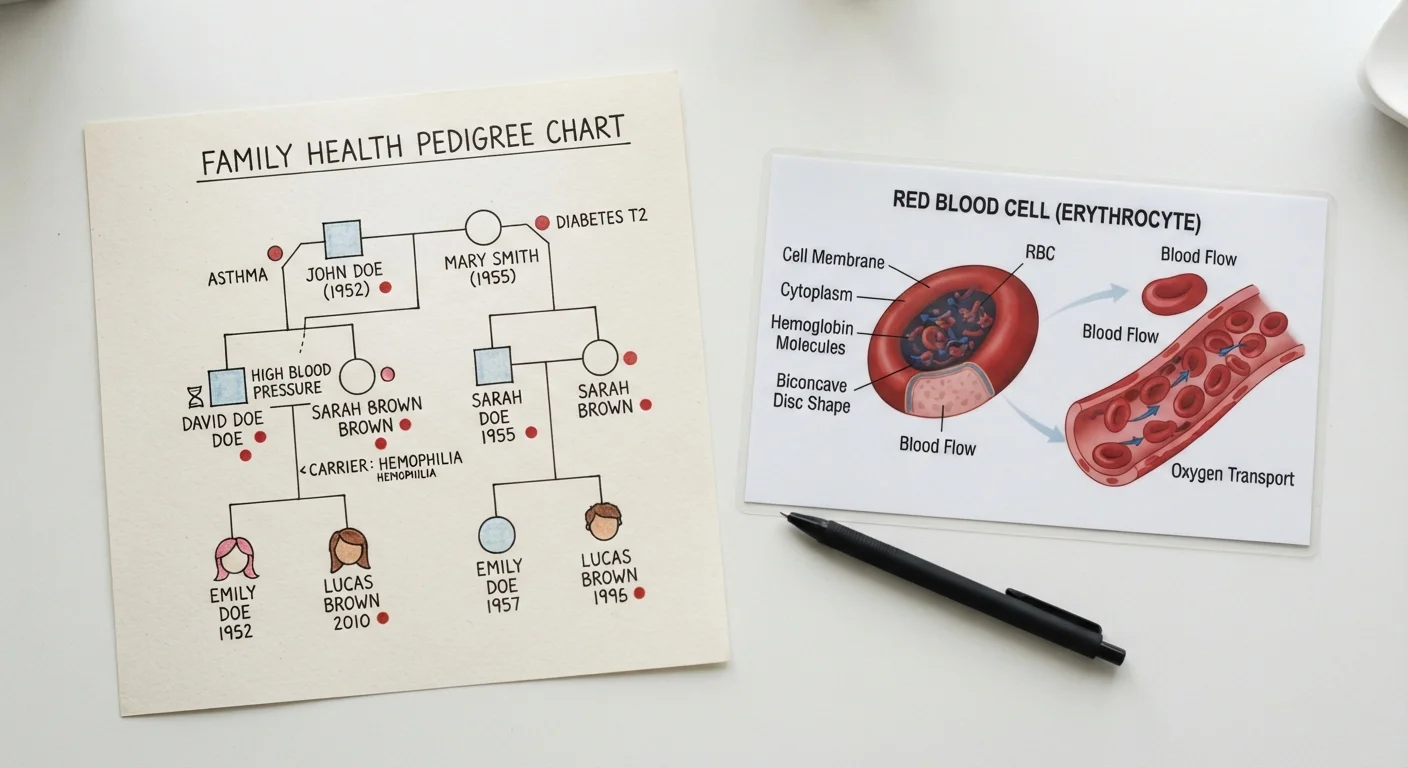
What Happens Inside the Blood
Normally, the body's clotting system maintains a careful balance: it activates quickly enough to stop bleeding from a wound, then shuts down to prevent clots from growing unnecessarily. Dozens of proteins — called clotting factors and natural anticoagulants — work together to maintain this equilibrium.
In hereditary thrombophilia, inherited gene variants tip that balance toward clotting. Either a clotting factor is overactive, or a natural anticoagulant is deficient. The result is blood that responds more aggressively to the triggers that normally initiate clot formation — things like slowed blood flow, vessel injury, or inflammation.
This predisposition is present from birth, even if its effects are not felt until much later in life. For many carriers, a clot never forms. For others, a specific circumstance — a long-haul flight, a surgical procedure, a period of bed rest — provides the additional trigger that leads to a deep vein thrombosis (DVT) or pulmonary embolism (PE).
Thrombophilia Is Not the Same as a Clotting Disorder
Thrombophilia describes a predisposition — an elevated baseline risk — rather than a condition that actively causes clots at all times. Most people with an inherited variant never develop a clot without an additional trigger. Knowing about the predisposition is valuable precisely because it allows individuals and their healthcare providers to manage those triggers more carefully.
The Most Common Inherited Variants
Several distinct gene variants are recognized as causes of hereditary thrombophilia. They differ in how common they are, how much risk they add, and which populations carry them most frequently.
- Factor V Leiden: The most prevalent hereditary thrombophilia variant among people of European ancestry, present in roughly 3–8% of this group. It affects the Factor V clotting protein, making it resistant to a natural off-switch called activated Protein C.
- Prothrombin G20210A mutation: The second most common inherited variant, found in about 2–3% of European-ancestry populations. It leads to elevated levels of prothrombin, a protein central to clot formation.
- Protein C deficiency, Protein S deficiency, and antithrombin deficiency: Each involves a shortage of a naturally occurring anticoagulant protein. These are rarer than Factor V Leiden but generally associated with higher individual clotting risk.
Carrying two copies of a variant — or inheriting combinations of variants — raises risk more substantially than carrying a single copy alone. Understanding which variant is present, and whether one or two copies are inherited, matters when a healthcare provider assesses risk.
3–8%
Prevalence of Factor V Leiden in European-ancestry populations
Factor V Leiden is the most commonly identified hereditary thrombophilia variant, according to estimates from hematology literature.
~50%
Of DVT cases with an identifiable thrombophilia have Factor V Leiden
Research estimates suggest Factor V Leiden accounts for a substantial proportion of thrombophilia-associated deep vein thrombosis cases.
~30–50%
Of venous clot cases have no identified cause
A significant share of venous thromboembolism events are classified as unprovoked, meaning no obvious situational trigger is found — a pattern that prompts investigation for inherited factors.
How Family History Connects to Diagnosis
Because hereditary thrombophilia is passed through families, a detailed family history is often the first clue that a genetic variant may be present. Doctors typically consider testing when someone has experienced:
- A blood clot at a young age (before 50).
- A clot in an unusual location, such as a vein in the abdomen or brain.
- Recurrent clots without an obvious cause.
- A first-degree relative (parent, sibling, child) diagnosed with hereditary thrombophilia.
It is worth noting that testing is not universally recommended for everyone with a family history of clotting. Guidance varies by clinical circumstance, and the decision involves weighing how much a positive result would actually change management. This is a conversation to have with a primary care provider or hematologist.
Hereditary thrombophilia is part of a broader family of conditions that run in families — see the plain-language reference guide to hereditary conditions for wider context. Like familial hypercholesterolaemia, it can be present for decades without obvious symptoms, making family history an especially important diagnostic tool.
Risk Factors That Interact With the Genetic Predisposition
Carrying a thrombophilia variant does not mean a clot is inevitable. Risk is shaped by how the genetic predisposition interacts with other factors — many of which become more common as people age.
Known risk amplifiers include:
- Immobility: Long periods of sitting (travel, hospitalization, bed rest) slow blood flow in the legs, creating conditions favorable to clot formation.
- Surgery: Major procedures, particularly orthopedic operations, carry elevated clotting risk, which is compounded by an underlying thrombophilia.
- Hormonal therapies: Estrogen-containing medications and hormone replacement therapy have a recognized association with increased clotting risk.
- Age: Clotting risk rises naturally with age, meaning older adults with a genetic predisposition carry a compounded risk profile.
- Other medical conditions: Cancer, heart failure, and inflammatory conditions can each independently activate the clotting system.
For older adults in particular, the combination of age-related changes and an inherited variant warrants careful discussion with a healthcare provider — especially before surgery, hospitalization, or beginning any new therapy. This interaction between genetics and other risk factors mirrors patterns seen in heart disease risk across generations, where lifestyle and environment modify — but do not erase — the influence of family history.
Tell Your Doctor Before Any Surgery or New Medication
If you know you carry a thrombophilia variant, proactively share this with every healthcare provider involved in your care — including surgeons, gynecologists, and any specialist prescribing hormonal therapies. This information can directly shape how your clotting risk is managed around procedures or medication changes. Keep a note of your family history of clotting so it is easy to communicate accurately.
This article is for general informational purposes only and is not a substitute for professional medical advice, diagnosis, or treatment. Always consult a qualified healthcare provider about any personal health concerns, symptoms, or questions regarding your medical history or medications.