
Why a Family Health History Matters at Any Age
Your family's medical past is one of the few health tools that costs nothing and can meaningfully shape the care you receive. When clinicians understand which conditions appear across generations, they can tailor screening schedules, identify inherited risk patterns earlier, and focus prevention efforts where they matter most.
Older adults are often uniquely positioned to gather this information — many have lived long enough to observe health patterns across multiple generations, and they may be the most knowledgeable person in their family about grandparents' or parents' health. If you're new to this topic, our beginner's overview of family health history covers the key concepts before you dive into collecting.
Family History Is Not a Diagnosis
Having a family member with a serious illness does not mean you will develop it. Family health history identifies patterns that inform screening and prevention conversations — it is one factor among many that clinicians consider. Always discuss what your history means for your personal health with a qualified healthcare provider rather than drawing conclusions on your own.
What You'll Need Before You Start
Gathering a family health history doesn't require specialist knowledge or expensive tools. The essentials are modest:
What you will need
Pen and notepad (or word processor)
Recording information as you gather it — a simple format works just as well as specialist software.
Shared digital document or cloud folder
Allows multiple family members to contribute and access the record over time.
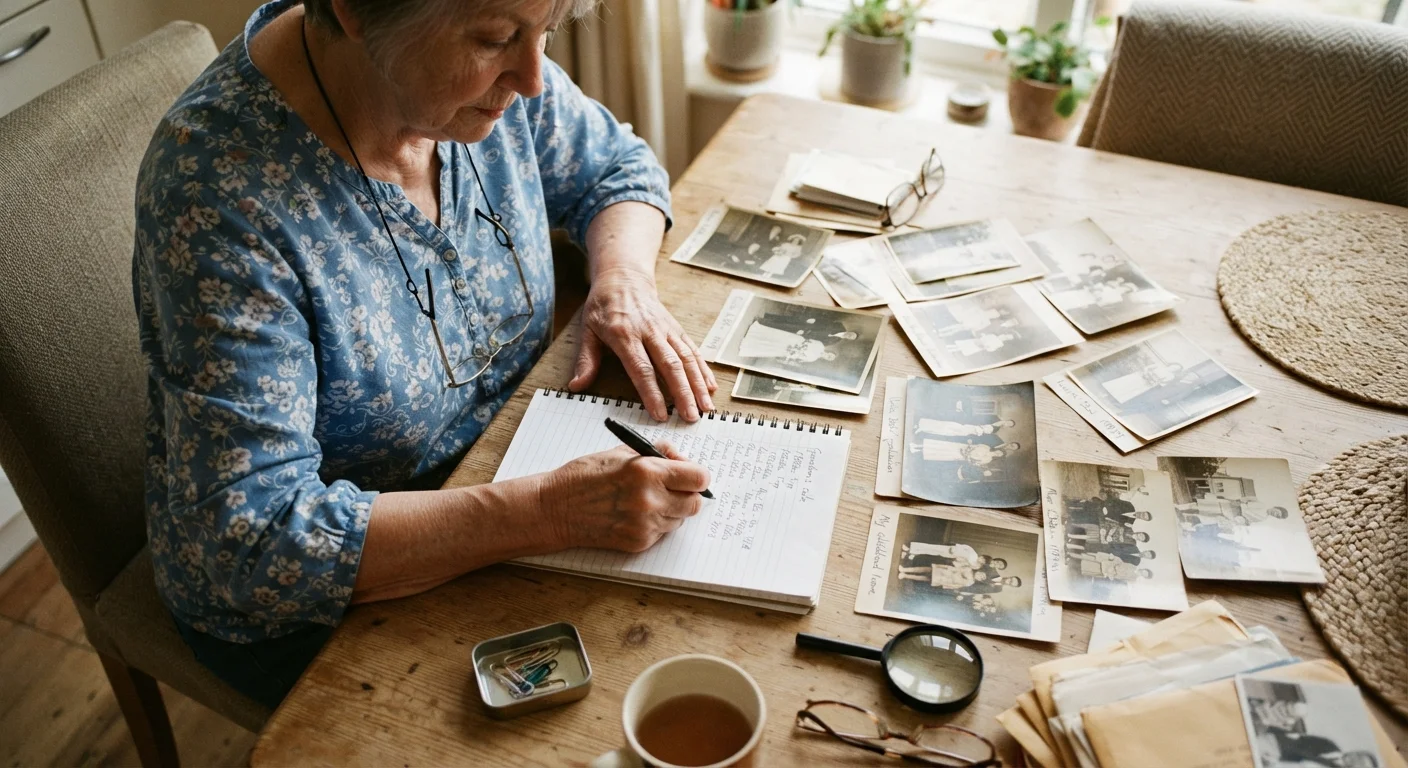
Family photographs and old letters
Can reveal clues about relatives' health, age at death, or physical traits relevant to genetic conditions.
Death certificates or obituaries
Often list cause of death and age, providing otherwise unavailable health data for deceased relatives.
U.S. Surgeon General's My Family Health Portrait tool
A free, government-provided web tool for organizing and printing a structured family health history.
Once you have these basics in place, the steps below will guide you through the process systematically — including what to do when information is incomplete or relatives are difficult to reach.
Step-by-Step: Collecting Your Family Health History
Decide which relatives to include
Start with a three-generation scope: your parents, siblings, and grandparents on both sides of your family. If information is available, extend to aunts, uncles, and first cousins. This scope is what most clinicians refer to when they ask about family health history, and it is the foundation of a three-generation family health portrait.
For each person, note their name (or relationship to you), date of birth, and — if deceased — approximate age and cause of death.
List the health conditions to ask about
Before reaching out to relatives, prepare a focused list of conditions that are known to run in families. Clinicians pay particular attention to:
- Heart disease and stroke
- Type 2 diabetes
- Certain cancers (breast, ovarian, colorectal, prostate)
- High blood pressure and high cholesterol
- Mental health conditions such as depression or bipolar disorder
- Autoimmune conditions (rheumatoid arthritis, lupus, thyroid disease)
- Alzheimer's disease and other dementias
Record the age at which each condition was diagnosed, not just whether a relative had it — early onset often carries different risk implications than late onset.
Reach out to relatives thoughtfully
A phone call, video call, or a brief letter often works better than an unexpected direct question at a family gathering. Frame the conversation around your own health planning rather than scrutinising theirs. For example: 'I'm putting together a health history for my own doctor's visits, and any information you're comfortable sharing would really help.'
Some relatives may be private, emotionally guarded about certain illnesses, or simply unsure of details. Accept what they offer without pressure, and note any uncertainty ('grandmother may have had a type of blood cancer — unsure of exact type').
Search available documents for supporting detail
Death certificates, obituaries, and old hospital discharge papers can fill significant gaps, particularly for grandparents or great-grandparents who can no longer be interviewed. Obituaries often mention cause of death; death certificates list it formally. Old family letters or diaries occasionally reference illnesses in ways that add useful context.
If your family history has significant gaps due to adoption, estrangement, or records being lost, see our guide on piecing together a health history with incomplete information for additional strategies.
Record and organise what you've gathered
Compile your notes into a single, readable document. A simple table works well — one row per relative, with columns for relationship, date of birth, conditions diagnosed (with age at diagnosis), and cause and age of death if applicable. Also note your family's ethnic background, as certain genetic variants are more prevalent in specific populations.
For guidance on formats and what details matter most, see our article on keeping a family health record. Avoid over-engineering the format — a clear, legible list your doctor can read at a glance is the goal.
Share the record with your doctor
Bring a printed or digital copy to your next appointment and flag it proactively — don't wait to be asked. Your doctor can use it to personalise screening schedules, identify patterns that warrant specialist referral, and note your risk level for conditions that may otherwise be missed.
For practical advice on how to present this information effectively, our article on sharing your family health history with your doctor walks through how to make the most of that conversation.
Make It a Family Project
Consider sharing your completed record with siblings or adult children so they can use it for their own healthcare too. A shared cloud document or even a printed copy distributed at a family gathering can turn a private task into a collective health resource. The more relatives who contribute and benefit, the more complete and useful the record becomes over time.
What to Do With What You Find
A completed family health history is most useful when it moves beyond the drawer and into an active healthcare conversation. Before your next appointment, review your record for patterns: the same condition appearing in multiple relatives, or diagnoses that occurred at unusually young ages, are both worth highlighting explicitly.
Keep Your Record Secure
Family health information is sensitive personal data. Store written records in a private location, and use password-protected or encrypted digital files if sharing electronically. Be selective about who has access, and inform contributing relatives about how the information will be stored and used.
Your record should be treated as a living document. Update it after family events, when relatives share new diagnoses, or after a relative passes away and cause of death becomes known. Over time, even a modest starting record can grow into a detailed and genuinely useful clinical resource. For a fuller guide on presenting this information effectively, see our article on talking to your doctor about family health history.
This article is for general informational purposes only and does not constitute medical advice. Always consult a qualified healthcare professional for guidance specific to your personal health circumstances.