
Why This Choice Matters More After 60
Physical activity is one of the most thoroughly studied contributors to healthy aging — supporting cardiovascular function, muscle mass, balance, and cognitive health. But the format of exercise also shapes outcomes in ways that go beyond the workout itself.
For older adults, social engagement, injury risk, and the ability to maintain a routine long-term are all legitimate health considerations. Whether you gravitate toward a community yoga class or a quiet walk with resistance bands at home, understanding the trade-offs of each approach helps you build something sustainable.
For a broader look at how exercise supports mobility and independence in later life, see Active Aging: The Full Picture.
The Case for Group Exercise
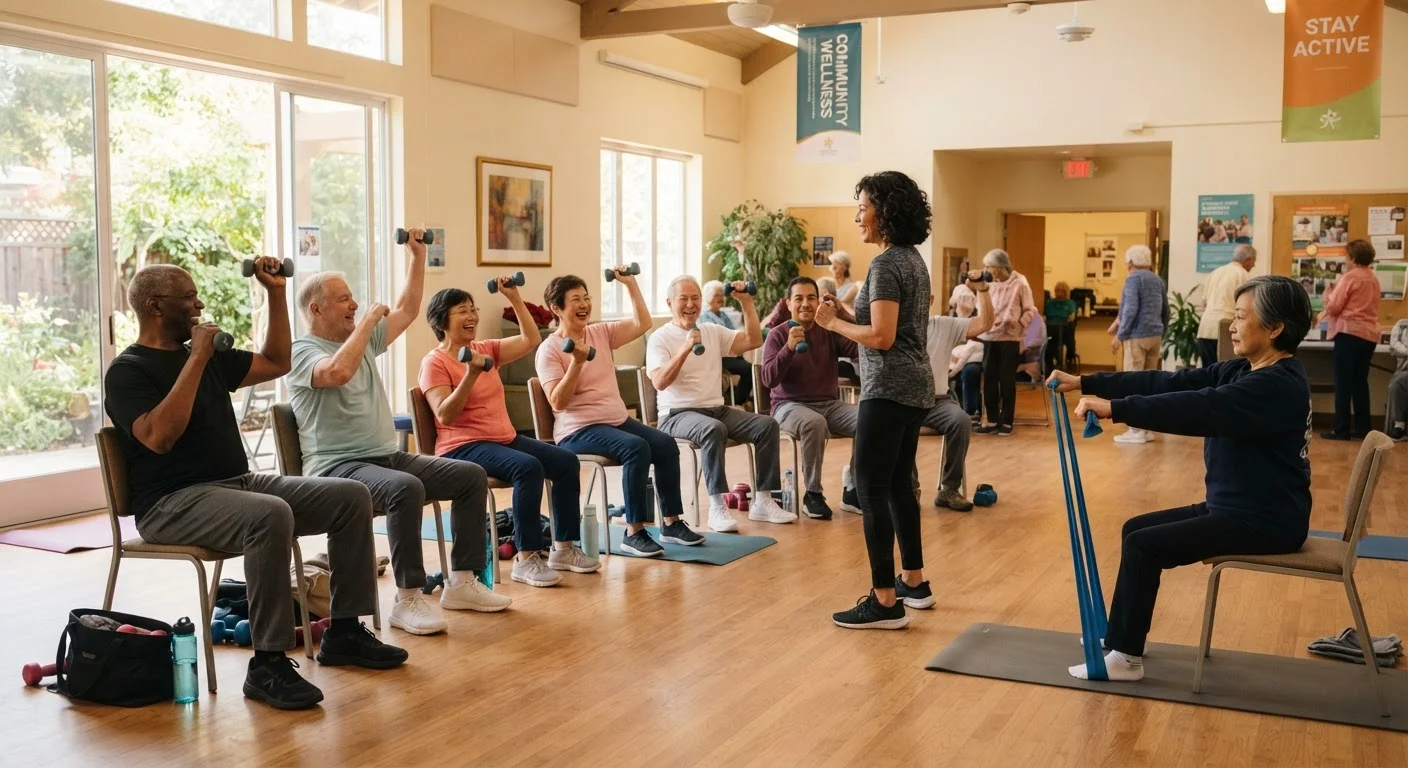
Group fitness classes — from chair yoga and water aerobics to dance and tai chi — offer a structured environment with predictable schedules and a qualified instructor present. For many older adults, this combination is exactly what sustains long-term participation.
Social connection reduces isolation and supports mental health
Research consistently links social engagement to better mental and cognitive outcomes in older adults. Group exercise creates regular, structured opportunities for interaction that many find difficult to replicate independently.
Instructor oversight improves form and reduces injury risk
A qualified instructor can observe posture, correct movement patterns, and modify exercises for individual participants — reducing the risk of strain or injury that can occur when self-taught technique goes unchecked.
Scheduled classes support consistent exercise habits
A fixed class time provides external accountability that many older adults find easier to follow than self-directed schedules, making it more likely exercise becomes a reliable weekly habit.
Peer motivation encourages sustained effort
Exercising alongside others creates a mild, positive competitive dynamic and shared purpose that tends to help participants push through low-motivation days more readily than exercising alone.
Many classes are designed specifically for older bodies
Programs like SilverSneakers, chair fitness, and gentle yoga are built around the functional needs and physical realities of aging, lowering barriers to safe participation.
~28%
Older adults who are physically inactive
The CDC estimates that roughly 28% of adults aged 50 and older are physically inactive, underscoring the importance of finding formats that support long-term engagement.
2x
Adherence advantage with social support
Multiple behavioral studies suggest that exercising with others or in structured social settings can roughly double adherence rates compared to solitary exercise programs.
If you're new to resistance-based group formats, Strength Training for Older Adults: A Complete Starting Point offers an accessible entry point with no prior experience needed.
The Limitations of Group Classes
Group exercise is not a perfect fit for everyone. Individual health needs, physical limitations, and personal comfort all affect whether a class setting is helpful or counterproductive.
Fixed schedules may not suit unpredictable health days
Older adults managing chronic conditions, fatigue, or recovery needs may find it difficult to commit to class times, leading to missed sessions and loss of momentum.
One instructor cannot fully personalize to every participant
In a group setting, modifications are offered broadly rather than tailored precisely. Those with complex conditions may not receive the individualized pacing they need to exercise safely.
Travel and accessibility can be real barriers
Not all older adults have easy access to facilities offering appropriate classes. Transportation limitations, cost, and geographic availability can make group exercise impractical for some.
Social discomfort can deter initial participation
Some older adults — particularly those new to exercise or self-conscious about ability — may find group settings anxiety-provoking, which can delay starting or lead to early dropout.
When Solo Training Has a Clear Edge
For older adults with post-surgical recovery needs, significant balance impairment, or highly individualized rehabilitation protocols, solo training guided by a physical therapist is often the safer and more effective starting point. Group classes can be introduced gradually as functional capacity improves. Always discuss format choices with your healthcare team if you have active health conditions.
Those managing arthritis or joint concerns should also review Strength Training and Ageing Joints for guidance on how to adapt resistance work safely.
Building a Balanced Approach
Many older adults find the most sustainable routine isn't an either-or decision. Attending one or two group classes per week provides social structure and instructor feedback, while independent sessions on other days allow for personalized pacing and flexibility.
For those weighing which exercise types to prioritize, Aerobic vs. Resistance Exercise: What Older Adults Actually Need breaks down how cardio and strength training complement each other in aging bodies.
The most effective exercise format is the one you continue. Talk with your healthcare provider about which mix of group and solo activity fits your current health status, mobility, and goals.
This article is for general informational purposes only and does not constitute medical advice. Always consult a qualified healthcare professional before beginning or modifying any exercise program, especially if you have existing health conditions.