
Why Movement Habits — Not Just Exercise — Matter After 60
Maintaining independence as you age isn't solely a product of formal workouts. Research in exercise science consistently shows that how you move throughout an ordinary day — how often you stand up, how far you walk, how well you balance — has a profound influence on functional ability over time. These everyday patterns are what gerontologists and physical therapists often call functional fitness: the capacity to perform the tasks that daily life demands.
Falls remain one of the leading causes of injury-related hospitalizations among older adults in the United States. Muscle loss, known clinically as sarcopenia, accelerates in the absence of regular resistance and weight-bearing activity. And joint stiffness that goes unaddressed tends to compound over time. The encouraging reality is that targeted, consistent movement habits can meaningfully slow all three of these processes — at virtually any starting point.
The habits below are drawn from established evidence in exercise physiology and geriatric health. They are designed to be practical, adaptable, and sustainable for older adults at varying fitness levels. As always, speak with your physician or a qualified physical therapist before beginning or significantly changing any exercise routine — especially if you are managing a chronic condition.
Start With What You Can Do Today
You don't need a gym membership or a structured program to begin building functional movement habits. Standing up from your chair without using your hands, taking a short walk after a meal, or practicing standing on one foot near a kitchen counter are all legitimate starting points. The evidence is clear: some consistent movement is substantially better than waiting for the 'right' program.
Seven Movement Habits That Reinforce Long-Term Independence
Walk with purpose and consistency
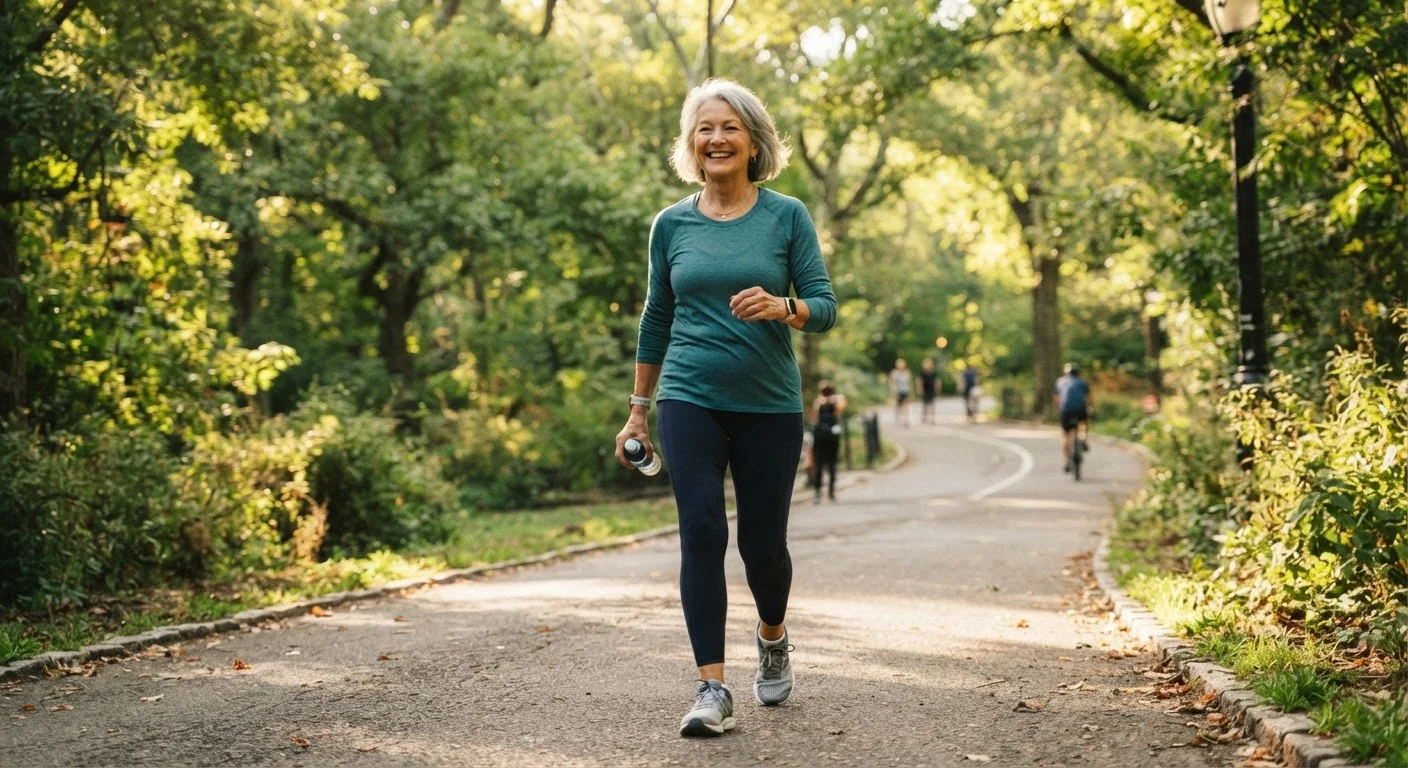
Walking remains one of the most accessible, evidence-backed forms of physical activity for older adults. Beyond calorie expenditure, regular walking strengthens the lower body, supports cardiovascular health, and — when practiced on varied terrain — challenges balance and coordination in ways that flat indoor walking does not.
Pace and consistency matter more than duration alone. Moderate-paced walking performed most days of the week is associated with better functional outcomes than infrequent longer sessions. Getting more from every step after 65 is a practical place to explore how small adjustments to pace and route can amplify walking's benefits.
Consistent, moderate-paced walking is among the highest-return habits for older adult independence.
Practice resistance training at least twice weekly
Muscle mass naturally declines with age, but this process is not fixed or irreversible. Resistance training — using bodyweight, resistance bands, or weights — stimulates muscle protein synthesis and helps preserve the leg, core, and upper-body strength that everyday tasks require. Major health organizations, including the U.S. Department of Health and Human Services, recommend muscle-strengthening activity at least two days per week for older adults.
Exercises like chair-assisted squats, wall push-ups, and step-ups are effective entry points that don't require gym equipment. Working with a physical therapist or certified fitness professional experienced with older adults can help ensure proper form and appropriate progression.
Resistance training at least twice weekly helps counter age-related muscle loss that undermines daily independence.
Incorporate dedicated balance training
Balance is a trainable physical skill — not simply a fixed trait that declines inevitably. Standing on one foot, heel-to-toe walking, and tai chi are among the practices with the strongest evidence for reducing fall risk in older adults. Even brief, daily balance practice produces measurable improvements in stability over time.
Evidence-backed balance exercises for older adults offer a structured starting point. Many of these exercises can be done at home, near a counter or sturdy chair for safety.
Balance is trainable — even brief daily practice meaningfully reduces fall risk over time.
Prioritize flexibility and mobility work
Stiffness in the hips, ankles, and thoracic spine can quietly erode the ability to perform basic movements — stepping over a threshold, reaching overhead, or turning to look behind you while driving. Gentle stretching and mobility exercises help preserve the range of motion that functional tasks depend on.
Stretching is most effective when performed on warm muscles, such as after a walk. Yoga and gentle movement classes designed for older adults combine flexibility with balance and body awareness — making them efficient choices. For a deeper look at why this area matters, the role of flexibility and mobility in aging well is worth exploring.
Maintaining hip and ankle flexibility protects the range of motion that daily functional tasks require.
Reduce prolonged sitting throughout the day
Extended periods of uninterrupted sitting are independently associated with reduced physical function in older adults, separate from how much exercise a person gets. Breaking up sitting time with brief standing or movement intervals — even for two to three minutes every 30 to 45 minutes — supports circulation, glucose regulation, and lower-body muscle activation.
Practical strategies include standing during phone calls, setting a gentle reminder to stand hourly, or incorporating short walks between activities. This habit costs very little time but adds meaningfully to overall daily movement volume.
Breaking up prolonged sitting with brief movement intervals supports circulation and muscle function throughout the day.
Use stairs and inclines intentionally
Stair climbing is a functional, weight-bearing activity that strengthens the quadriceps, glutes, and calves — the muscle groups most critical for rising from a chair, climbing curbs, and maintaining upright posture. Choosing stairs over elevators when safely able to do so turns an ordinary part of the day into a strength opportunity.
Inclined walking, even on gentle hills, adds a cardiovascular challenge while reinforcing the same muscle groups. For those managing joint concerns, evidence-based principles for keeping joints healthy can help you determine how to incorporate these movements without excessive stress on knees or hips.
Choosing stairs intentionally strengthens the muscle groups most essential for rising, climbing, and postural stability.
Anchor movement to existing daily routines
Habit science consistently shows that new behaviors are more likely to persist when linked to established cues. Rather than scheduling movement as a separate event, older adults who weave activity into existing routines — morning coffee followed by a short walk, balance exercises during a television program — report higher long-term adherence.
This approach also takes pressure off willpower and motivation, which fluctuate naturally. The goal is to make movement the path of least resistance — a default rather than a decision. For a broader look at how active aging habits fit together, the full picture of exercise and mobility after 60 offers a comprehensive framework.
Linking movement to existing daily cues removes reliance on motivation and dramatically improves long-term adherence.
Movement Benefits Extend Beyond Physical Health
Regular physical activity is associated not only with stronger muscles and better balance, but also with reduced risk for several chronic conditions, including certain cancers. Physical activity's role in cancer risk reduction is an area where evidence continues to grow. Movement also intersects meaningfully with cognitive health — another reason its benefits compound across multiple dimensions of healthy aging.
Building These Habits Into Real Life
The most effective movement habit is the one you actually maintain. Research on behavior change in older adults consistently points to two factors: starting small and linking new habits to existing routines. For example, pairing balance exercises with tooth brushing, or adding a short walk after a regular meal, reduces the mental effort required to sustain the habit over time.
It's also worth remembering that movement and cognitive health are closely linked. Daily habits that support brain health often overlap with those that preserve physical function — making movement one of the highest-return investments available to older adults. And if you are managing joint concerns, building a joint-friendly daily routine can help you stay active without aggravating sensitive areas.
Finally, be mindful that well-intentioned effort can backfire. Understanding activity pitfalls that set back older exercisers is just as valuable as knowing what to do — especially when returning to movement after a period of inactivity. Progress, not perfection, is the goal.
This article is for general informational and educational purposes only and does not constitute medical advice. Always consult a qualified healthcare professional for guidance specific to your health situation.