
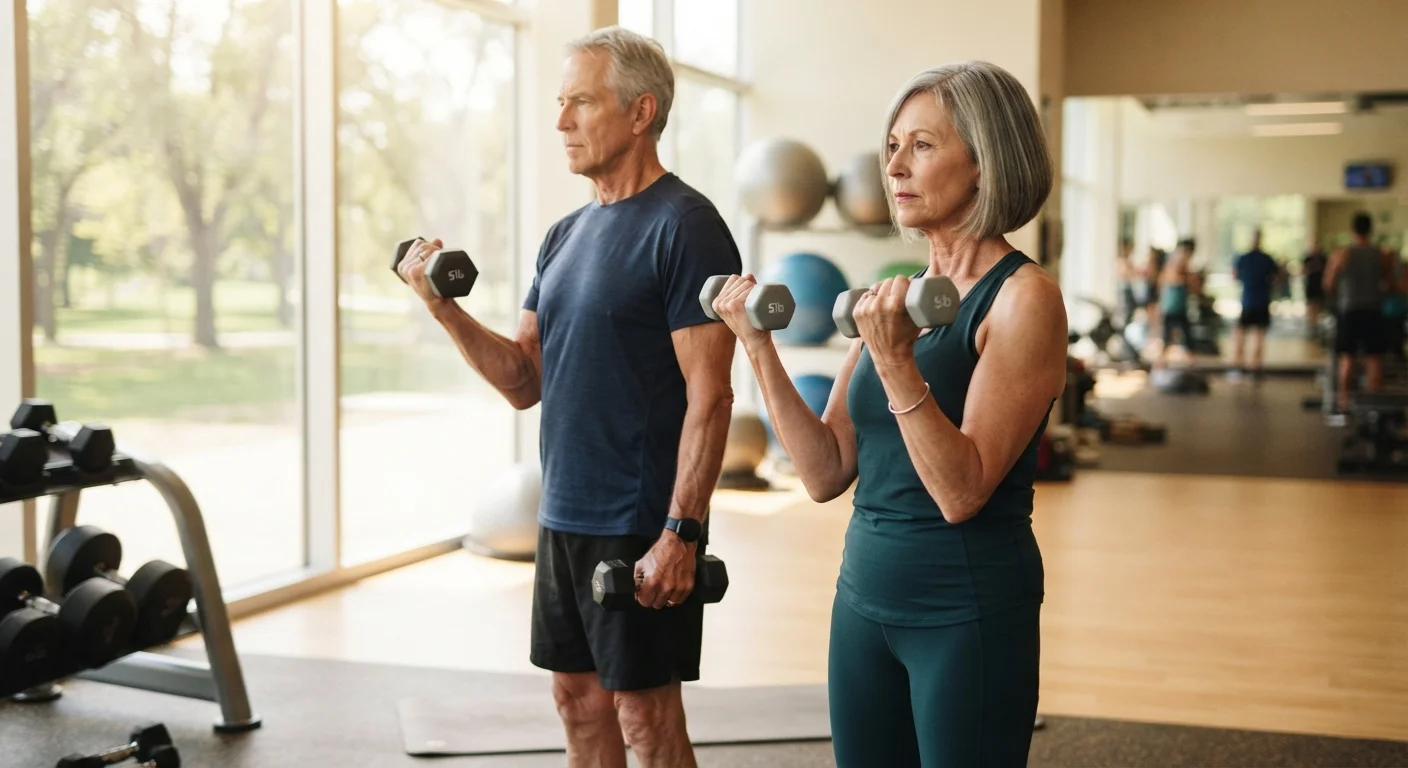
What Happens to Muscle After 60
Muscle is metabolically active tissue — it burns calories at rest, stabilizes joints, and generates the force needed for virtually every daily movement. After age 60, the biological processes that build and maintain muscle become less efficient, and the balance tips toward breakdown.
Several mechanisms drive this shift. Muscle protein synthesis — the process by which cells repair and grow muscle fibers — slows with age. The motor neurons that signal muscles to contract begin to deteriorate, causing muscle fiber dropout. Hormonal changes, including declining testosterone in men and estrogen in women, further reduce the anabolic signals that support muscle maintenance. Chronic low-grade inflammation, common in older adults, adds additional pressure on muscle tissue.
The result is sarcopenia: a progressive, measurable reduction in muscle mass, strength, and physical performance. It is not inevitable in its severity, but it is universal in its onset. Understanding these drivers is the first step toward addressing them effectively.
Sarcopenia Is Now a Diagnosable Condition
In 2016, sarcopenia was formally recognized with its own International Classification of Diseases (ICD-10) code, signaling its acceptance as a distinct medical condition rather than simply a byproduct of aging. This matters because it opens pathways for clinical screening, targeted treatment, and insurance coverage for related interventions. If you are concerned about muscle loss, a physician can assess your risk using validated screening tools.
Why Muscle Loss Has Real Health Consequences
The effects of sarcopenia extend well beyond reduced physical performance. Muscle tissue plays a central role in metabolic regulation — it is the body's primary site for glucose uptake, meaning less muscle mass contributes to poorer blood sugar control and increased risk of type 2 diabetes.
Falls are among the most serious consequences. Reduced leg strength and impaired balance — both linked to muscle loss — are major contributors to the roughly 36 million falls that occur among older adults in the United States each year, according to the Centers for Disease Control and Prevention. Falls are a leading cause of injury-related hospitalization and loss of independence in this age group.
Beyond falls, sarcopenia is associated with slower recovery from illness or surgery, increased frailty, and reduced ability to perform activities of daily living — from carrying groceries to rising from a chair. Preserving muscle is, in a meaningful sense, preserving independence.
3–8%
Muscle mass lost per decade after age 30
This rate accelerates significantly after age 60, according to research published in the Journal of Cachexia, Sarcopenia and Muscle.
36 million
Falls among older U.S. adults annually
The Centers for Disease Control and Prevention reports that falls — strongly linked to muscle weakness — affect approximately one in four older adults each year.
Up to 50%
Muscle mass potentially lost by age 80
Some estimates suggest adults may lose up to half of their peak skeletal muscle mass by their 80s without targeted intervention, according to gerontology literature.
The Role of Resistance Exercise
Resistance training — using weights, resistance bands, or bodyweight — is the most evidence-supported strategy for countering sarcopenia. It stimulates muscle protein synthesis, recruits and maintains motor neurons, and produces functional strength gains that translate directly into daily life.
Clinical research, including systematic reviews of randomized trials, confirms that progressive resistance training produces meaningful increases in muscle mass and strength in adults aged 60 and older. "Progressive" is key: gradually increasing the challenge — through heavier loads, more repetitions, or reduced rest — drives adaptation over time.
For context on how resistance training compares with aerobic activity, see our guide to aerobic vs. resistance exercise for older adults. Both forms of exercise matter, but their contributions to muscle preservation are distinct.
Those with joint concerns should not assume strength training is off-limits. See our balanced overview of strength training and aging joints for a nuanced look at benefits and precautions.
Start Resistance Training at Any Age
It is never too late to begin a resistance training program. Studies have documented meaningful strength gains in adults in their 70s and 80s who took up weight training for the first time. Begin with light resistance and focus on proper form, ideally under guidance from a physical therapist or certified fitness professional experienced with older adults.
Nutrition's Essential Supporting Role
Exercise alone cannot fully offset sarcopenia without adequate nutritional support — particularly protein. Older adults are often under-consuming protein relative to their physiological needs, partly because appetite tends to decrease with age and partly because dietary guidance has historically underestimated how much older bodies need.
Protein provides the amino acids used to build and repair muscle fibers. When protein intake is insufficient, the body may break down muscle tissue to meet other metabolic demands — accelerating the very loss sarcopenia causes. Distributing protein intake across meals, rather than concentrating it in one sitting, appears to support muscle synthesis more effectively.
For a deeper look at how diet supports strength and physical function with age, our guide to protein intake after 60 outlines the evidence clearly. Broader nutrition and aging guidance is also available for those looking to align their diet with healthy aging goals.
This article provides general health information for educational purposes only and is not a substitute for professional medical advice, diagnosis, or treatment. Always consult a qualified healthcare provider before making changes to your exercise routine, diet, or health management plan.