
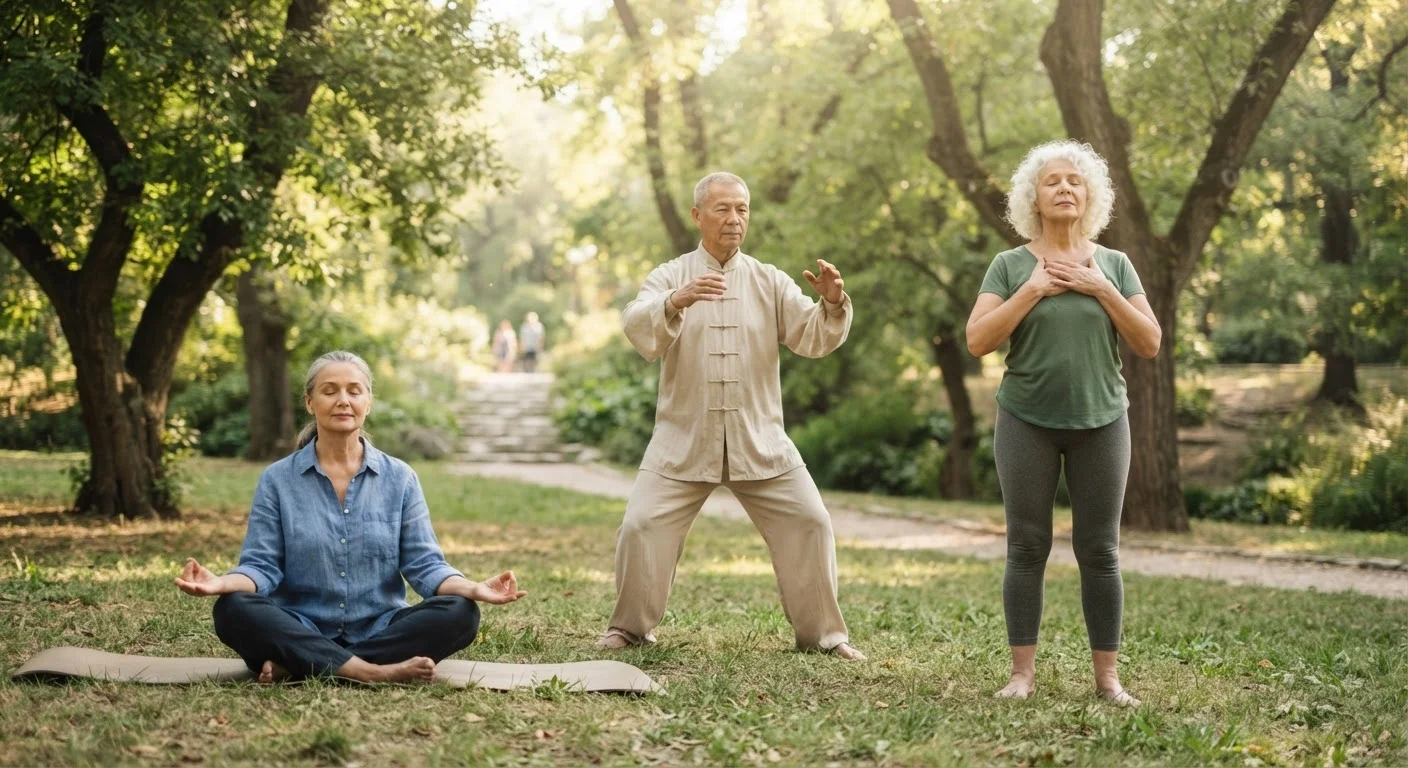
Why Mind-Body Practices Matter More as We Age
Mental well-being is an essential pillar of healthy aging, yet it often receives less attention than physical fitness or nutrition. Chronic stress, disrupted sleep, and mild anxiety are common experiences in later life — and they can quietly erode both cognitive sharpness and physical health over time.
Mind-body practices address this gap by engaging the nervous system directly, calming stress responses, and cultivating a clearer sense of mental focus. Three approaches stand out for their evidence base and accessibility to older adults: meditation, Tai Chi, and breathing exercises. Each takes a different route to better mental health, and understanding those differences helps you choose where to start — or how to combine them. For a broader look at daily habits that support the aging brain, see our guide to everyday habits that support long-term brain health.
| Meditation | Tai Chi | Breathing Exercises | |
|---|---|---|---|
| Primary benefit | Anxiety and sleep improvement | Balance, mobility, and mood | Immediate stress relief |
| Physical activity level | None (seated) | Low-impact movement | None (seated or lying) |
| Equipment needed | None | None (comfortable clothing) | None |
| Ease for beginners | Moderate — focus can be hard | Moderate — needs instruction | High — very accessible |
| Fall prevention benefit | Not established | Well-supported by research | Not established |
| Cognitive support evidence | Emerging positive evidence | Some supporting evidence | Limited research to date |
| Typical session length | 10–20 minutes | 20–45 minutes | 5–15 minutes |
Meditation: Training Attention and Calming the Mind
Meditation encompasses a range of structured mental practices — most commonly mindfulness meditation, which involves directing sustained, non-judgmental attention to the present moment, often through breath awareness. Research published in journals including JAMA Internal Medicine has found that mindfulness-based programs can produce meaningful reductions in anxiety, depression, and sleep disturbance in older adults.
The practice requires no equipment and carries virtually no physical risk, making it broadly accessible. That said, beginners frequently find sustained mental focus challenging. Guided programs — available through community centers, libraries, and audio apps — can ease the learning curve considerably. Sessions as short as 10 to 15 minutes practiced regularly appear to yield measurable benefit over weeks.
Start Small and Stay Consistent
You don't need long sessions to benefit from meditation. Beginning with just five to ten minutes daily builds the habit foundation that longer sessions can grow from. Consistency over weeks matters more than session length. Many community libraries and senior centers offer free or low-cost guided meditation programs specifically designed for older adults.
Meditation also shows early promise for supporting cognitive function. Some research suggests regular practice may help maintain attention and working memory, though this area remains an active field of study rather than established consensus.
Tai Chi: Movement, Balance, and Mental Calm Together
Tai Chi is a centuries-old Chinese martial art practiced today as a slow, flowing sequence of postures coordinated with breath. Unlike seated mind-body practices, Tai Chi is inherently physical — and that physical dimension adds a distinct layer of benefit for older adults.
A substantial body of research, including multiple systematic reviews, supports Tai Chi for improving balance and reducing fall risk — a critical concern after age 65. At the same time, its meditative movement quality produces documented reductions in stress and depressive symptoms. The dual engagement of body and mind makes Tai Chi particularly well-suited to older adults who find purely seated practices difficult to sustain.
Classes are widely offered through senior centers and community recreation programs, and the low-impact nature of the movements means it is generally gentler on joints than many aerobic activities. For context on how movement supports joint health as you age, our article on evidence-based principles for keeping joints healthy offers useful background.
Breathing Exercises: The Lowest Barrier, Fastest Relief
Controlled breathing techniques — such as diaphragmatic breathing (belly breathing) and slow-paced breathing patterns — work by activating the parasympathetic nervous system, the body's natural counterbalance to the stress response. The effect can be felt within minutes: heart rate slows, muscle tension eases, and a sense of calm becomes more accessible.
Breathing exercises require no equipment, no special setting, and no prior fitness. They can be practiced seated, lying down, or even during a waiting room visit. For older adults managing mobility limitations or chronic conditions, this accessibility makes breathing techniques an ideal entry point into mind-body practice.
Research consistently shows benefits for blood pressure regulation and acute anxiety reduction. While breathing exercises generally lack the depth of long-term cognitive research that meditation carries, their immediate physiological effects are well-documented and meaningful in daily life.
~40%
Reduction in fall risk with Tai Chi
Multiple systematic reviews, including analyses published in the British Journal of Sports Medicine, have found Tai Chi reduces fall incidence in older adults by approximately 40%.
8 weeks
Typical duration to measurable mindfulness benefit
Research on Mindfulness-Based Stress Reduction (MBSR) programs consistently shows clinically meaningful improvements in anxiety and mood after approximately eight weeks of regular practice.
Breathing techniques also integrate naturally with Tai Chi and meditation, making them an excellent complement to either practice. If you're ready to take a broader view of your mental wellness routine, our monthly mental wellness self-check can help you track changes worth discussing with your doctor.
This article is for general informational purposes only and is not a substitute for professional medical advice. Always consult a qualified healthcare provider before beginning a new exercise or mind-body practice, particularly if you have existing health conditions.