
Why Digestive Health Shifts After 60
The gastrointestinal system undergoes meaningful changes as the body ages. Muscular contractions that move food through the digestive tract tend to slow, gastric acid production may decrease, and the composition of the gut microbiome — the community of bacteria living in your intestines — can shift toward less diversity. These changes contribute to common complaints among older adults: constipation, bloating, slower digestion, and a heightened sensitivity to certain foods.
Dietary fiber plays a foundational role in counteracting several of these shifts. It feeds beneficial gut bacteria, adds bulk and moisture to stool, and supports the regular muscular contractions the bowel needs to function effectively. Beyond the gut, research consistently links higher fiber intake to favorable outcomes for cardiovascular health and blood sugar regulation — areas of particular importance for adults managing or seeking to prevent chronic conditions. As the body's nutritional needs change with age, understanding the role of fiber is part of a broader picture covered in our article on how nutritional needs shift as you age.
Talk to Your Doctor First
Significant dietary changes can affect how certain medications work, including blood thinners and diabetes medications. If you manage a chronic condition or take prescription drugs, consult your healthcare provider before substantially increasing your fiber intake. This article provides general nutrition education, not personalized medical advice.
How to Build Fiber-Rich Meals: A Step-by-Step Approach
Increasing fiber intake does not require a dramatic dietary overhaul. The most sustainable strategy is incremental — making targeted substitutions and additions over several weeks rather than rewriting your entire diet at once. The steps below offer a practical sequence for older adults starting from a typical Western diet.
What you will need
Food journal or notes app
Track your current fiber sources and monitor your body's response as you gradually increase intake.
Measuring cups
Estimate serving sizes of grains, legumes, and seeds to better understand fiber content per meal.
Reusable water bottle
Staying consistently hydrated throughout the day is essential to fiber moving properly through the digestive tract.
Assess your current fiber intake honestly
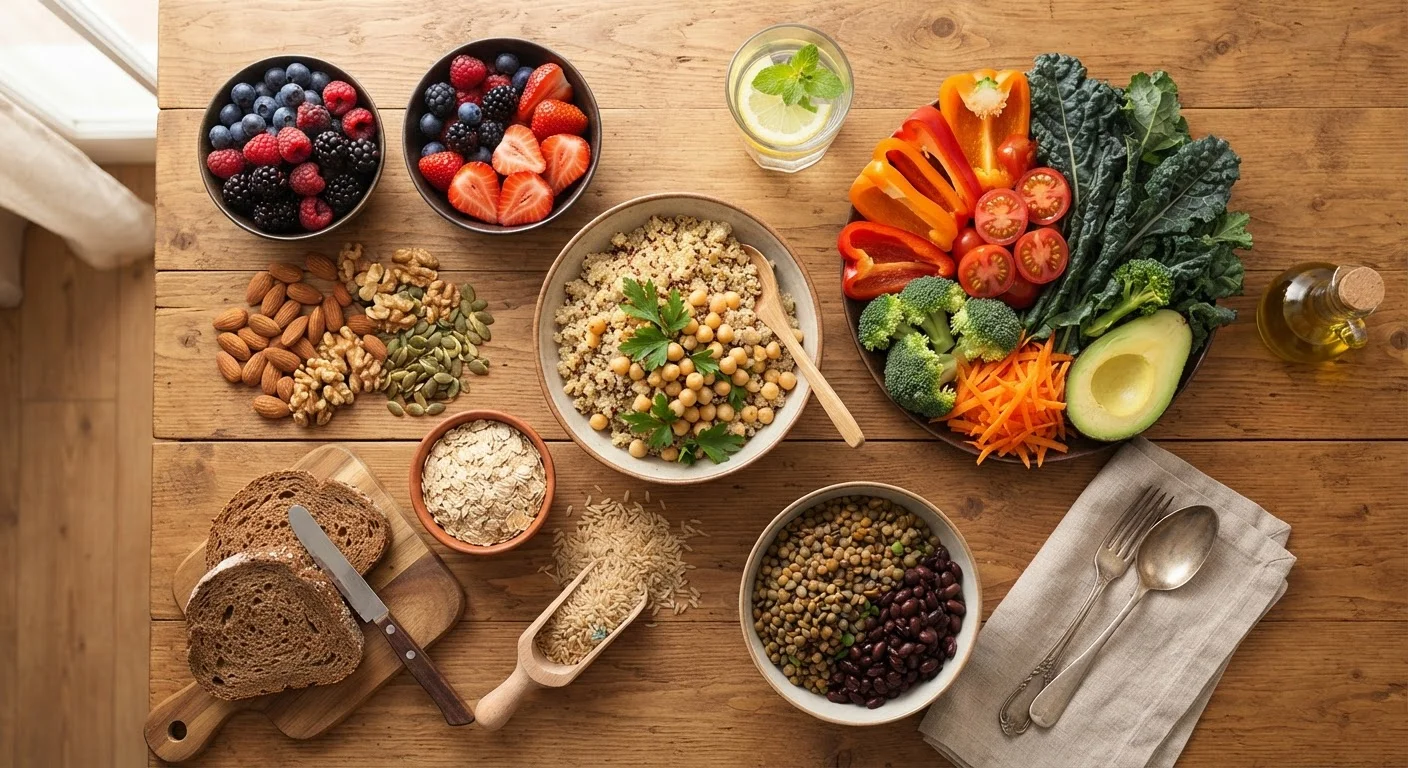
Before changing anything, spend two or three days noting what you typically eat. Look for fiber-rich foods: vegetables, fruits, legumes (beans, lentils, chickpeas), whole grains (oats, brown rice, whole wheat bread), nuts, and seeds. Most older adults in the US consume roughly 10–15 grams of fiber per day — well below the general recommendation of 21–30 grams for adults over 50. Identifying your gap is the first step toward closing it.
Learn the two types of fiber and what each does
Soluble fiber dissolves in water to form a gel-like substance in the gut. It slows digestion, helps moderate blood sugar levels after meals, and has been associated in research with supporting healthy LDL cholesterol levels. Good sources include oats, apples, citrus fruit, barley, and legumes.
Insoluble fiber does not dissolve. It adds bulk to stool and speeds transit through the colon, reducing constipation — a very common concern for adults over 60. Whole wheat, bran, many vegetables, and the skins of fruits are rich in insoluble fiber.
Most whole plant foods contain both types in varying ratios. A varied, plant-forward diet naturally provides both without requiring precise tracking.
Swap refined grains for whole grain versions
This is one of the highest-impact, lowest-effort changes available. Replace white bread with 100% whole wheat bread, choose rolled oats over instant varieties with added sugar, and select brown or wild rice instead of white rice. When reading food labels, look for 'whole grain' or 'whole wheat' as the first ingredient — the word 'multigrain' alone does not guarantee significant fiber content.
Add legumes to two to three meals per week
Legumes — beans, lentils, split peas, and chickpeas — are among the most fiber-dense foods available, offering 6–9 grams of fiber per half-cup serving. They also contribute plant-based protein, which matters increasingly with age. For more on why protein becomes critical after 60, see Protein After 60: Why It Matters More Than You Think.
Canned beans are convenient and nutritionally comparable to dried — rinse them to reduce sodium content. Stir black beans into soups, add lentils to stews, or use hummus as a vegetable dip.
Build vegetables into every meal — not just dinner
Many older adults eat most of their vegetables at the evening meal and relatively few at breakfast or lunch. Spreading vegetable intake across the day supports more consistent digestive activity. Add spinach or tomatoes to eggs at breakfast, include a side salad or vegetable-based soup at lunch, and aim for two distinct vegetable servings at dinner. Frozen vegetables are just as nutritious as fresh and are often more affordable and easier to prepare.
Increase water intake alongside fiber
Fiber requires adequate fluid to function properly. Without sufficient water, increased fiber can actually worsen constipation rather than relieve it. Aim to sip water consistently throughout the day rather than drinking large amounts at once. Herbal teas, broth-based soups, and water-rich vegetables like cucumber and celery also contribute to hydration. Older adults are more susceptible to dehydration because the sensation of thirst diminishes with age — building consistent fluid habits matters more than relying on thirst cues alone.
Increase Fiber Gradually
Adding large amounts of fiber too quickly is one of the most common mistakes older adults make. It can cause gas, bloating, cramping, and irregular bowel movements. Aim to add roughly one to two additional servings of high-fiber food per week, allowing your gut microbiome and digestive muscles time to adjust.
Use the Half-Plate Rule as a Starting Point
Filling half your plate with vegetables and fruits at each meal is a practical, visual shortcut to boosting daily fiber without counting grams. Pair this habit with choosing whole grains over refined ones and you will naturally move toward the recommended intake. For more structured plate-building guidance, see The Older Adult's Roadmap to a Balanced Plate.
Putting It All Together for the Long Term
Fiber's benefits accumulate with consistent, long-term intake — not from a single high-fiber day. The goal is to weave fiber-rich choices into your everyday eating patterns so they become habitual rather than effortful. A practical long-term approach might look like oatmeal with berries at breakfast, a lentil-based soup at lunch, an afternoon snack of apple slices with nut butter, and a dinner built around a whole grain, a legume, and two vegetable servings.
If you have a digestive condition such as diverticular disease, inflammatory bowel disease, or irritable bowel syndrome, fiber recommendations may differ significantly from general guidelines. Always work with your gastroenterologist or primary care provider to determine what is appropriate for your individual situation. For readers who want to connect digestive health to broader cardiovascular goals, Getting Started with Heart-Healthy Eating After 60 offers a complementary starting point. You may also find it useful to revisit common assumptions about food with our article on food myths that may be holding older adults back.
This article is for informational and educational purposes only and does not constitute medical advice. Always consult a qualified healthcare provider before making significant changes to your diet, especially if you have existing health conditions or take prescription medications.