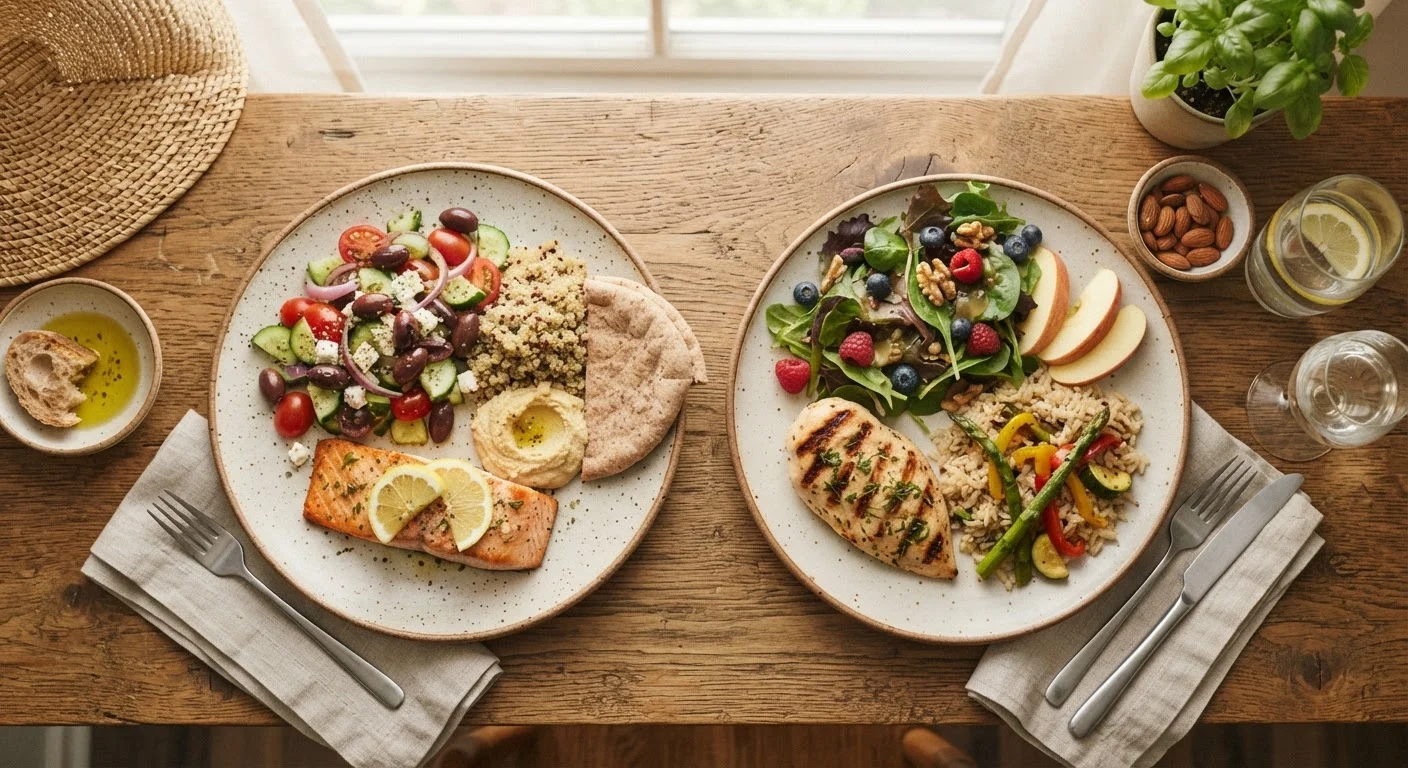
What Each Diet Actually Involves
Both the Mediterranean and DASH (Dietary Approaches to Stop Hypertension) diets are frequently cited by nutrition researchers and clinicians as models for healthy eating in later life. Despite sharing foundational principles, they differ meaningfully in emphasis and structure.
The Mediterranean diet draws from traditional eating patterns in southern Europe. It prioritizes vegetables, legumes, whole grains, nuts, and olive oil as a primary fat source. Fish and seafood appear regularly, while red meat is eaten sparingly. Moderate red wine consumption is part of the traditional pattern, though it is not recommended for everyone. There are no rigid portion rules — the focus is on food quality and variety.
The DASH diet was developed specifically to address high blood pressure, a condition affecting a significant proportion of older Americans. Like the Mediterranean diet, it emphasizes produce, whole grains, and lean proteins. Its defining feature, however, is an explicit daily sodium limit — typically 1,500 to 2,300 milligrams — along with structured guidance on daily servings of dairy, nuts, and fats. It does not encourage alcohol consumption.
For a broader framework on building nutritious meals suited to aging, see The Older Adult's Roadmap to a Balanced Plate.
| Criterion | Mediterranean Diet | DASH Diet |
|---|---|---|
| Primary Goal | Overall dietary quality and longevity | Lowering blood pressure |
| Sodium Guidance | No explicit target; naturally moderate | Strict limit: 1,500–2,300 mg/day |
| Fat Emphasis | Olive oil and omega-3-rich fish | Low saturated fat; some healthy fats |
| Dairy | Moderate; mainly yogurt and cheese | Encouraged; low-fat dairy included |
| Alcohol | Moderate wine traditionally included | Not encouraged |
| Structural Rigidity | Flexible; principles-based | Defined daily servings per food group |
| Cognitive Health Research | Promising and growing evidence | Less studied for brain outcomes |
| Cardiovascular Evidence | Strong; broad outcome data | Strong; especially blood pressure |
Evidence for Older Adults: Heart, Brain, and Longevity
Both diets carry substantial research support, though their strongest evidence differs by health outcome.
The Mediterranean diet has been extensively studied for cardiovascular protection, with large observational studies and some controlled trials suggesting associations with lower rates of heart disease, stroke, and overall mortality. It has also attracted significant attention for its potential role in supporting cognitive health — a major concern for older adults. Research published in journals including JAMA Internal Medicine and The New England Journal of Medicine has linked adherence to this pattern with favorable brain aging outcomes, though researchers note the evidence is still evolving. Learn more in our companion article on diet and cognitive health in aging.
The DASH diet's strongest evidence base is in blood pressure reduction. Clinical trials have consistently demonstrated meaningful decreases in systolic and diastolic blood pressure among participants following the diet — a finding that is especially relevant given how common hypertension is after age 60. DASH is also associated with reduced cardiovascular risk and improved cholesterol profiles.
~70%
US adults over 65 with hypertension
According to the U.S. Centers for Disease Control and Prevention (CDC), hypertension affects a large majority of older Americans, underlining the DASH diet's clinical relevance.
~5 mmHg
Average systolic blood pressure reduction on DASH
Research published in clinical nutrition literature consistently shows meaningful blood pressure reductions for adults adhering to the full DASH diet pattern.
30%
Lower cardiovascular event risk
A landmark trial (PREDIMED) found a relative risk reduction of approximately 30% for major cardiovascular events in participants following a Mediterranean diet supplemented with olive oil or nuts.
If you are new to heart-conscious eating, Getting Started with Heart-Healthy Eating After 60 offers a practical starting point.
Practical Fit: Sustainability, Cost, and Daily Life
Research value only matters if a diet can realistically be followed. For older adults, sustainability depends on factors including food access, cooking ability, social context, and existing health conditions.
The Mediterranean diet tends to score well on enjoyment and flexibility. Meals can be as simple as a vegetable soup with crusty whole-grain bread and olive oil, or a piece of baked salmon with roasted vegetables. There are no calorie counts or sodium spreadsheets to manage. This flexibility suits adults who cook for themselves or share meals socially.
The DASH diet requires somewhat more attention to sodium content — which means reading food labels, limiting processed foods, and potentially preparing more meals from scratch. For adults accustomed to convenience foods or eating in restaurants frequently, this adjustment can take time. However, many find the structured guidance reassuring once they establish new habits.
Both diets rely on widely available, affordable ingredients. Legumes, frozen vegetables, canned fish (look for lower-sodium versions for DASH), oats, and eggs are budget-friendly staples in either pattern. Neither diet requires specialty health-food stores.
A Note on Individual Health Conditions
Older adults often manage multiple chronic conditions simultaneously, and dietary needs can vary significantly. For example, those with kidney disease may need to limit potassium-rich foods that are staples in both diets. Anyone taking blood-pressure medications, blood thinners, or other prescription drugs should discuss dietary changes with their prescribing clinician, as some foods can interact with medications.
For those curious about how these patterns compare to plant-based approaches, see Plant-Based Eating vs. Traditional Omnivore Diets for Healthy Aging and Anti-Inflammatory Eating Patterns Compared.
This article is for general informational and educational purposes only and does not constitute medical or dietary advice. Always consult a qualified healthcare provider or registered dietitian before making significant changes to your diet, particularly if you have existing health conditions or take medications.