
Why Three Factors Matter More Than One
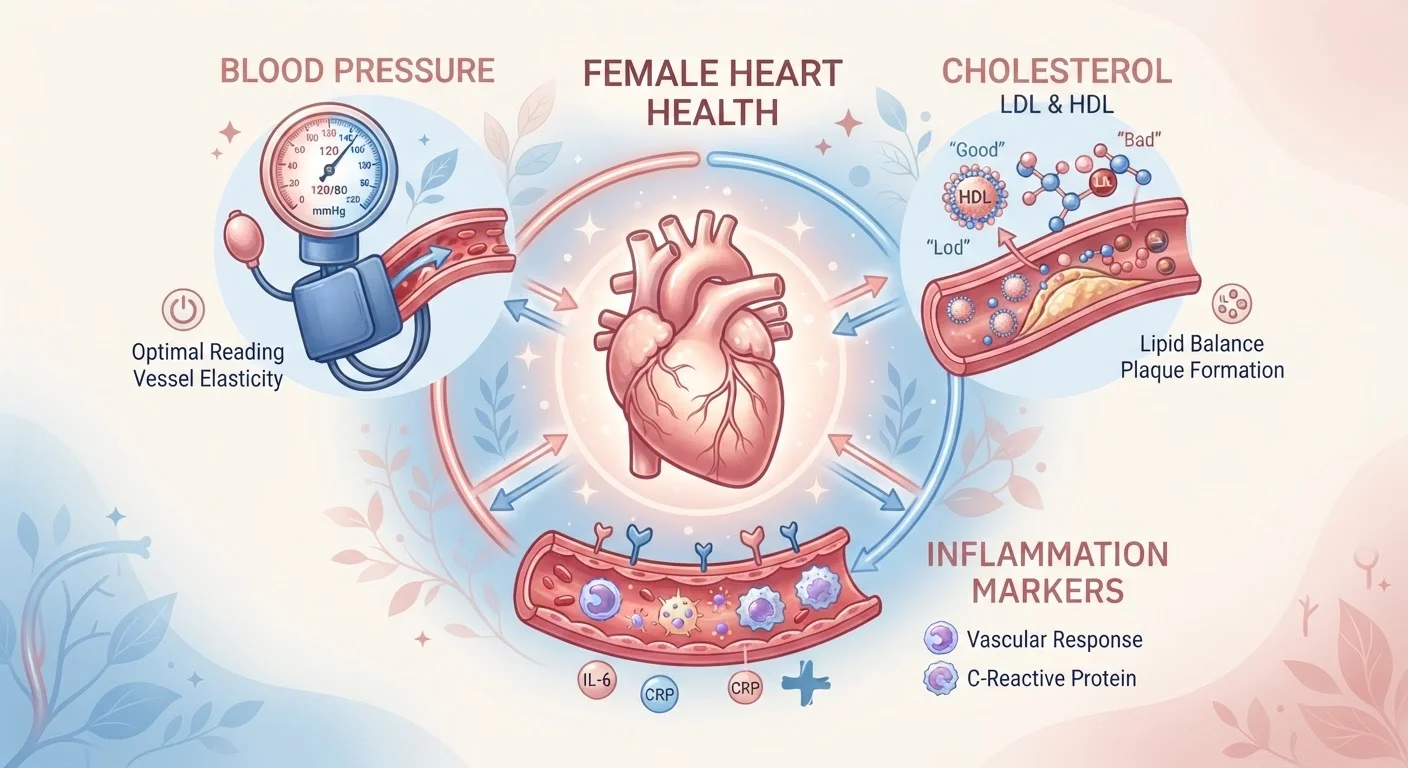
When most people think about heart health, they think about cholesterol. But cardiovascular risk in women is rarely driven by a single number. Blood pressure, cholesterol, and inflammation form a triad of interconnected forces — each capable of harming the heart and arteries on its own, and significantly more dangerous when they act together.
As explored in our article on how heart disease differs for women, women's cardiovascular picture has historically been underestimated. Part of that underestimation comes from focusing narrowly on cholesterol while missing what blood pressure and inflammation are doing at the same time. Understanding all three — how they work, how they interact, and why they matter especially after midlife — is a foundational step toward better heart health decisions.
44%
Women in the U.S. living with cardiovascular disease
According to the American Heart Association's Heart Disease and Stroke Statistics, nearly half of American women are affected by some form of cardiovascular disease.
~10 years
Later onset of heart disease in women vs. men on average
Research consistently shows women develop coronary artery disease roughly a decade later than men, often coinciding with menopausal hormonal shifts.
2x
Increased risk when hypertension and high cholesterol coexist
Having both high blood pressure and elevated LDL cholesterol together compounds cardiovascular risk significantly more than either factor alone, per cardiovascular medicine literature.
Blood Pressure: The Force That Wears Down Artery Walls
Blood pressure measures the force your blood exerts against artery walls with every heartbeat. When that force stays persistently high — a condition called hypertension — it gradually damages the inner lining of arteries, making them stiffer and more vulnerable to injury. Over years, this creates the conditions for plaque buildup, reduced blood flow, and ultimately heart attack or stroke.
For women specifically, blood pressure often rises after menopause. Estrogen has a protective effect on blood vessel flexibility, and as estrogen declines, arteries can become less responsive. This helps explain why women who maintained healthy blood pressure readings for decades may find their numbers shifting in their 50s and 60s. Hormonal changes across a woman's life affect more than mood and bone density — they reach directly into cardiovascular function.
Because hypertension causes no pain or obvious symptoms, regular monitoring is the only reliable detection method. Home blood pressure monitors can complement clinical readings, but interpretation should always involve a healthcare provider.
Cholesterol: Not Just a Number, But a Story
Cholesterol is often spoken about as a single villain, but the reality is more nuanced. LDL cholesterol (low-density lipoprotein) is associated with plaque buildup in artery walls, while HDL cholesterol (high-density lipoprotein) helps clear excess cholesterol from the bloodstream. Triglycerides — fats circulating in the blood — add another layer to the risk equation.
Women tend to have naturally higher HDL levels than men during reproductive years, which offers some protection. After menopause, however, LDL levels often rise and HDL may fall, shifting the balance in a less favorable direction. This is one reason cardiovascular health after 50 deserves dedicated attention rather than assumptions carried over from younger years.
A standard lipid panel measures all of these values. What matters is not any single number in isolation, but the full pattern — and how it interacts with blood pressure and inflammation.
Get a Full Lipid Panel, Not Just Total Cholesterol
Ask your healthcare provider for a complete lipid panel that includes LDL, HDL, and triglycerides — not just a total cholesterol number. Adding an hs-CRP test can provide additional context, especially if your risk picture seems unclear. A fuller picture allows for more personalized guidance.
Inflammation: The Overlooked Driver
Chronic low-grade inflammation is perhaps the least understood member of this triad. Unlike the acute inflammation that helps heal a cut, chronic inflammation is a persistent, low-level immune response that slowly damages blood vessels over time. It makes artery plaques unstable and more likely to rupture — turning a manageable buildup into a life-threatening event.
Research has found that elevated levels of high-sensitivity C-reactive protein (hs-CRP), a blood marker of inflammation, are associated with increased cardiovascular risk — and that this association may be particularly meaningful for women. Conditions common in women — including autoimmune diseases, chronic stress, poor sleep, and certain pregnancy complications — can all sustain elevated inflammation over years.
Common myths about women and heart disease often overlook inflammation entirely, focusing instead on the more familiar territory of cholesterol. Recognizing inflammation as a modifiable risk factor opens additional pathways for prevention — including diet patterns, sleep quality, and stress management strategies that a healthcare provider can help tailor to individual needs.
How the Three Factors Amplify Each Other
What makes this triad especially important is how its members interact. High blood pressure promotes arterial damage that makes LDL cholesterol more likely to embed in artery walls. Embedded LDL triggers an inflammatory response. That inflammation, in turn, makes existing plaques more dangerous and can raise blood pressure further. The three factors form a reinforcing cycle.
This interconnection also means that addressing one factor has ripple effects. Reducing sodium intake, for example, may lower blood pressure and also dampen inflammatory signals. Increasing physical activity can improve HDL cholesterol levels, reduce LDL, and lower systemic inflammation simultaneously. Understanding the overlap helps explain why lifestyle changes tend to have broader cardiovascular benefit than targeting a single number.
For women navigating health risks across life stages, awareness of this triad at each transition — particularly around perimenopause and beyond — can support more timely conversations with healthcare providers about screening, lifestyle adjustments, and, where appropriate, medication.
“Cardiovascular risk in women is multifactorial. Looking at blood pressure, lipids, and inflammatory markers together — rather than in isolation — gives clinicians and patients a much more accurate picture of what's actually happening in the arteries.”
— Dr. Nanette Wenger, Professor of Medicine (Cardiology), Emory University School of Medicine; pioneer in women's cardiovascular research
This article is for informational purposes only and is not a substitute for professional medical advice, diagnosis, or treatment. Always consult a qualified healthcare provider about your individual health concerns.