
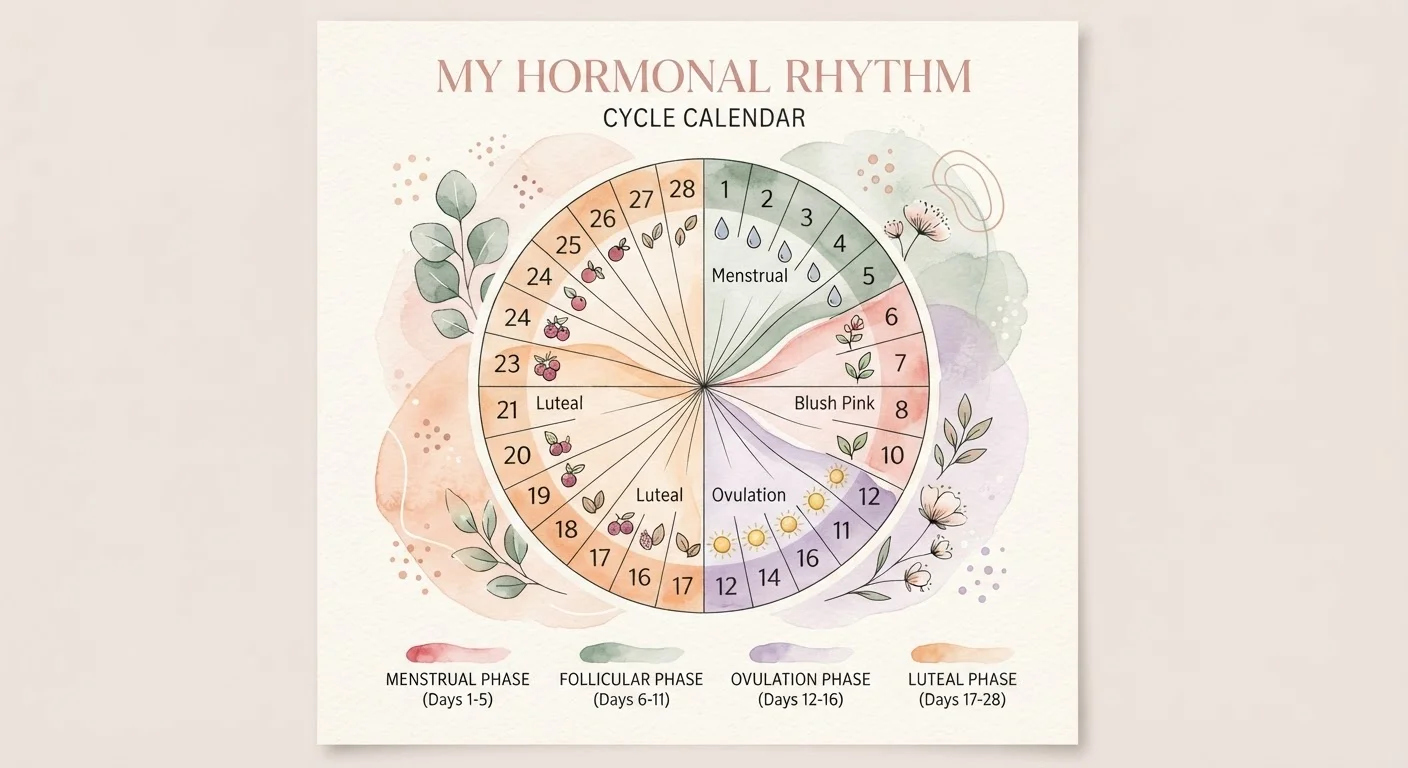
Phase 1: Menstrual Phase — The Reset
The cycle begins on day one of your period. During the menstrual phase, the uterine lining built up during the previous cycle sheds because no fertilized egg implanted. Estrogen and progesterone are both at their lowest levels, which can translate to fatigue, cramping, and lower energy for many women.
Prostaglandins — hormone-like compounds — trigger uterine contractions to help expel the lining. Higher prostaglandin levels are associated with more intense cramping. This phase typically lasts three to seven days. While it may feel like a difficult time physically, it marks the hormonal slate being cleared for a new cycle to begin.
Tracking Your Cycle Supports Self-Awareness
Keeping a simple log of your cycle length, energy levels, sleep, and symptoms over two to three months can help you identify personal patterns. This information is also valuable to share with your healthcare provider, particularly if you notice significant changes. Tracking apps or a paper diary both work well — the key is consistency.
Phase 2: Follicular Phase — Rising Energy and Focus
Overlapping with menstruation and continuing until ovulation, the follicular phase is driven by follicle-stimulating hormone (FSH). FSH signals the ovaries to develop several follicles, each containing an egg. As follicles grow, they produce increasing amounts of estrogen.
Rising estrogen stimulates the uterine lining to thicken and rebuild. Beyond the reproductive system, estrogen supports bone density, helps regulate cholesterol, and interacts with brain chemistry in ways that many women experience as improved mood, sharper mental clarity, and higher motivation. This is often the phase when women report feeling most energetic and socially engaged. For a broader look at how estrogen shapes long-term health, see our article on hormonal changes and cardiovascular risk.
21–35 days
Normal menstrual cycle length range
According to the American College of Obstetricians and Gynecologists, cycle length varies widely among individuals and can shift across life stages.
~90%
Women who experience some PMS symptoms
Research suggests the majority of women of reproductive age report at least some premenstrual symptoms, though severity varies considerably.
12–24 hrs
Window an egg remains viable after ovulation
This narrow window, cited in reproductive medicine literature, underscores why hormonal timing is central to fertility and cycle health.
Phase 3: Ovulatory Phase — The LH Surge
Around the cycle's midpoint — often day 14 in a 28-day cycle — a sharp spike in luteinizing hormone (LH) triggers the release of a mature egg from the dominant follicle. This is ovulation. The egg travels down the fallopian tube, remaining viable for approximately 12 to 24 hours.
Estrogen peaks just before the LH surge, and many women notice heightened energy, a slight rise in basal body temperature, and changes in cervical mucus during this window. The ovulatory phase is brief — typically 24 to 48 hours — but it represents the most fertile point in the cycle. Understanding it empowers women both for family planning and for simply recognizing a natural hormonal landmark. To understand how these hormonal signals affect mood and cognition, our article on mood shifts and hormones explores the science in depth.
Phase 4: Luteal Phase — Progesterone Takes the Lead
After ovulation, the empty follicle transforms into the corpus luteum, a temporary structure that secretes progesterone. Progesterone prepares the uterine lining for potential implantation of a fertilized egg and helps maintain early pregnancy if conception occurs.
If pregnancy does not occur, the corpus luteum breaks down after about 10 to 14 days, causing progesterone and estrogen to fall sharply. This hormonal decline is what triggers the next period. The drop in estrogen and progesterone during the late luteal phase is closely linked to premenstrual syndrome (PMS) — symptoms such as bloating, breast tenderness, irritability, and disrupted sleep. These are real physiological responses to hormonal change, not simply emotional reactions.
PMS vs. PMDD: Knowing the Difference
While many women experience mild premenstrual symptoms, a smaller proportion experience premenstrual dysphoric disorder (PMDD) — a more severe condition marked by significant mood disruption, depression, or anxiety in the luteal phase. PMDD is a recognized medical condition and responds to treatment. If premenstrual symptoms significantly affect your daily life, speaking with a healthcare provider is an important step.
As women age into their 30s and 40s, luteal phase patterns can shift, sometimes indicating early changes in ovarian function. For a longer-term perspective, explore our guide on hormonal health through the decades.
This article is for informational purposes only and is not a substitute for personalized medical advice. Always consult a qualified healthcare professional about your individual health concerns.