
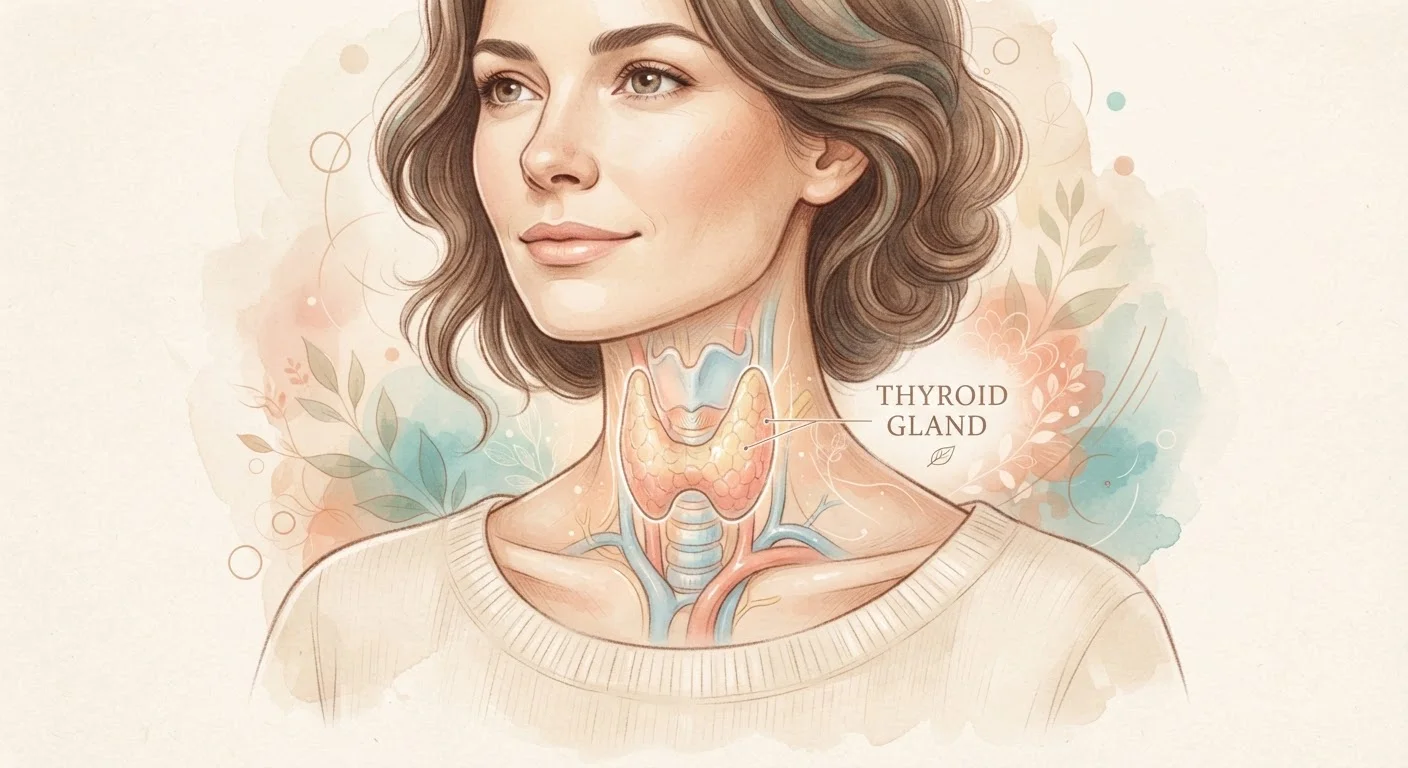
What the Thyroid Actually Does
The thyroid gland may be small, but its reach is remarkable. Sitting just below the Adam's apple, this butterfly-shaped gland produces hormones that act as regulators for nearly every cell in your body. They set the pace of your metabolism, help maintain a stable body temperature, support heart rhythm, and play a role in how efficiently your brain and muscles work.
For women specifically, thyroid hormones interact with estrogen and other reproductive hormones throughout life — influencing menstrual regularity, fertility, pregnancy outcomes, and the experience of perimenopause and beyond. To understand how thyroid changes fit into the broader hormonal picture across a woman's life, see our guide to hormonal health through the decades.
Thyroid and Menopause Often Overlap
Thyroid disorders and menopause share many of the same symptoms, including fatigue, mood changes, weight shifts, and sleep disruption. Because both tend to emerge around the same time in a woman's life, thyroid screening is often recommended as part of a thorough hormonal evaluation during perimenopause and beyond. If you are exploring hormone therapy options, a balanced look at hormone therapy for menopause may also be useful context for your conversations with your provider.
When the Thyroid Produces Too Little: Hypothyroidism
Hypothyroidism — an underactive thyroid — is the more common thyroid disorder in women, particularly after age 50. When the gland does not produce enough T3 and T4, the body's processes slow down. Symptoms develop gradually and can be easy to dismiss.
- Persistent fatigue and sluggishness
- Unexplained weight gain despite no change in diet
- Feeling cold more often than others around you
- Constipation, dry skin, and brittle hair or nails
- Low mood, memory fog, or difficulty concentrating
- Heavier or more irregular menstrual cycles
Because these symptoms overlap so significantly with menopause, thyroid dysfunction in midlife women is sometimes overlooked. If several of these patterns feel familiar, it is worth specifically asking your doctor about thyroid screening. You may also find it useful to read about signs that hormonal changes deserve a closer look.
Keep a Symptom Log Before Your Appointment
If you suspect a thyroid issue, jotting down your symptoms — their frequency, severity, and when they began — can make your medical appointment significantly more productive. A written record helps your provider see patterns that might otherwise be missed in a brief consultation. Note any family history of thyroid disease as well, since autoimmune thyroid conditions often run in families.
When the Thyroid Produces Too Much: Hyperthyroidism
An overactive thyroid floods the body with excess hormone, effectively pressing the accelerator on every bodily process. This condition — hyperthyroidism — produces a different set of symptoms that can be just as disruptive:
- Unexplained weight loss despite normal or increased appetite
- Racing or irregular heartbeat (palpitations)
- Trembling hands or anxiety and nervousness
- Increased sweating and heat sensitivity
- Difficulty sleeping
- More frequent bowel movements
Hyperthyroidism also carries implications for heart and bone health. Prolonged excess thyroid hormone can reduce bone density, raising the risk of osteoporosis, and may contribute to heart rhythm irregularities if left unmanaged.
1 in 8
Women affected by thyroid disorder in their lifetime
According to the American Thyroid Association, approximately one in eight women will develop a thyroid condition during her lifetime.
5–8×
Higher thyroid disorder risk in women vs. men
The American Thyroid Association reports women are five to eight times more likely than men to experience thyroid problems.
60%
People with thyroid disease who are undiagnosed
The American Thyroid Association estimates that up to 60 percent of people with thyroid disease are unaware of their condition.
Getting a Diagnosis and Advocating for Yourself
A standard TSH blood test is typically the first step in evaluating thyroid function. If TSH is abnormal, your provider may follow up with T3 and T4 measurements, and sometimes thyroid antibody tests to identify autoimmune causes such as Hashimoto's thyroiditis or Graves' disease.
Thyroid concerns are, unfortunately, among the conditions where symptoms are sometimes attributed to stress or normal aging before a workup is done. If you feel your concerns are not being heard, you are not alone — research and patient accounts consistently reflect this pattern. Our article on advocating for yourself when hormonal symptoms are dismissed offers practical guidance on making your voice heard at medical appointments.
“Thyroid disease is incredibly common and yet frequently goes unrecognized for years, particularly in women, because the symptoms are so nonspecific and can mimic so many other conditions.”
— American Thyroid Association, Leading professional and patient advocacy organization for thyroid health
This article is for informational purposes only and does not constitute medical advice. If you are concerned about thyroid symptoms or any aspect of your hormonal health, please speak with a qualified healthcare provider.