
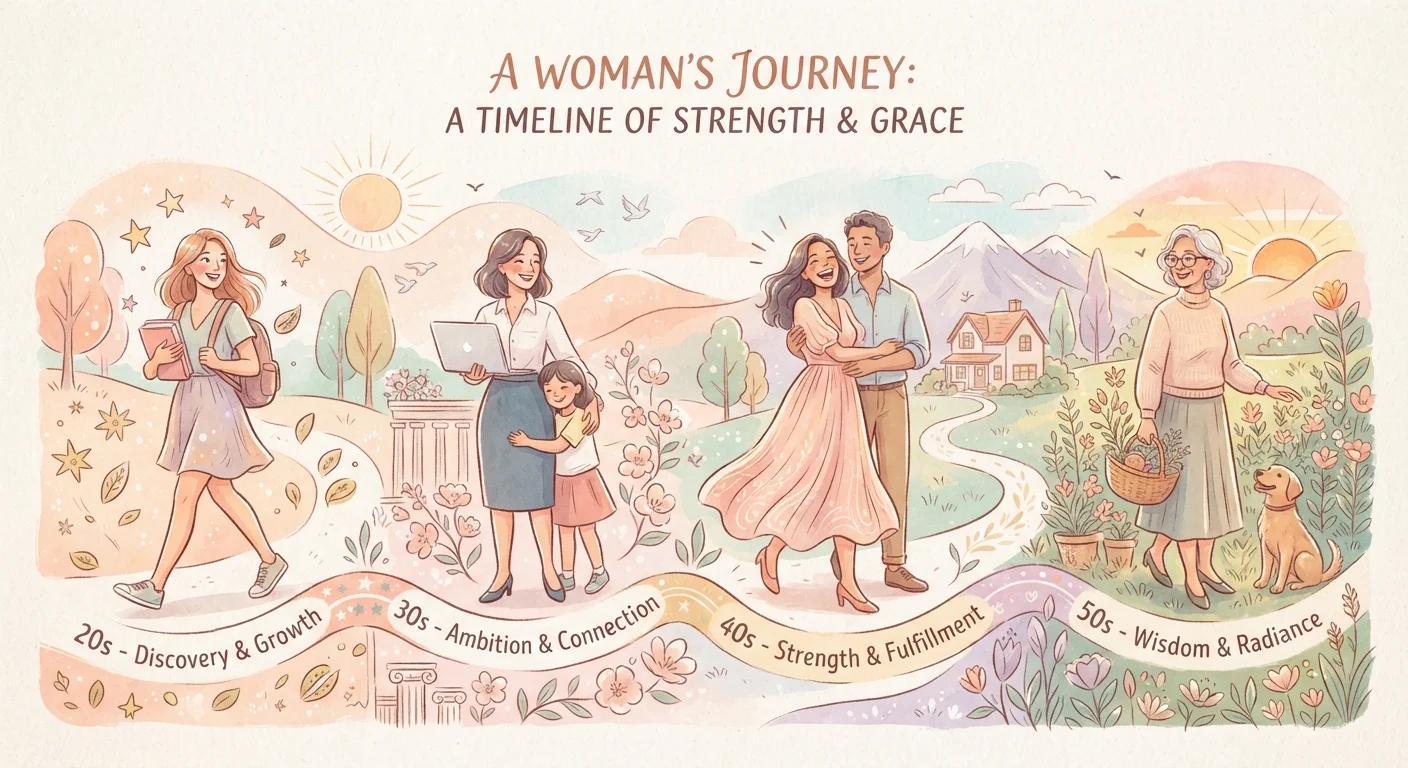
Your 20s: Establishing Baselines
The 20s are often when reproductive health patterns solidify. Menstrual cycles, which may have been irregular during adolescence, typically become more predictable. This is a good time to establish what is normal for your body — cycle length, flow, cramping — so that changes are easier to recognize later.
Conditions such as polycystic ovary syndrome (PCOS) and endometriosis are frequently diagnosed during this decade, often because symptoms become more noticeable as cycles regulate. Routine gynecological care, including Pap smears beginning at age 21 per U.S. clinical guidelines, forms the foundation of long-term reproductive wellness.
Contraceptive choices, STI screening, and preconception counseling are all appropriate topics to raise with a healthcare provider during this stage. See our article on evidence-supported reproductive wellness habits for lifestyle factors that may support menstrual regularity from an early age.
| Average age of first Pap smear (U.S.) | 21 years old (American College of Obstetricians and Gynecologists (ACOG)) |
| Average age of menopause (U.S.) | Around 51 years (National Institute on Aging) |
| Perimenopause duration | Typically 4–8 years (North American Menopause Society) |
| Cervical screening recommended through | Age 65 (most U.S. guidelines) (U.S. Preventive Services Task Force) |
| Age at which fertility decline accelerates | After 35 (ACOG Practice Bulletin) |
Your 30s and 40s: Fertility Shifts and Perimenopause Begins
Fertility gradually declines across the 30s, with a more pronounced shift after age 35. This is a biological reality, not a cause for alarm — many women conceive naturally in their late 30s and 40s — but it is worth discussing family planning goals openly with a provider.
The 40s often bring the earliest signs of perimenopause, the transitional phase leading up to menopause. Cycle irregularity, changes in flow, sleep disruption, and mood fluctuations are all common experiences. Understanding this context helps women distinguish normal hormonal transitions from symptoms that warrant further evaluation.
Pelvic floor changes can also begin during this period, particularly in women who have had vaginal deliveries. Our article on pelvic floor health and reproductive wellbeing explains what supports and weakens this important muscle group across the lifespan.
For a broader view of how hormones shift through these decades, the Women's Hormonal Health Roadmap offers useful context alongside this reproductive overview.
Perimenopause
The transitional phase before menopause during which hormone levels fluctuate and menstrual cycles become irregular. It can last several years and is distinct from menopause itself.
Menopause
Defined clinically as 12 consecutive months without a menstrual period. It marks the end of reproductive years and is accompanied by lasting hormonal changes.
Endometriosis
A condition in which tissue similar to the uterine lining grows outside the uterus, often causing pelvic pain and sometimes affecting fertility.
PCOS
Polycystic ovary syndrome — a hormonal condition that can cause irregular periods, elevated androgen levels, and small cysts on the ovaries. It is one of the most common reproductive conditions in women of reproductive age.
Pelvic Floor
A group of muscles and connective tissue at the base of the pelvis that supports the bladder, uterus, and bowel. Its strength and function can change with age, childbirth, and hormonal shifts.
Your 50s and Beyond: Menopause and the Post-Reproductive Years
Menopause — defined clinically as 12 consecutive months without a menstrual period — occurs on average around age 51 in the United States. With it comes a permanent shift in estrogen and progesterone levels that affects many body systems beyond reproduction, including bone density and cardiovascular health.
Vaginal dryness, urinary changes, and shifts in sexual comfort are common in this stage and are directly treatable. These topics deserve open conversation with a gynecologist or primary care provider; many women find relief through evidence-based options, though what works varies by individual and health history.
Importantly, some health needs remain consistent throughout life: regular cervical screening (up to age 65 per most U.S. guidelines), breast health monitoring, and STI awareness do not disappear after menopause. Staying engaged with preventive care remains essential.
The physical transitions of the 50s also intersect with nutrition. Our guide on how nutritional needs shift as you age explores how to support your body through these changes at the table. For a deeper look at cardiovascular and bone risks that intensify post-menopause, see heart and bone health risks across women's life stages.
51
Average age of menopause in the U.S.
According to the National Institute on Aging, the average American woman reaches menopause around age 51, though the range of 45–55 is considered typical.
~10%
Women affected by endometriosis
The World Health Organization estimates that roughly 10% of women of reproductive age worldwide are affected by endometriosis.
4–8 years
Typical length of perimenopause
The North American Menopause Society notes that perimenopause commonly lasts between four and eight years before the final menstrual period.
This article is for general informational purposes only and does not constitute medical advice. Always consult a qualified healthcare provider for guidance tailored to your personal health situation.