
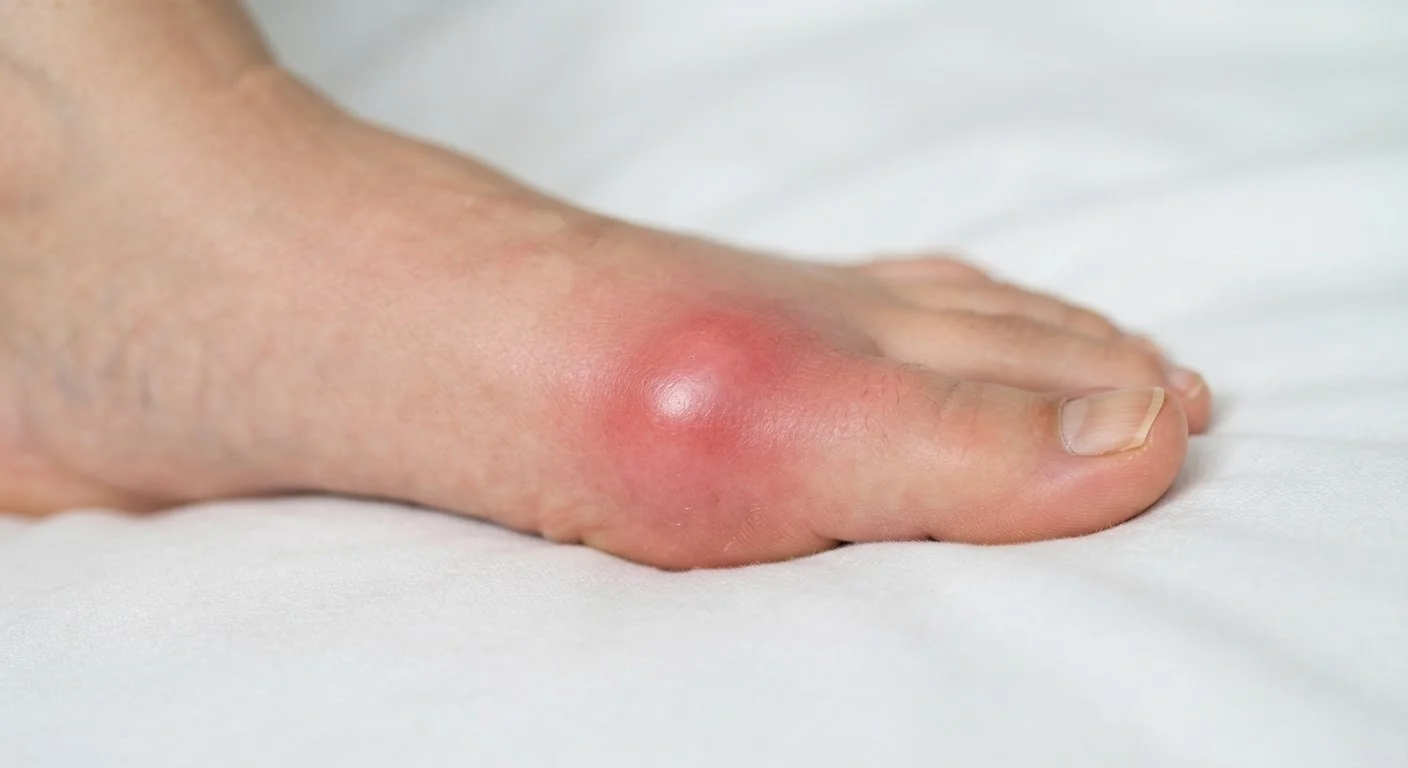
What Happens Inside a Gouty Joint
Gout begins not in the joint itself, but in the bloodstream. The body produces uric acid as it breaks down purines — natural substances found in many foods and also produced by the body's own cells. Normally, uric acid dissolves in the blood, passes through the kidneys, and exits the body in urine. Problems arise when the body produces too much uric acid or the kidneys excrete too little, allowing levels to build up.
Over time, excess uric acid can form monosodium urate crystals — rigid, microscopic structures shaped like tiny needles. These crystals tend to settle in cooler parts of the body, which is one reason the big toe is so frequently targeted. When the immune system detects these foreign crystals, it mounts an inflammatory response: white blood cells rush in, and the joint becomes intensely swollen, red, warm, and exquisitely painful.
This response is a gout flare, and it is one of the most painful experiences in all of rheumatology. The inflammation is real and acute — not imagined or exaggerated.
~8.3 million
Americans estimated to have gout
According to estimates cited by the American College of Rheumatology, gout is one of the most common inflammatory arthritis conditions in the United States.
~4x
Higher gout prevalence in men vs. women
Men are significantly more likely to develop gout than premenopausal women, though the gap narrows after menopause, according to rheumatology literature.
6.8 mg/dL
Serum uric acid threshold often cited in clinical guidance
Many clinical guidelines reference a target of keeping uric acid levels below this threshold to reduce the risk of crystal formation and gout flares.
Common Triggers and Risk Factors
Gout does not strike randomly. Several factors can push uric acid levels high enough to trigger crystal formation — or set off a flare in someone who already has crystals present.
- Dietary choices: Organ meats, shellfish, red meat, and beverages sweetened with fructose or alcohol — especially beer — raise uric acid levels.
- Medications: Certain diuretics (often called water pills) used for high blood pressure can impair the kidneys' ability to clear uric acid.
- Kidney function: Because the kidneys filter uric acid from the blood, reduced kidney function often leads to higher uric acid levels.
- Dehydration: Low fluid intake concentrates uric acid in the blood, increasing the likelihood of crystal formation.
- Genetics: A family history of gout significantly raises individual risk.
- Other health conditions: Obesity, high blood pressure, and metabolic syndrome are all associated with elevated gout risk.
It is worth noting that gout shares some surface similarities with other crystal-related joint conditions. If you are uncertain about your diagnosis, our comparison of gout and pseudogout explains how clinicians tell the two apart.
Stay Well Hydrated to Support Uric Acid Excretion
Adequate fluid intake — particularly water — helps the kidneys filter and excrete uric acid more efficiently. Staying hydrated is a simple, evidence-supported habit that may help reduce uric acid concentration in the blood. Speak with your doctor about appropriate fluid intake goals for your individual health situation, especially if you have kidney or heart conditions.
What to Expect During and Between Flares
A gout flare typically arrives without warning — often at night. The affected joint becomes intensely painful within hours, and even the weight of a bedsheet may feel unbearable. Redness, swelling, and warmth are visible signs. Flares often resolve on their own within one to two weeks, but recurrence is common without treatment.
Between flares, many people have no symptoms at all — a period called intercritical gout. However, uric acid crystals may still be silently accumulating in the joint. Over years of repeated flares and elevated uric acid, a condition called tophaceous gout can develop, in which large deposits of urate crystals (called tophi) form visible lumps under the skin around joints. Chronic joint damage may follow.
Gout Is Not the Same as Infection
A severe gout flare can closely mimic a joint infection (septic arthritis) — both cause redness, warmth, and intense pain. A healthcare provider may need to analyze fluid from the joint to distinguish between the two. If you experience sudden, severe joint pain with fever, seek prompt medical evaluation rather than assuming it is a gout flare.
Because gout is a form of inflammatory arthritis with a clear biochemical cause, it is usually highly responsive to treatment when managed consistently. This distinguishes it from some other arthritis types — for context, see how gout compares in our overview of major arthritis types.
This article is for general informational purposes only and does not constitute medical advice. Always consult a qualified healthcare provider for diagnosis, treatment, or any concerns about your joint health.