
Why Temperature Matters for Joint Discomfort
For older adults managing arthritis or general joint discomfort, heat and cold are among the most accessible comfort measures available. Both have been used in clinical and home settings for decades, and both have legitimate, evidence-informed roles. The challenge is knowing which to reach for and when.
Joint pain is not a single experience. Sometimes it stems from muscle tightness and reduced circulation — the deep morning stiffness many people with osteoarthritis recognise. Other times it reflects active tissue inflammation after a flare or overuse. These two states call for opposite responses. Applying heat to a swollen, acutely inflamed joint can intensify discomfort; applying cold to a stiff, already-constricted area may deepen tightness rather than relieve it.
Understanding the basic physiology behind each approach helps you make smarter decisions day to day, as part of the broader joint pain management strategies that support long-term comfort.
Heat Therapy: How It Works and When to Use It
Heat increases blood flow to the treated area, relaxes surrounding muscles, and makes connective tissue more pliable. For joints that feel stiff and rigid — particularly after rest, in cool weather, or first thing in the morning — gentle warmth can improve mobility and ease discomfort before activity begins.
Common heat sources include warm (not hot) showers or baths, electric heating pads set to a low or medium setting, microwaveable grain bags, and paraffin wax baths for the hands. Moist heat, such as a damp warm towel, tends to penetrate more evenly than dry heat.
Try Heat Before Morning Movement
If joint stiffness is most pronounced after waking, applying gentle warmth for 10–15 minutes before getting up or beginning a stretching routine may help improve initial mobility. A warm shower or a low-setting heating pad can serve this purpose well. Allow the area to return to normal temperature before applying any activity-based load.
Heat is generally most helpful for chronic, non-inflammatory stiffness — the kind associated with osteoarthritis or muscle guarding. It is typically less appropriate during an active flare of inflammatory arthritis (such as rheumatoid arthritis), when the joint is already warm, red, or swollen.
For those who enjoy water-based activity, the warmth of an aquatic environment offers a related benefit — see how warm water exercise supports joint health for more on that approach.
Cold Therapy: How It Works and When to Use It
Cold narrows blood vessels (vasoconstriction), which can reduce swelling and slow the local inflammatory response. It also has a mild numbing effect on nerve endings, which is why a cold pack can temporarily dull acute pain after a joint strain or post-exercise soreness.
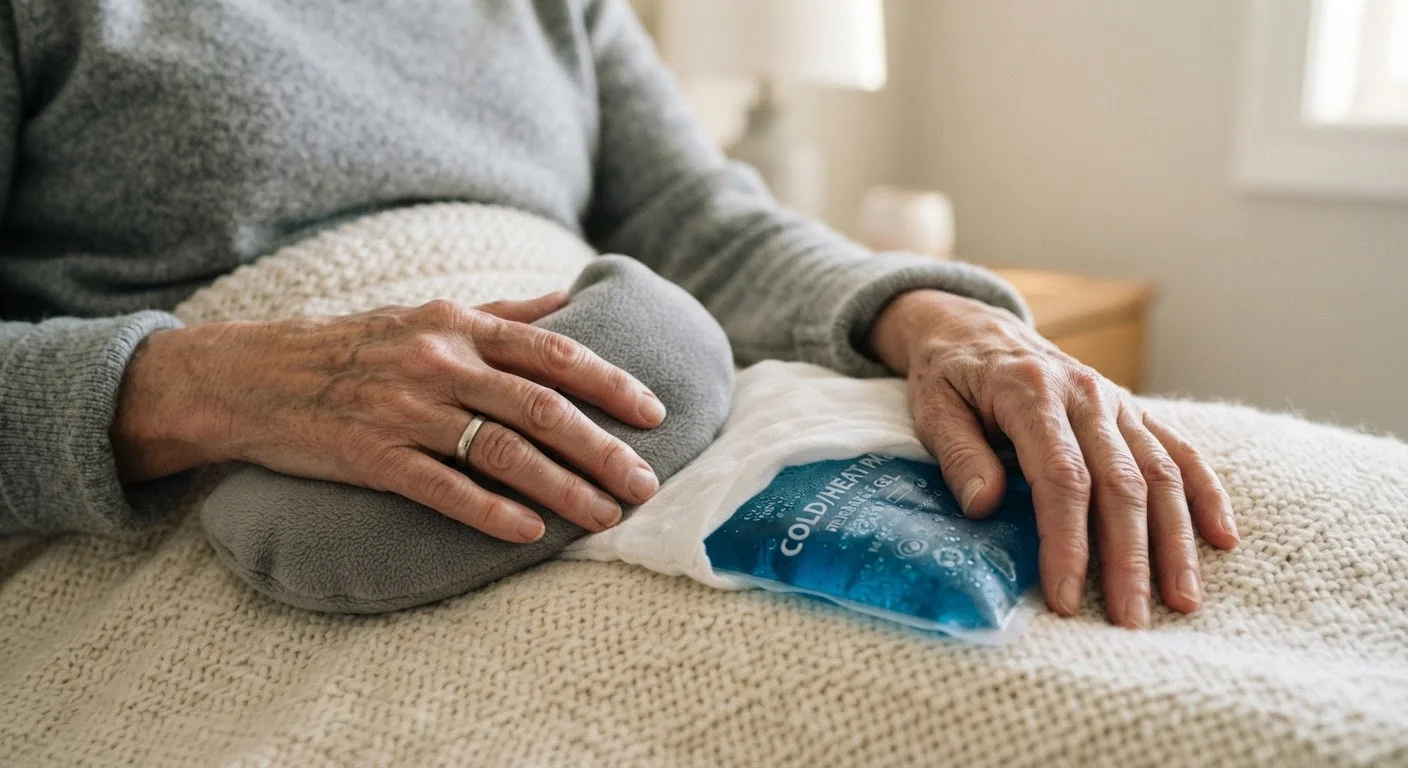
Suitable cold sources include gel ice packs (always wrapped in a thin cloth to protect skin), bags of frozen vegetables, or cold-water compresses. Application times are generally kept short — typically no more than 15 to 20 minutes at a time — to avoid skin damage.
| Heat Therapy | Cold Therapy | |
|---|---|---|
| Primary mechanism | Increases blood flow, relaxes muscles | Reduces blood flow, limits swelling |
| Best timing | Before activity, for morning stiffness | After activity, during acute flare |
| Ideal symptom type | Chronic stiffness, muscle tightness | Acute swelling, post-exertion soreness |
| Common sources | Heating pad, warm shower, grain bag | Gel ice pack, cold compress, frozen veg |
| Typical session length | 15–20 minutes | 10–15 minutes |
| Main caution | Avoid on hot, swollen joints | Avoid with circulation problems |
Cold is particularly useful in the hours following unusual joint activity, a minor injury, or during an acute inflammatory flare where the joint feels hot or noticeably swollen. It is not recommended for people with conditions that affect circulation or cold sensitivity, such as Raynaud's phenomenon, without first consulting a clinician.
Safety Considerations and Practical Guidance
Both therapies carry straightforward risks if used carelessly. Burns from heat sources and ice burns or frostbite from cold packs are entirely preventable with basic precautions: always use a barrier (cloth or towel) between the source and skin, check skin regularly during application, and limit sessions to recommended time windows.
People with diabetes, reduced skin sensation, or circulatory conditions should be especially cautious and should discuss both approaches with their healthcare provider before regular use. The same applies to anyone managing a complex inflammatory condition.
Neither heat nor cold substitutes for addressing the underlying condition. A good daily routine — including gentle movement to support stiff joints and attention to diet as explored in our look at inflammatory foods and joint pain — forms a more complete foundation for joint health.
When to Skip Self-Treatment Entirely
If a joint is severely swollen, intensely painful, or accompanied by fever or redness spreading beyond the joint, do not self-treat with heat or cold — seek prompt medical evaluation. These signs may indicate an infection (septic arthritis) or a significant flare requiring clinical management, not a home remedy.
This article is for informational purposes only and does not constitute medical advice. Always consult a qualified healthcare professional before beginning any new pain-management approach, particularly if you have a diagnosed joint condition or other chronic health concerns.