
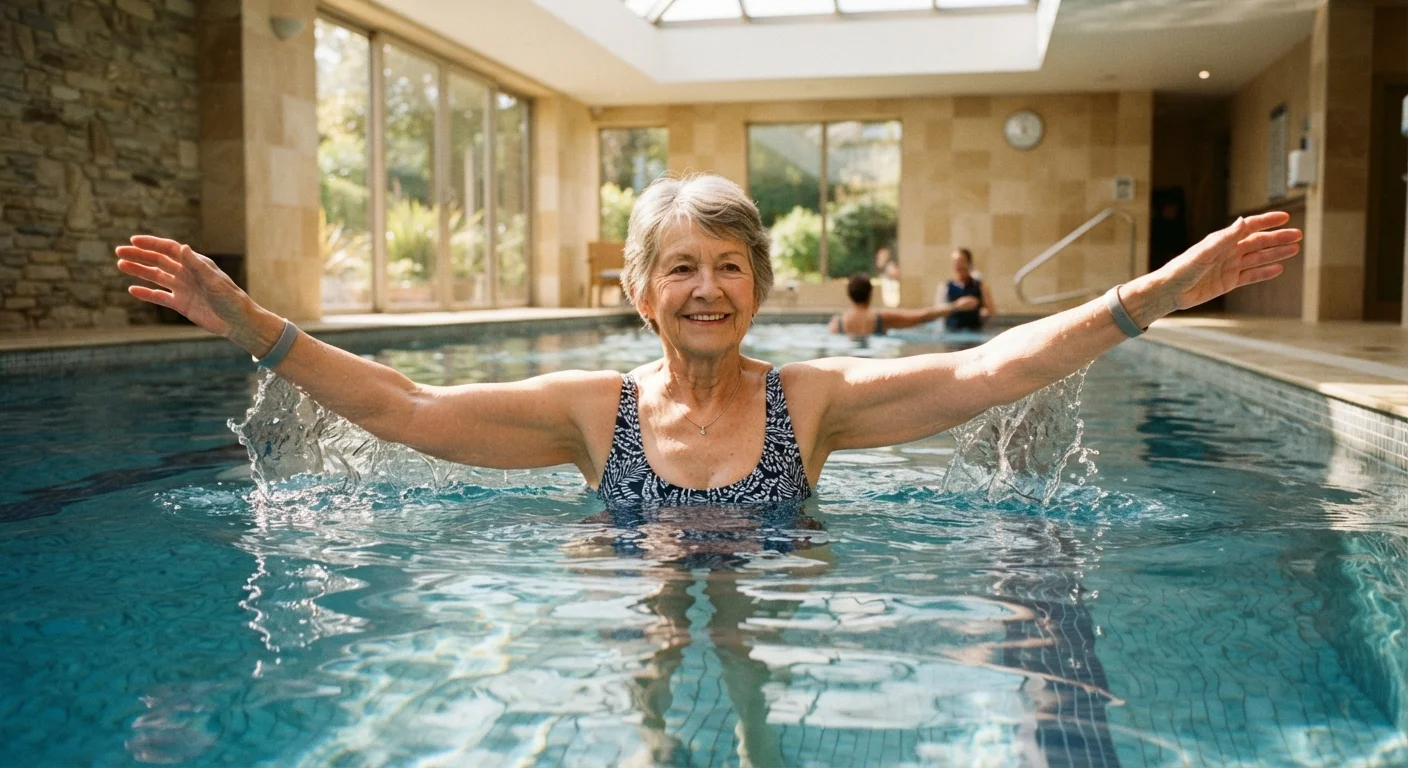
Why Water Changes Everything for Aching Joints
For older adults managing chronic joint discomfort, the prospect of exercise can feel daunting. Land-based movement — walking, climbing stairs, even standing for extended periods — places direct compressive force on joints that are already inflamed or worn. Aquatic exercise works on an entirely different mechanical principle, and understanding that principle helps explain why so many people with arthritis report that moving in water simply feels easier.
The key physical property is buoyancy. When you enter a pool and your body becomes partially or fully submerged, water exerts an upward force that counters gravity. Submerged to chest depth, a person bears roughly 25–35% of their normal body weight through their lower-limb joints. Submerged to the neck, that figure drops further still. The joints of the knees, hips, ankles, and spine — which bear the full burden of body weight on land — are given significant mechanical relief.
This matters enormously for people with osteoarthritis (the most common form of arthritis in older adults), where cartilage that normally cushions joint surfaces has thinned or worn away. Reducing the compressive load on these surfaces during exercise can allow a wider range of motion with significantly less pain. That expanded movement, in turn, helps maintain joint flexibility and surrounding muscle strength — both of which are critical for long-term joint health. You can read more about the evidence supporting movement for joint conditions in our piece on staying active with arthritis.
The Added Role of Warmth
Buoyancy is only part of what makes therapeutic pool exercise distinctive. The temperature of the water plays an equally important role, particularly for people whose joints feel stiffest in the morning or after periods of rest.
Warm water — typically between 83°F and 90°F in therapeutic settings — promotes muscle relaxation and increases circulation to soft tissues around the joint. Warmth can reduce the perception of pain and help muscles become more pliable before movement begins. This is closely related to the principles behind heat therapy for joint pain more broadly; the mechanism is similar but water distributes warmth evenly across the body rather than in one localized area. For a closer look at how heat and cold each affect joint tissue, see our article on heat therapy versus cold therapy.
The combined effect of warmth and reduced joint loading makes aquatic exercise particularly valuable at the start of a movement program — a period when many people find land-based exercise too uncomfortable to sustain.
Before Your First Aquatic Session
Speak with your doctor or physiotherapist before joining an aquatic exercise program, especially if you have cardiovascular conditions, skin infections, or poorly controlled blood pressure. A brief medical review can help identify whether a therapeutic pool setting or a standard community pool class is most appropriate for your situation.
What the Research Suggests
A body of clinical research supports the use of aquatic exercise for older adults with joint conditions, particularly osteoarthritis of the knee and hip. Systematic reviews and meta-analyses — studies that pool findings from multiple trials — have consistently found that water-based exercise programs are associated with reductions in self-reported pain and improvements in physical function compared to no exercise.
Up to 90%
Reduction in joint load when submerged to the neck
Biomechanical research on buoyancy demonstrates that neck-depth submersion can reduce effective body weight on lower-limb joints by up to 90% compared to standing on land.
83°F–90°F
Recommended therapeutic pool temperature range
Clinical guidelines for aquatic therapy typically specify this temperature range to promote muscle relaxation and circulation without risking overheating.
Consistent improvement
Pain and function outcomes across multiple trials
Multiple systematic reviews, including those published in rheumatology and physical therapy journals, have found aquatic exercise associated with reduced pain and improved physical function in osteoarthritis patients.
Importantly, research also suggests that aquatic exercise improves balance, which is a meaningful concern for older adults at risk of falls. The resistance water provides when moving through it engages stabilizing muscles throughout the body, strengthening them without the impact forces that land exercise generates.
That said, researchers also note that the long-term benefits of aquatic exercise appear to depend on continued participation. Like any exercise modality, effects tend to diminish when a program is discontinued. Working with a physiotherapist to establish a sustainable routine — whether pool-based, home-based, or a combination — is often the most effective approach. Our article on physiotherapy versus home exercise programs explores what each setting offers.
“Hydrotherapy reduces the mechanical demands of exercise while preserving its rehabilitative benefits — making it one of the most accessible entry points for patients who find land-based movement too painful to sustain consistently.”
— American College of Rheumatology, Guidance on non-pharmacological management of osteoarthritis
Practical Considerations and Getting Started
If you're considering aquatic exercise as part of your joint health routine, there are a few practical factors worth knowing before you begin.
- Pool temperature matters. Standard lap pools are often too cool to provide the muscle-relaxation benefits associated with therapeutic hydrotherapy. Look for community pools, YMCA facilities, or hospital-affiliated rehabilitation centers that maintain warmer water specifically for therapeutic programs.
- Structured programs outperform solo swimming. Aquatic exercise therapy typically involves specific exercises — walking in water, leg lifts, gentle resistance movements — rather than freestyle swimming. Many facilities offer instructor-led classes designed for older adults or those with joint conditions.
- Transition carefully. Moving from water to land can involve a brief period of readjustment as your joints re-experience full weight-bearing. Take your time exiting the pool and avoid rushing through changing areas.
Aquatic exercise integrates well with a broader set of joint health habits, including dietary choices, sleep, and land-based gentle movement. For complementary low-impact routines you can do outside the pool, see our guide to gentle movement routines for stiff joints.
This article is for general informational purposes only and does not constitute medical advice. Always consult a qualified healthcare professional before starting a new exercise program, particularly if you have a diagnosed joint condition, cardiovascular concerns, or other chronic health issues.