
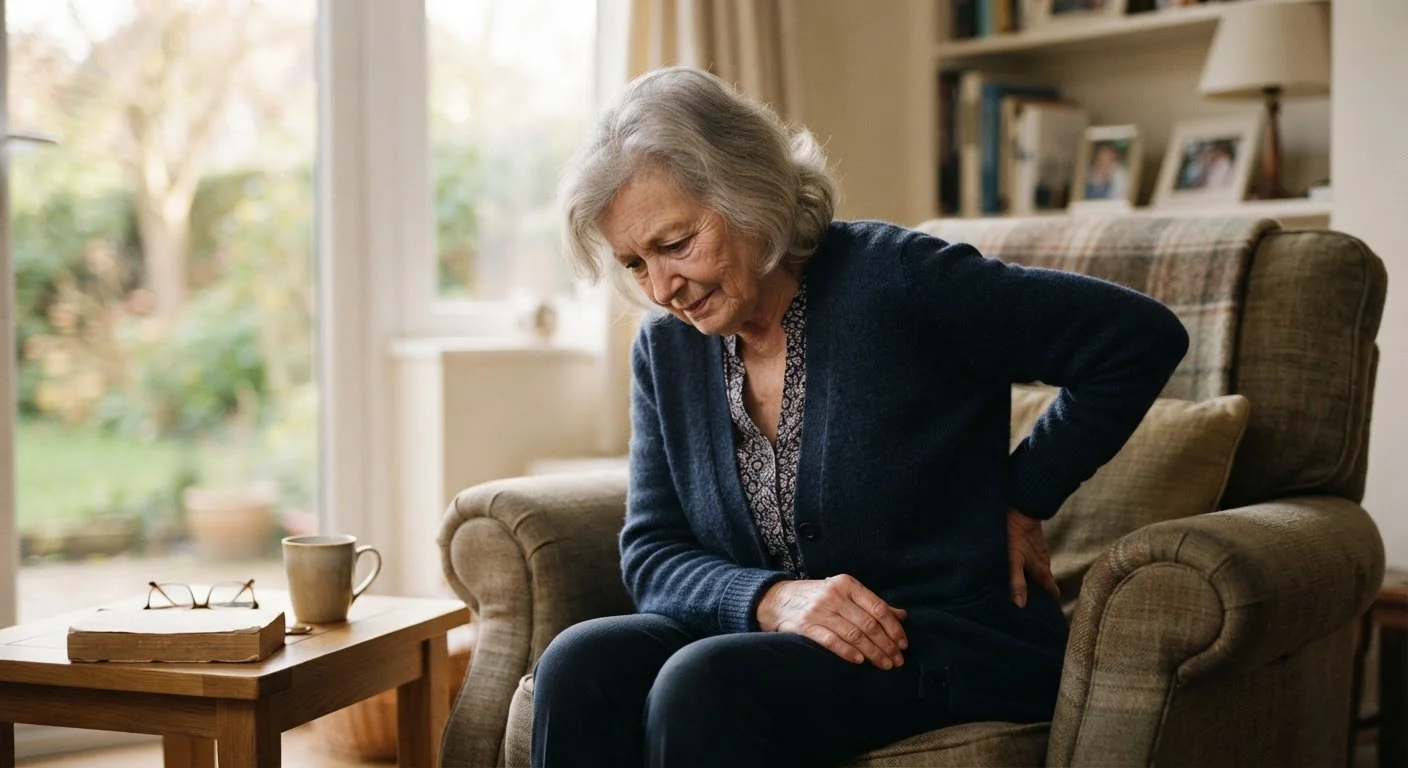
Why Everyday Habits Matter More Than You Might Think
Most people managing joint pain focus primarily on medication or formal treatment — and both absolutely matter. But what happens in the hours between appointments often shapes how pain feels day to day just as much. Certain routine behaviors, repeated consistently over weeks and months, can quietly make joints harder to manage without ever feeling dramatic enough to notice.
To understand why joints respond so strongly to habitual patterns, it helps to know what's actually happening inside your joints as they age. Cartilage, synovial fluid, and the surrounding muscles all respond to how you use — or don't use — them throughout the day. That means small, consistent changes to your habits can genuinely shift how well you manage pain over time.
The mistakes below are not about blame. They are extremely common, often well-intentioned, and entirely correctable once you know what to look for.
Resting completely when pain flares, avoiding all movement.
Why it happens: Pain feels like a warning to stop, so complete rest seems like the safest and most logical response during a difficult period.
Ignoring sleep disruption as a factor in joint pain.
Why it happens: Sleep problems and joint pain tend to be treated as separate issues, so the connection between them is easy to overlook.
Pushing through high-pain activity without adjusting pace or intensity.
Why it happens: A 'no pain, no gain' mindset is deeply ingrained in many older adults, who were often taught to push through discomfort rather than modify activity.
Sitting or standing in the same position for long stretches.
Why it happens: Prolonged postures feel comfortable or simply go unnoticed when focus is on a task — watching television, driving, or working at a desk.
Underestimating how body weight affects joint load.
Why it happens: Weight changes feel gradual, and the mechanical impact on joints is invisible — making it easy to discount as a significant contributor to pain.
Dismissing morning stiffness as inevitable and not worth addressing.
Why it happens: Stiffness after waking is so common among older adults that it is frequently normalized — accepted as simply part of getting older rather than something manageable.
Building Better Daily Patterns
Correcting these habits doesn't require overhauling your life. It tends to work best when changes are introduced gradually and tailored to how your joints actually behave — not according to a generic schedule. The joint-friendly movement guide offers a practical framework for weaving low-impact activity into your day without adding pressure.
~4x
Knee joint load per pound of body weight
Biomechanical research indicates that knee joints experience roughly four times a person's body weight as load during normal walking, amplifying the effect of even small weight changes.
50–80%
Adults with arthritis reporting sleep disturbance
Studies published in rheumatology journals suggest that between half and four-fifths of people with arthritis report significant sleep disruption, highlighting how closely pain and rest are intertwined.
One tool that tends to be underused is systematic self-monitoring. Tracking your joint pain — including what you ate, how you slept, and how active you were — can reveal patterns that aren't obvious in the moment. Many people discover that a trigger they'd attributed to the weather was actually linked to a disrupted night's sleep or an unusually sedentary day.
It's also worth acknowledging that pain perception isn't purely mechanical. Stress and mental state influence how pain signals are processed, which means habits that support psychological wellbeing — consistent routines, adequate rest, social connection — contribute more to joint comfort than is often credited.
When to Seek Professional Guidance
If joint pain is sudden, severe, accompanied by swelling, redness, or warmth, or if it is worsening despite habit changes, contact a healthcare provider promptly. These symptoms may indicate conditions that require clinical assessment beyond lifestyle adjustments. Do not attempt to self-diagnose or delay evaluation for significant new symptoms.
This article provides general health information for educational purposes only and is not a substitute for professional medical advice, diagnosis, or treatment. Always consult a qualified healthcare provider regarding any joint symptoms, pain management strategies, or changes to your activity routine.