
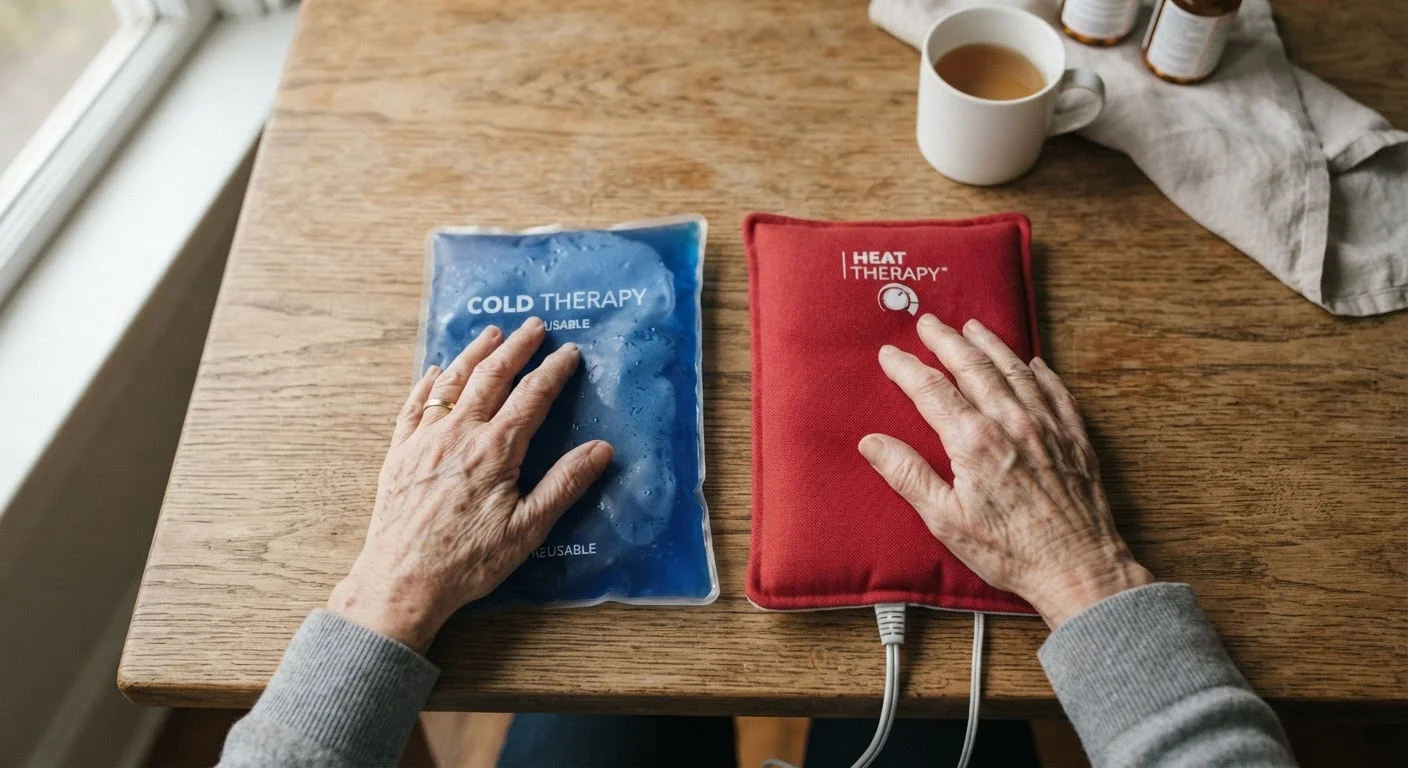
How Heat and Cold Work on Joints
Heat therapy and cold therapy — together sometimes called thermotherapy and cryotherapy — are two of the oldest and most accessible tools for managing joint discomfort. Despite being simple, their mechanisms of action are quite different, which is why choosing the right one for the right situation matters.
Heat works by dilating (widening) blood vessels near the skin and underlying tissues. This increases local circulation, delivers more oxygen to muscles, and helps tight or spasming muscles relax. Warmth also raises the pain threshold slightly by stimulating sensory nerve fibres that can temporarily override pain signals — a mechanism sometimes called the gate control effect.
Cold works in the opposite direction. It causes blood vessels to constrict (narrow), which limits fluid accumulation in tissues. This is why cold is effective at reducing swelling after an acute injury or inflammatory flare. Cold also slows nerve conduction velocity, numbing the area and providing short-term pain relief.
Understanding this distinction — heat for chronic tightness, cold for acute inflammation — is the foundation for using both therapies appropriately. For a broader look at non-invasive approaches, see our guide to physiotherapy vs. home exercise programs.
| Criterion | Heat Therapy | Cold Therapy |
|---|---|---|
| Primary effect | Relaxes muscles, improves circulation | Reduces swelling, numbs pain |
| Best timing | Chronic stiffness, before activity | Acute flare-up, after activity |
| Ideal for | Osteoarthritis, muscle tension | Swollen joints, acute injury |
| Application time | 15–20 minutes | 10–15 minutes |
| Avoid when | Joint is actively swollen or inflamed | Poor circulation or Raynaud's present |
| Common forms | Heating pads, warm towels, heat packs | Ice packs, frozen gel packs, cold towels |
When to Choose Each: Practical Guidance
Selecting the right therapy often comes down to the nature of your discomfort at that specific moment — not just your diagnosis.
Use Heat When:
- Your joints feel stiff but not visibly swollen, especially in the morning or after long periods of inactivity.
- You want to prepare muscles and connective tissue before gentle exercise or stretching.
- You have chronic osteoarthritis with dull, persistent aching rather than sharp, acute pain.
- Muscle tension around a joint is contributing to your discomfort.
Use Cold When:
- A joint is noticeably swollen, red, or warm to the touch — signs of active inflammation.
- You've recently overexerted a joint during activity and it aches afterward.
- You're experiencing a gout flare or rheumatoid arthritis flare (always confirm with your doctor first).
- An acute injury to a joint occurred within the past 48–72 hours.
A Note on Rheumatoid Arthritis Flares
For people with rheumatoid arthritis, cold therapy is often preferred during active flares because heat can intensify inflammation and discomfort. However, between flares, gentle heat may help ease residual stiffness. Because RA management is complex and individual, it is important to get personalised guidance from a rheumatologist or physiotherapist about which modality is appropriate for your specific situation.
Diet also plays a role in how joints feel day to day. Our article on inflammatory foods and joint pain separates evidence from common claims.
Safe Application: Time, Temperature, and Precautions
Both therapies carry real risks if misused, particularly for older adults whose skin may be more fragile or whose circulation may be reduced.
15–20 min
Recommended maximum heat session length
Rheumatology and physiotherapy guidelines generally recommend limiting heat application to 15–20 minutes per session to avoid skin injury.
10–15 min
Recommended maximum cold session length
Clinical guidance typically advises limiting ice or cold pack application to 10–15 minutes to reduce the risk of frostbite or tissue damage.
Heat Therapy Safety Tips
- Apply for 15–20 minutes at a time; longer sessions raise the risk of burns.
- Use a heating pad on a low or medium setting — never fall asleep with one in place.
- Always place a thin towel or cloth between the heat source and skin.
- Avoid heat over areas with reduced sensation (for example, due to diabetic neuropathy) without medical guidance.
Cold Therapy Safety Tips
- Limit sessions to 10–15 minutes to prevent frostbite or skin damage.
- Wrap ice packs or frozen gel packs in a cloth — never apply directly to bare skin.
- Do not use cold therapy over open wounds, areas of poor circulation, or if you have Raynaud's disease.
Some people find that alternating heat and cold — sometimes called contrast therapy — is helpful for certain conditions. However, this approach should be discussed with a physiotherapist or physician before trying it, as it is not appropriate for all joint conditions. For movement-based relief options, warm water exercise is another well-supported complement to consider.
This article is for general informational purposes only and does not constitute medical advice. Always consult a qualified healthcare professional before beginning or changing any treatment or self-care routine for joint pain.