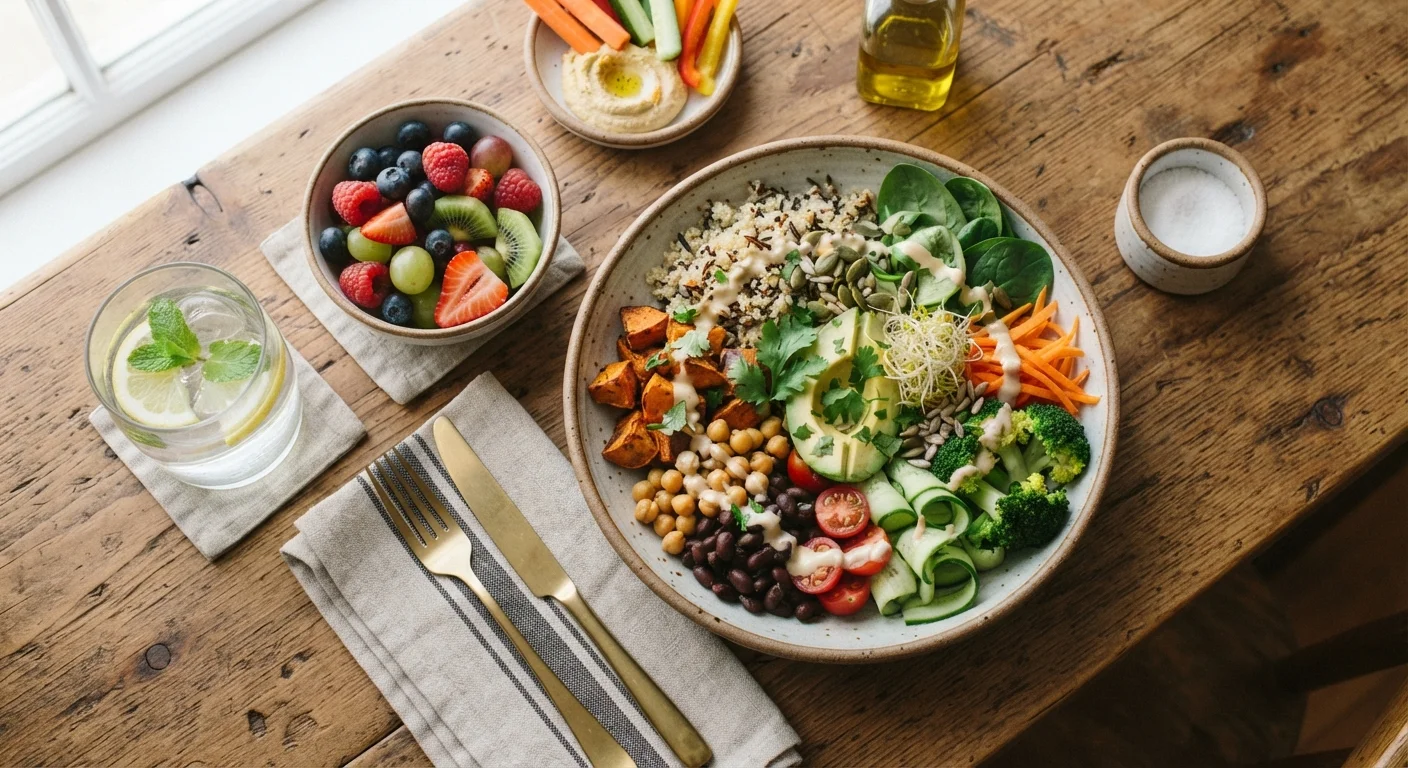
Why Food Patterns Matter More Than Individual Foods
No single food causes or prevents cancer. What the evidence consistently points to is dietary patterns over time — the overall mix of foods you eat across weeks, months, and years. Large-scale research, including studies cited by the National Cancer Institute and the World Cancer Research Fund, consistently finds that diets high in plant foods and low in processed meats and alcohol are associated with reduced cancer risk at the population level.
This distinction matters practically: it means you do not need to find a magic superfood, nor do you need to achieve a perfect diet. What you need is a gradual, consistent shift in the right direction. Our in-depth look at diet and lifetime cancer risk explores the underlying evidence in greater detail.
It is also worth noting that diet is one piece of a larger picture. Smoking, physical inactivity, excess body weight, and alcohol consumption all independently influence cancer risk. Diet interacts with all of these factors. For readers thinking about a broader approach, starting a cancer prevention routine after 60 provides a grounded framework.
This Is General Information, Not Medical Advice
The guidance in this article is based on population-level research and is intended for general educational purposes only. It does not constitute personal medical advice, a diagnosis, or a treatment plan. If you have a personal or family history of cancer, or any chronic health condition, consult a qualified healthcare provider before making significant dietary changes.
How to Apply These Steps Practically
The following steps are designed to be layered gradually — not adopted all at once. Work through them at your own pace, consolidating each change before adding the next. If you are also managing cardiovascular health, many of these same principles apply; our guide on heart-healthy eating after 60 covers the meaningful overlap.
What you will need
Weekly meal planner (paper or digital)
Helps you map out plant-forward meals in advance, reducing the chance of defaulting to less nutritious options.
Registered dietitian or nutritionist
Provides personalized dietary guidance, especially useful if you have chronic conditions or specific nutritional needs.
Food label reading knowledge
Enables you to identify processed meats, added sugars, and ultra-processed ingredients on packaged food labels.
Take stock of your current eating pattern
Before making changes, spend three to five days recording what you typically eat — meals, snacks, and drinks. You do not need a formal nutrition app; a simple notebook works. Look for patterns: How often do you eat vegetables? Do processed meats appear regularly? How much alcohol do you consume weekly? This honest baseline prevents vague intentions and gives you a concrete starting point.
Add one additional serving of vegetables or fruit each day
Rather than eliminating foods immediately, begin by adding. The American Cancer Society's nutrition guidelines emphasize a diet rich in vegetables, fruits, and whole grains. Aim to add a single extra serving daily — a handful of leafy greens at lunch, a piece of fruit with breakfast, or a vegetable-based side at dinner. Additions are psychologically easier than restrictions, building momentum for further changes.
Swap refined grains for whole grains in at least one daily meal
Whole grains — such as oats, brown rice, whole-wheat bread, and barley — provide dietary fiber that research associates with reduced colorectal cancer risk. You do not need to eliminate all refined grains immediately. Start by replacing one refined-grain choice per day: choose oatmeal over a sugary cereal, or whole-grain bread over white. Over several weeks, expand from there.
Reduce processed meat intake to occasional rather than regular
Processed meats — including bacon, sausage, hot dogs, ham, and deli meats — are classified as Group 1 carcinogens by the International Agency for Research on Cancer (IARC), meaning there is sufficient evidence linking them to colorectal cancer. The goal is not necessarily complete elimination but meaningful reduction. If processed meat currently appears daily, aim to bring it down to once or twice per week. See our evidence-based overview of meat and cancer risk for a fuller picture of the research.
Limit alcohol or eliminate it where possible
Alcohol is linked to increased risk for several cancers, including cancers of the mouth, throat, esophagus, liver, breast, and colon. The IARC classifies alcohol as a Group 1 carcinogen. There is no established safe threshold; risk increases with the amount consumed. If you currently drink regularly, reducing intake — even modestly — carries measurable benefit. This is one of the most evidence-supported dietary steps for cancer risk reduction.
Make your changes stick with consistent, realistic meal planning
Sustainable dietary change relies on environment and habit, not willpower alone. Plan two or three plant-forward meals per week in advance, keep fruit and vegetables visible and accessible in your kitchen, and batch-cook whole grains to use across several meals. Over time, these structured habits reduce the daily decision-making that often leads to reverting to old patterns. For a broader look at which lifestyle habits carry the strongest cancer-prevention evidence, see lifestyle factors most consistently linked to lower cancer risk.
The Plate Method Makes It Visual
A practical shortcut: aim to fill at least half your plate with vegetables and fruit at every main meal. This single visual habit naturally nudges the rest of your meal toward a more plant-forward pattern without requiring calorie counting or complex planning. It aligns closely with guidance from major cancer research organizations.
Dramatic Dietary Overhauls Can Backfire
Attempting to change everything at once often leads to abandonment within weeks. Research on behavior change consistently shows that incremental, realistic adjustments are more likely to become lasting habits. Focus on one or two changes at a time rather than a complete diet reinvention.
This article is for general informational and educational purposes only and does not constitute medical advice. Always consult a qualified healthcare professional before making significant changes to your diet, particularly if you have existing health conditions or a personal or family history of cancer.