
What the Research Actually Says
The link between meat and cancer entered public consciousness largely after the World Health Organization's cancer research arm, IARC, issued its landmark 2015 evaluation. That review analyzed more than 800 epidemiological studies. The findings were specific: processed meat was designated a Group 1 carcinogen — the same category as tobacco smoke — while red meat was placed in Group 2A, meaning it probably causes cancer in humans.
It is worth clarifying what those classifications do and do not mean. Group 1 signals that the evidence of cancer causation in humans is sufficient and consistent — not that the risk magnitude is identical to other Group 1 agents. Smoking causes far more cancer deaths than processed meat consumption; the categories describe confidence in the relationship, not severity. For red meat, the association is real but the evidence has more gaps and confounding factors than for processed meat.
The primary cancer linked to both categories is colorectal cancer. Research also suggests possible, though less consistent, associations with pancreatic and prostate cancers for red meat. For more context on colorectal cancer specifically, see what the evidence shows about colorectal cancer risk and screening.
Group 1
IARC carcinogen classification for processed meat
Assigned by the International Agency for Research on Cancer in 2015, based on review of more than 800 epidemiological studies.
~18%
Relative colorectal cancer risk increase per 50g daily processed meat
Pooled analysis findings cited in IARC's 2015 monograph on red and processed meat; represents relative, not absolute, risk increase.
4–5%
Average lifetime colorectal cancer risk in the U.S.
According to the National Cancer Institute's SEER data; individual risk varies based on age, family history, and lifestyle factors.
Why These Foods May Raise Risk
Several biological mechanisms help explain the observed associations. Processed meats contain nitrites and nitrates used in preservation; these compounds can form N-nitroso compounds in the gut, which are known carcinogens. Red meat contains heme iron, which at high concentrations may promote the formation of compounds that damage the colon lining.
Cooking method introduces an additional layer of risk. When meat is grilled, fried, or cooked at very high temperatures, chemical reactions produce heterocyclic amines (HCAs) and polycyclic aromatic hydrocarbons (PAHs). Both compound classes have shown carcinogenic effects in laboratory studies, and epidemiological data support their relevance in human populations.
“The cancer risk from processed meat is real and well-established, but it needs to be communicated in absolute terms — not just relative risk — so that people can make genuinely informed decisions rather than panicked ones.”
— Dr. Walter Willett, Professor of Epidemiology and Nutrition, Harvard T.H. Chan School of Public Health
It is also important to understand that dietary patterns, not isolated foods, shape long-term disease risk. A diet otherwise rich in fiber, vegetables, and whole grains may partially offset some of the risk associated with modest red meat consumption. This is why researchers increasingly study overall eating patterns. Small, consistent dietary shifts — not complete overhauls — are what evidence tends to support.
Putting Risk in Practical Perspective
Absolute risk numbers ground this conversation usefully. In large pooled analyses, each 50-gram daily serving of processed meat (roughly two strips of bacon or one hot dog) is associated with approximately an 18% increase in relative risk of colorectal cancer. That figure sounds alarming in isolation. In context: the average lifetime risk of colorectal cancer in the U.S. is roughly 4–5%. An 18% relative increase raises that to approximately 5–6% — a meaningful but not dramatic shift.
This does not dismiss the concern. At a population level, even modest risk increases matter because colorectal cancer is common. But it does mean that someone who occasionally eats processed meat is not in the same position as a daily heavy consumer. Frequency and quantity drive the risk gradient.
Practical Steps to Reduce Exposure
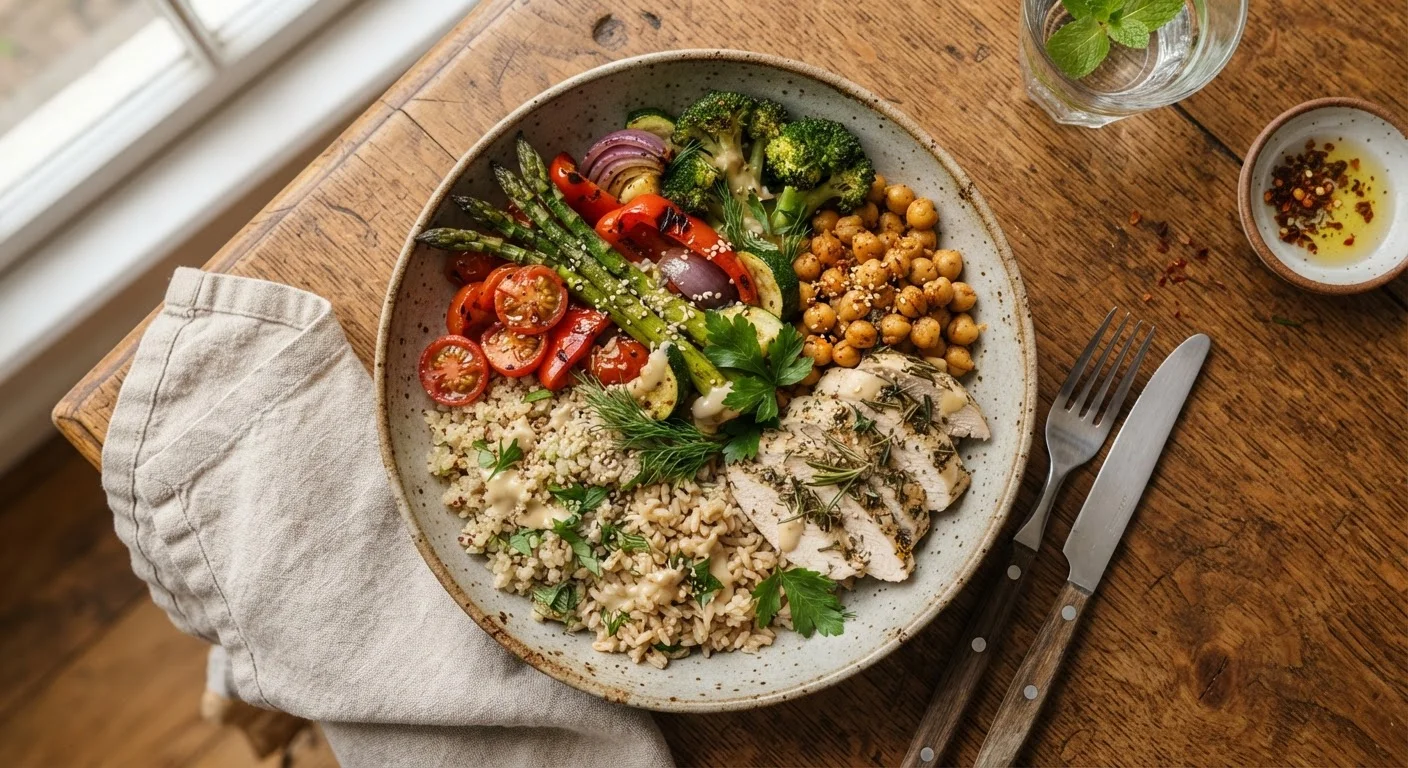
Consider swapping processed deli meats for roasted poultry, canned fish, or plant-based proteins like legumes and tofu in sandwiches and salads. When cooking red meat, opt for baking, slow-cooking, or steaming over high-heat charring. These substitutions don't require a complete dietary overhaul — small, consistent changes accumulate meaningful benefit over time.
Diet is one factor among many. Physical activity, body weight, alcohol use, smoking status, and screening history all interact with dietary choices in shaping cancer risk. For a broader view of how multiple habits compound risk or protection, see lifestyle factors most consistently linked to lower cancer risk. Readers interested in how excess body weight intersects with cancer biology may also find the research on obesity and cancer informative.
This article is for general health information and educational purposes only. It is not a substitute for personalized medical advice. Always consult a qualified healthcare provider about your individual diet, health history, and cancer screening needs.