
The Full Reach of Tobacco Carcinogens
Most people know that smoking causes lung cancer. Fewer realize that tobacco's carcinogenic reach extends to organs nowhere near the airways. The American Cancer Society identifies tobacco use as the single largest preventable cause of cancer death in the United States — and the cancers it drives include many that patients and even some clinicians don't automatically associate with smoking.
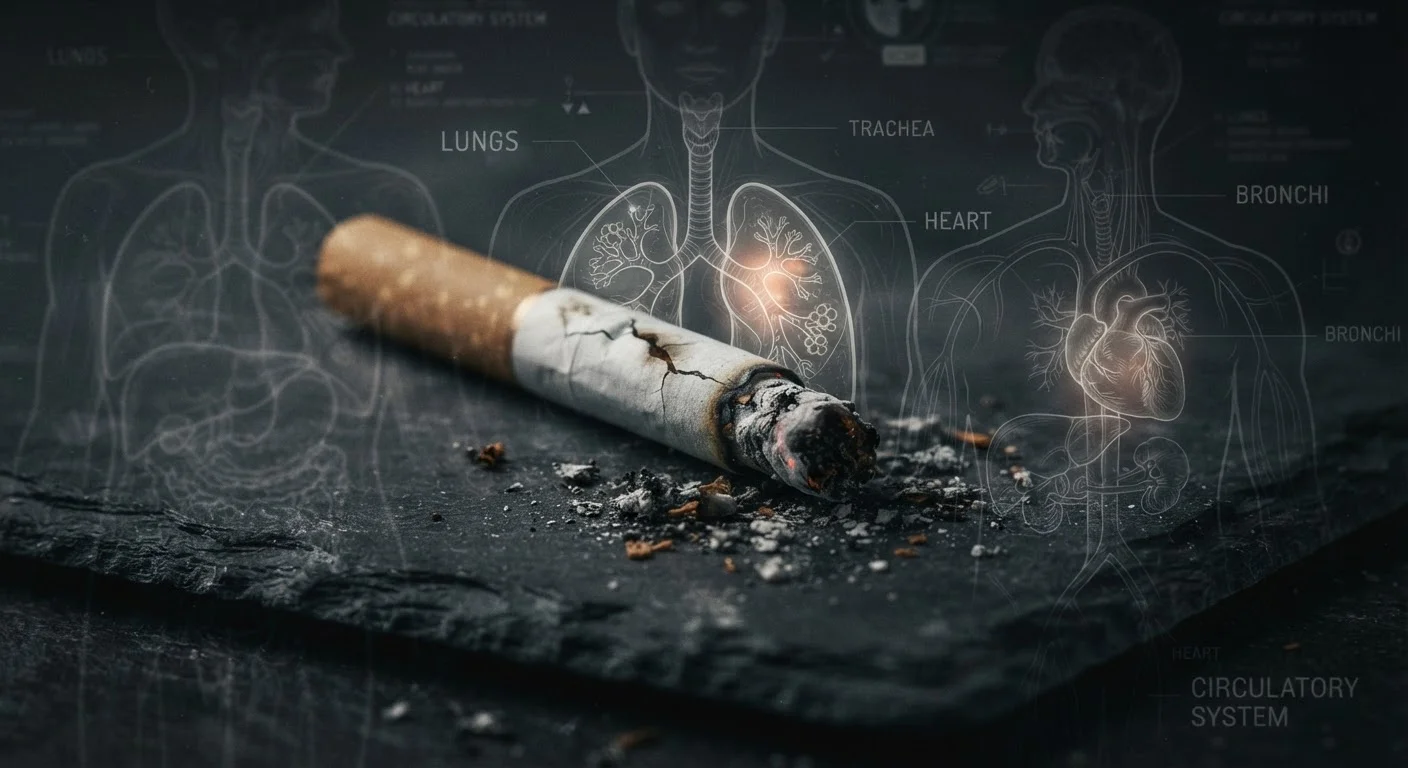
The reason tobacco affects so many organ systems lies in chemistry. Cigarette smoke contains more than 7,000 chemicals, of which at least 70 are recognized carcinogens. When inhaled, these compounds don't stay in the lungs. They enter the bloodstream and travel body-wide, damaging DNA wherever they accumulate. The kidneys concentrate and filter them into urine, exposing the bladder lining for hours at a time. Swallowed saliva carries carcinogens into the esophagus and stomach. Absorbed compounds reach the pancreas and cervix through circulation.
Understanding this systemic process is the foundation of understanding tobacco's true cancer burden. For a broader look at how environmental exposures contribute to cancer risk, see our overview of environmental cancer risk factors.
12+
Cancer types causally linked to tobacco use
The National Cancer Institute recognizes tobacco as a cause of cancers across more than a dozen distinct anatomical sites.
~30%
Of all U.S. cancer deaths attributable to tobacco
The American Cancer Society estimates that roughly 30% of all cancer deaths in the United States are linked to tobacco use.
7,000+
Chemicals in cigarette smoke
Of the more than 7,000 chemicals in tobacco smoke, at least 70 are recognized carcinogens according to the NCI.
Cancer Types Linked to Tobacco Use
The National Cancer Institute recognizes tobacco as a cause of cancers in the following sites: lung, larynx (voice box), mouth and throat (oropharynx), esophagus, stomach, pancreas, kidney and renal pelvis, urinary bladder, cervix, and certain types of acute myeloid leukemia. Cigars and pipes share most of these risks; pipe and cigar users face elevated rates of oral, esophageal, and lung cancers even when they do not inhale deeply.
Smokeless tobacco — including chewing tobacco and snuff — carries its own distinct profile. It is strongly linked to cancers of the mouth, gum, lip, cheek, and throat. Marketing smokeless products as a safer alternative to cigarettes does not accurately represent the evidence; they contain nitrosamines and other carcinogens that cause DNA damage in oral tissues.
Secondhand smoke is not a minor footnote. The CDC classifies it as a known human carcinogen, and long-term non-smoker exposure is associated with increased lung cancer risk. Children and spouses of heavy smokers bear a disproportionate share of this risk.
What Quitting Actually Does for Risk
Quitting tobacco is the most impactful step a person can take to reduce tobacco-related cancer risk — but the timeline matters, and the benefits are real even for long-term smokers who quit later in life. For lung cancer specifically, risk begins to decline measurably within the first few years after cessation and continues falling over a decade, though it may never reach the level of a lifetime non-smoker.
For some cancers, the reduction in risk after quitting is faster. Laryngeal and oral cancer risk begins to decline relatively soon after stopping. For bladder cancer, the risk curve is more gradual because the carcinogen exposure pattern involves urine concentration over time.
It's Never Too Late to Quit
Research consistently shows that quitting tobacco at any age reduces cancer risk compared with continuing to smoke. Adults who quit in their 50s, 60s, or even later still see measurable health benefits. If you currently use tobacco, speak with your healthcare provider about cessation resources — effective support options, including counseling and FDA-approved aids, are available.
Former smokers should not assume their risk has simply vanished. Screening conversations with a healthcare provider remain important. Current U.S. guidelines recommend annual low-dose CT lung cancer screening for adults aged 50–80 who have a significant smoking history and currently smoke or quit within the past 15 years — but individual eligibility depends on specific criteria your doctor can assess.
Tobacco is one of several modifiable cancer risk factors. For context on others, the Cancer Risk Factors hub covers lifestyle, genetic, and environmental contributors in depth. You may also find it useful to compare tobacco risk with what research shows about obesity and cancer risk.
This article is for general health education purposes only and is not a substitute for professional medical advice, diagnosis, or treatment. Always consult a qualified healthcare provider about your individual risk factors, screening needs, and any decision to change health behaviors.