
Why Environmental Exposures Matter for Cancer Risk
Cancer develops through a complex interplay of genetics, lifestyle, and environment. While inherited gene variants play a role — explored in our guide to cancer and genetics — a substantial proportion of cancers are linked to external, environmental factors that accumulate over a lifetime.
The World Health Organization estimates that between 7% and 19% of all cancers globally are attributable to environmental and occupational exposures, depending on the population studied. For older adults, who have had more years of potential exposure, understanding these risks is especially relevant.
Crucially, not all environmental risks are equal. Some — like testing your home for radon — are within individual control. Others, such as regional air quality, require community-level and policy responses. This overview covers the most well-established environmental carcinogens (substances that can cause cancer) so you can make informed decisions and know when to consult a healthcare provider.
21,000
Annual US lung cancer deaths linked to radon
According to the U.S. Environmental Protection Agency, radon is the second-leading cause of lung cancer nationwide.
Group 1
IARC carcinogen classification for outdoor air pollution
The International Agency for Research on Cancer classified outdoor air pollution as a definitive human carcinogen in 2013.
7–19%
Cancers attributable to environmental/occupational exposures
The World Health Organization estimates this range varies by population, geographic region, and specific exposure profiles.
Radon: The Invisible Indoor Hazard
Radon is a naturally occurring, colorless, odorless radioactive gas that forms from the breakdown of uranium in soil and rock. It can seep into homes through foundation cracks, gaps around pipes, and crawl spaces, accumulating to dangerous levels in poorly ventilated areas — particularly basements.
According to the U.S. Environmental Protection Agency (EPA), radon is the second-leading cause of lung cancer in the United States, responsible for an estimated 21,000 deaths each year. The risk is significantly higher for people who smoke, as tobacco and radon act synergistically to damage lung tissue.
Test Your Home for Radon Today
Radon testing is simple, inexpensive, and one of the highest-impact steps you can take for lung cancer prevention. Short-term test kits (placed for 48–96 hours) cost as little as $15–$30 and are available at most hardware stores. If results are at or above 4 pCi/L, contact a state-certified radon mitigation contractor. Many state health departments offer low-cost or free test kits.
Testing is the only reliable way to know your home's radon level. Inexpensive short-term and long-term test kits are widely available through hardware stores and state radon programs. The EPA recommends remediation (mitigation) if levels reach 4 picocuries per liter (pCi/L) or higher. Standard mitigation systems can reduce indoor radon levels by up to 99%.
Asbestos and Occupational Carcinogens
Asbestos is a group of naturally occurring fibrous minerals once widely used in construction, shipbuilding, and manufacturing for its heat-resistant properties. When materials containing asbestos are disturbed — during renovation, demolition, or natural deterioration — microscopic fibers become airborne and can be inhaled.
Long-term asbestos exposure is the primary cause of mesothelioma, a rare but aggressive cancer of the tissue lining the lungs and abdomen. It is also linked to lung cancer and certain other malignancies. Symptoms often don't appear until 20–50 years after exposure, meaning older adults who worked in construction, insulation, or industrial settings decades ago may still face elevated risk today.
Beyond asbestos, the National Cancer Institute (NCI) recognizes many workplace carcinogens, including benzene (linked to leukemia), formaldehyde, vinyl chloride, and certain heavy metals. If you worked in industries with known chemical exposures before modern safety regulations were in place, discussing this history with your doctor is worthwhile. For a broader look at often-overlooked risks, see cancer risk factors older adults commonly miss.
Do Not Disturb Suspected Asbestos Materials
If you live in a home built before 1980 and are planning renovation work, do not sand, drill, or remove materials that may contain asbestos — such as floor tiles, pipe insulation, or ceiling texture — without first having them professionally assessed. Disturbing intact asbestos-containing materials releases fibers that are invisible to the naked eye and remain dangerous long after the work is done. Hire only licensed asbestos inspectors and abatement contractors.
Outdoor Air Pollution and Lung Cancer
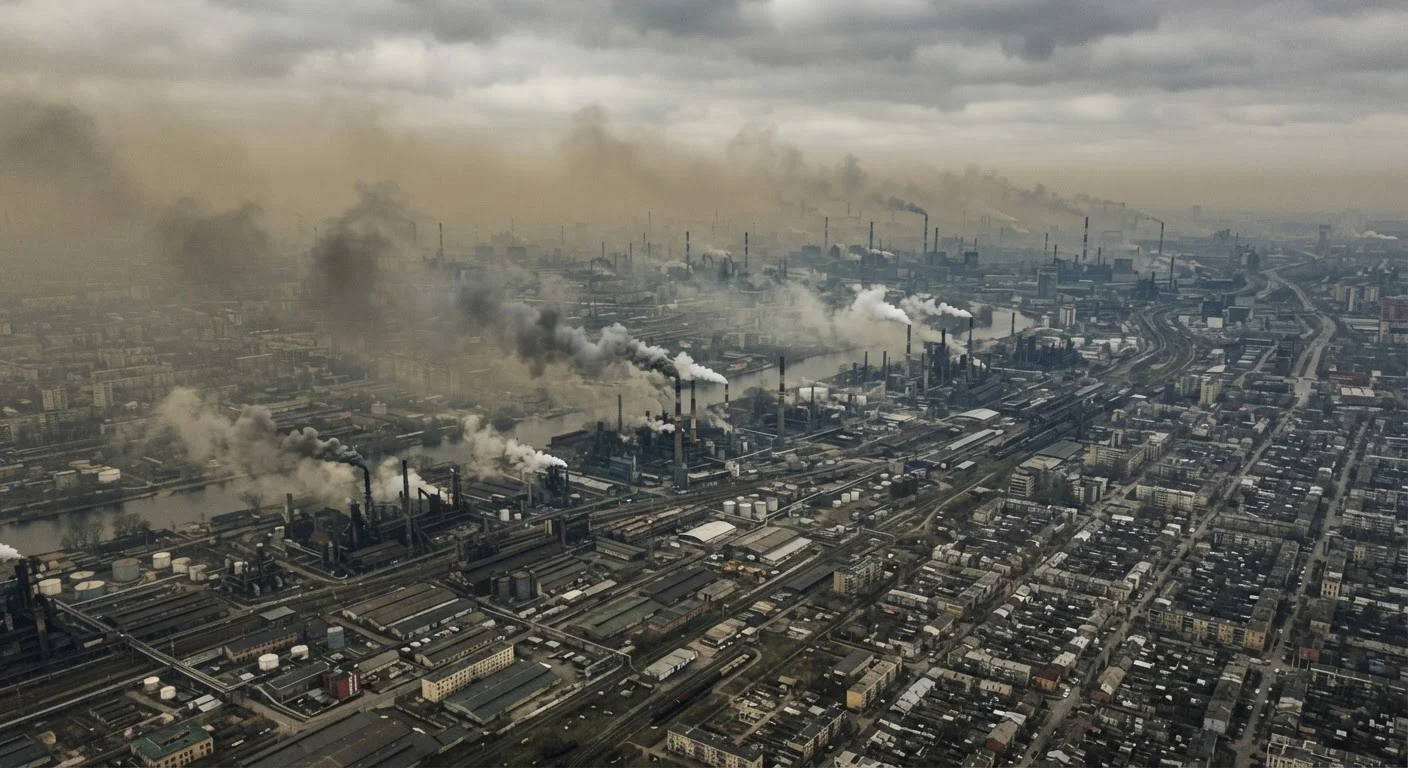
In 2013, the International Agency for Research on Cancer (IARC) classified outdoor air pollution as a Group 1 carcinogen — meaning there is sufficient evidence that it causes cancer in humans. Specifically, fine particulate matter (PM2.5) and nitrogen dioxide from vehicle exhaust, power plants, and industrial emissions are associated with increased lung cancer risk, even among people who have never smoked.
A large-scale European study found that long-term residence near high-traffic roads was associated with higher lung cancer incidence, independent of smoking status. For older adults with decades of urban or near-industrial residence, cumulative exposure may be meaningful.
Check your local AQI before prolonged outdoor activity — even a few high-exposure days a year can matter cumulatively over decades. Apps from EPA's AirNow program make this easy.
Fine particulate matter exposure is dose-dependent; reducing peak-exposure events is a practical harm-reduction strategy supported by EPA guidance.
If you lived or worked near industrial sites in the mid-20th century, mention this environmental history to your physician during your next visit — it may change which screenings are recommended.
Many occupational carcinogens have long latency periods; a detailed exposure history is a recognized part of comprehensive cancer risk assessment.
While individual control over outdoor air quality is limited, practical steps include checking local air quality index (AQI) forecasts, reducing outdoor activity on high-pollution days, and using HEPA air purifiers indoors. Advocacy for clean air policies is among the most impactful population-level tools for reducing this risk.
Water Contaminants Linked to Cancer
Drinking water can carry contaminants associated with increased cancer risk, particularly in areas with aging infrastructure or near industrial sites. Among the most studied:
- Arsenic: A naturally occurring element that can leach into groundwater. Long-term arsenic ingestion is linked to cancers of the bladder, skin, kidney, and lung. The EPA's maximum contaminant level for arsenic in public water is 10 parts per billion (ppb), though some research suggests risk begins at lower levels.
- Nitrates: Primarily from agricultural runoff and septic systems, high nitrate levels in drinking water have been associated with colorectal and thyroid cancers in some studies, though research continues.
- Disinfection byproducts (DBPs): Formed when chlorine used to treat water reacts with organic matter; some DBPs are classified as possible carcinogens.
Residents on private wells are responsible for their own water testing; public water utilities are required to provide annual quality reports. If your water source may be compromised, a certified water test and filtration consultation with your local health department is a reasonable step.
Private Wells Require Owner Testing
Unlike municipal water systems, private wells are not regulated by the EPA's Safe Drinking Water Act. Homeowners are entirely responsible for testing their own water quality. The CDC and EPA recommend testing private wells at least once a year for bacteria and nitrates, and additionally for local contaminants such as arsenic, radon in water, or industrial chemicals if you live near farms or industrial sites.
What You Can Do: Modifiable vs. Non-Modifiable Risks
Environmental cancer risks span a spectrum from highly actionable to largely outside personal control. Understanding this distinction helps prioritize effort without causing unnecessary anxiety.
Steps within individual reach:
- Test your home for radon and mitigate if levels are elevated.
- If your home was built before 1980, have a professional assess materials for asbestos before any renovation work.
- Request your local utility's annual water quality report; consider certified filtration if contaminants are detected.
- Monitor AQI on high-pollution days and reduce outdoor exertion accordingly.
- If you have a significant occupational exposure history, share it with your doctor — it may influence screening recommendations.
Environmental factors interact with other well-documented risks. Diet and nutrition play a complementary role, explored in our overview of diet and cancer risk. Tobacco exposure compounds the harm of many environmental carcinogens, particularly radon and air pollution. For a broader foundation, visit our cancer prevention basics hub.
Exposure History Is Part of Your Medical Record
If you have a history of significant occupational or environmental exposures — asbestos, benzene, heavy metals, or prolonged high-pollution environments — this information is clinically relevant. Tell your healthcare provider. In some cases, documented occupational exposure history qualifies individuals for enhanced cancer screening protocols or specialist referral. Do not assume your doctor already knows; bring it up proactively.
This article is for general informational and educational purposes only and does not constitute medical advice. Always consult a qualified healthcare provider for guidance specific to your health history, symptoms, or risk factors.