
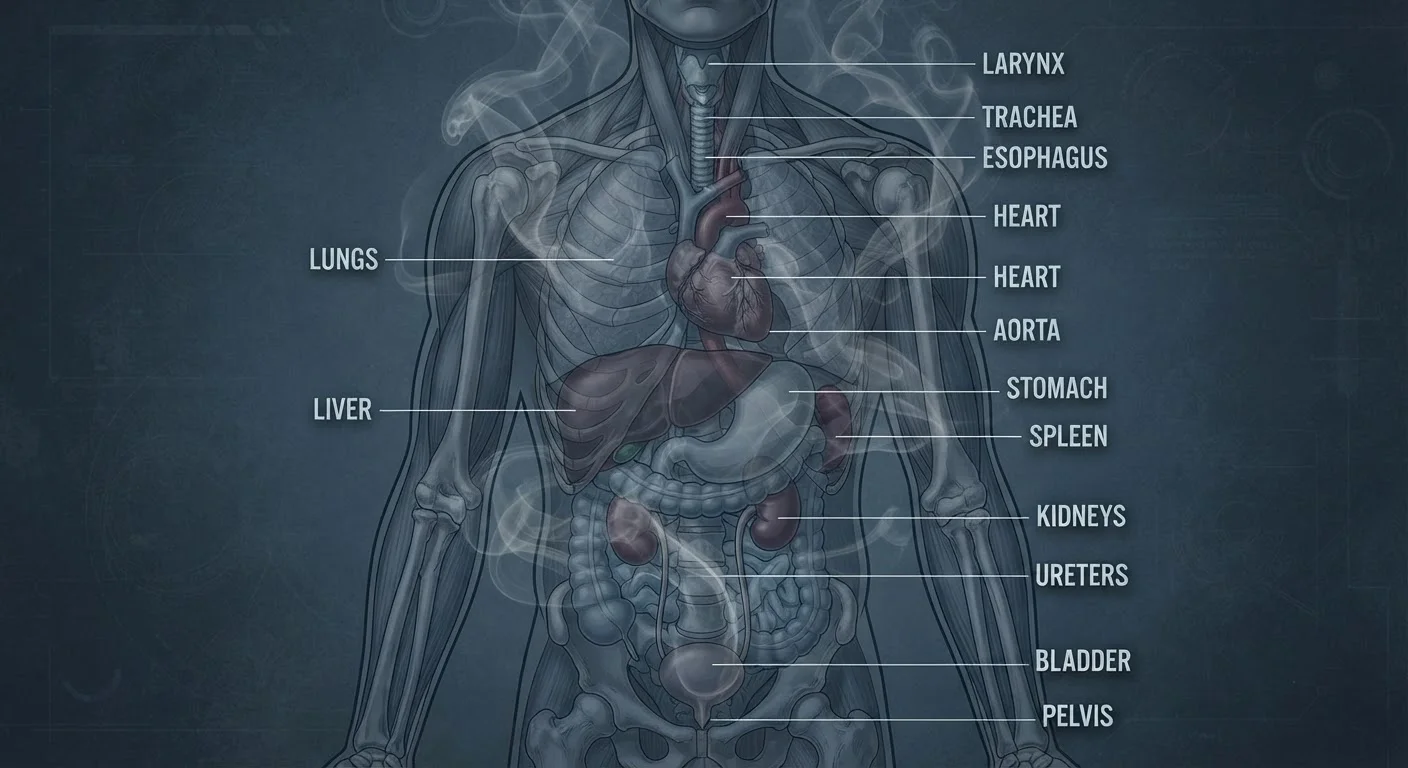
The Reach of Tobacco Goes Far Beyond the Lungs
Most people associate tobacco with lung cancer — and with good reason. Smoking remains the leading cause of lung cancer in the United States. But limiting tobacco's cancer footprint to the respiratory system significantly understates the risk it poses to the entire body.
According to the National Cancer Institute, tobacco use is linked to cancers of the mouth, throat, larynx (voice box), esophagus, stomach, pancreas, colon, rectum, liver, kidney, bladder, cervix, and certain types of leukemia, in addition to lung cancer. That is at least 15 distinct cancer types connected to a single, modifiable behavior.
Understanding the full scope of this risk can motivate meaningful decisions — and helps older adults recognize symptoms in areas they may not associate with their tobacco history. For a broader look at how various exposures elevate cancer risk, see environmental exposures and cancer risk.
15+
Cancer types linked to tobacco use
According to the National Cancer Institute, tobacco causes cancers well beyond the lung, including in the bladder, kidney, pancreas, and cervix.
2–3x
Increased bladder cancer risk for smokers
The American Cancer Society reports that smokers are two to three times more likely to develop bladder cancer than non-smokers.
70+
Known carcinogens in tobacco smoke
The NCI identifies more than 70 established carcinogens in tobacco smoke, many of which circulate in the bloodstream after inhalation.
How Tobacco Carcinogens Travel Through the Body
When tobacco is smoked or chewed, more than 70 known carcinogens enter the body. These chemicals don't stay in the lungs or mouth — they are absorbed into the bloodstream and carried to distant organs. The kidneys filter these compounds from the blood and concentrate them in urine, which means the bladder wall is repeatedly exposed to carcinogenic substances. This is why people who smoke are two to three times more likely to develop bladder cancer than non-smokers, according to the American Cancer Society.
The pancreas, liver, and stomach are also exposed through the bloodstream and digestive system. Carcinogens swallowed in saliva or absorbed through mucous membranes contribute to elevated risk for esophageal, stomach, and oral cancers. In women, tobacco-related carcinogens have been detected in cervical tissue, helping explain the connection between smoking and cervical cancer.
“Tobacco use remains the single largest preventable cause of cancer and cancer death in the United States, responsible for nearly one in five cancer deaths annually.”
— National Cancer Institute, U.S. federal government's principal agency for cancer research
It is important to recognize that risk is probabilistic — tobacco use raises the likelihood of these cancers but does not guarantee them. For context on how to interpret cancer risk information clearly, see why cancer risk is never zero.
Smokeless Tobacco: A Different Product, Similar Dangers
Many people assume that switching from cigarettes to smokeless tobacco — chewing tobacco, snuff, or dip — eliminates cancer risk. This is a dangerous misconception. Smokeless tobacco products contain high concentrations of tobacco-specific nitrosamines, a class of potent carcinogens that are directly deposited into oral tissues.
These products are strongly associated with cancers of the mouth, gums, tongue, cheek, throat, and esophagus. Oral and throat cancers — including signs like persistent sores, hoarseness, and difficulty swallowing — are frequently overlooked, partly because people may not associate their smokeless tobacco use with these risks.
Know the Warning Signs in Your Mouth
Regular dental checkups can help detect early signs of oral cancers associated with smokeless tobacco, including unusual sores, white or red patches, or lumps that don't heal. If you have a history of smokeless tobacco use, mention it to both your doctor and dentist. Prompt evaluation of any persistent change in your mouth is always worthwhile.
Smokeless tobacco also carries a meaningful association with pancreatic cancer and esophageal cancer. No form of tobacco is medically considered safe.
What Happens to Risk After Quitting
Quitting tobacco is one of the most impactful steps a person can take to reduce cancer risk. The body begins repairing damage relatively quickly: within five years of quitting, the risk of cancers of the mouth, throat, esophagus, and bladder drops substantially, according to the NCI. Lung cancer risk continues to decline over a decade or more, though it may remain higher than in someone who never smoked.
The duration and intensity of prior use matter. Someone who smoked heavily for 30 years carries a different residual risk profile than someone who smoked lightly for five years. This is why screening conversations with a healthcare provider remain important even after quitting — particularly for lung cancer, where low-dose CT screening is recommended for certain high-risk adults.
Tobacco is a modifiable risk factor, which means the choices made today affect future risk. For context on other modifiable contributors to cancer risk, the connection between body weight and cancer risk is another area where evidence-based habits can make a meaningful difference.
This article is for general health information and educational purposes only. It is not a substitute for professional medical advice, diagnosis, or treatment. Always consult a qualified healthcare provider regarding any health concerns, symptoms, or decisions about screening and care.