
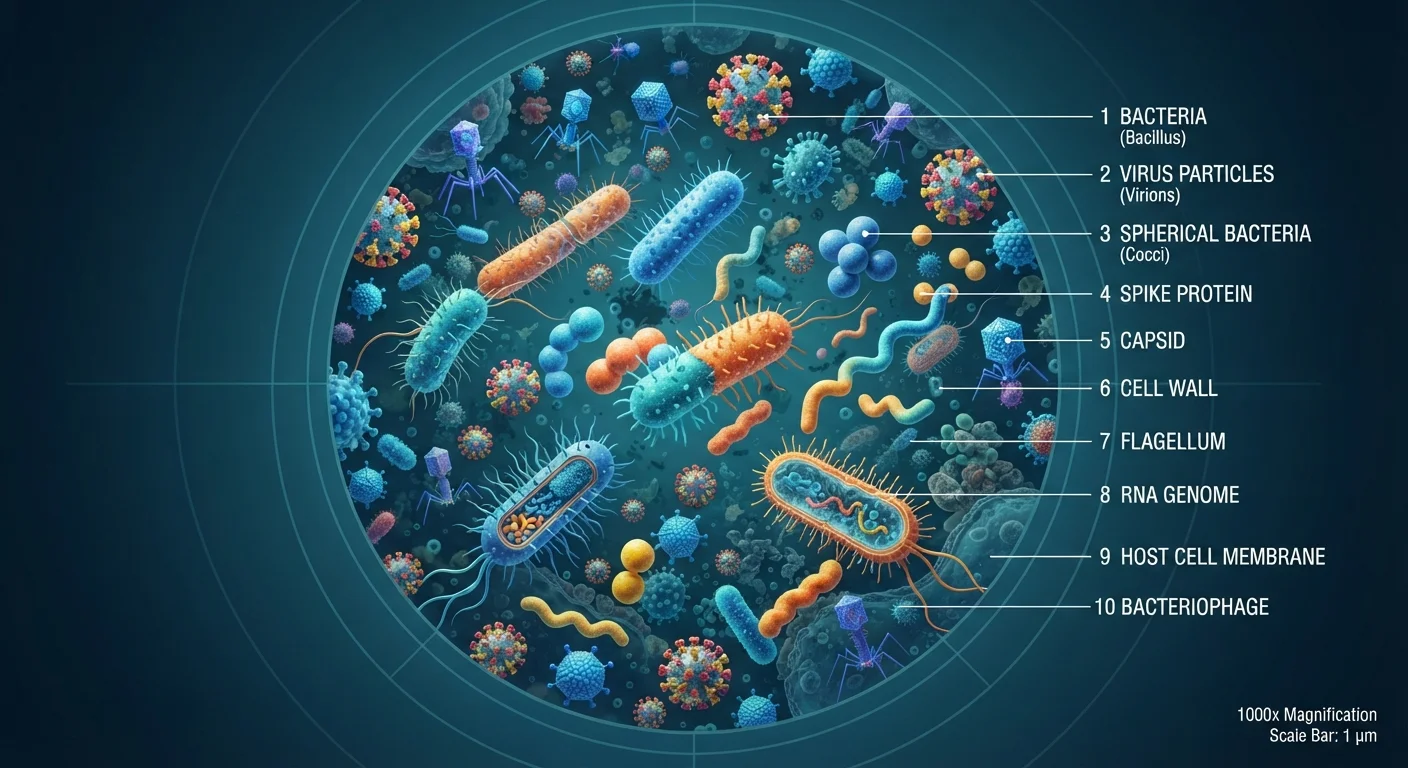
Why Some Infections Are Classified as Cancer Risk Factors
Most infections are cleared by the immune system without lasting consequences. A smaller group, however, can trigger chronic inflammation, alter cell DNA, or suppress local immune defences in ways that significantly raise cancer risk over time. The International Agency for Research on Cancer (IARC) formally classifies several infectious agents as Group 1 carcinogens — meaning evidence linking them to human cancer is sufficient and well established.
Understanding these connections matters for older adults because many of these infections were acquired decades before a cancer diagnosis is made, often before widespread vaccination or screening programmes existed. Some are now preventable; others are manageable when detected early. Chronic inflammation caused by persistent infection is among the risk factors most frequently overlooked in adults over 60.
| Fraction of cancers linked to infection | ~15–20% globally (World Health Organization / IARC estimates) |
| IARC classification for key agents | Group 1 (sufficient evidence of human carcinogenicity) (IARC Monographs Programme) |
| HPV strains classified as high-risk | At least 12 strains; types 16 and 18 most prevalent (National Cancer Institute) |
| US adults advised to test for HCV | All adults born 1945–1965 (baby boomer cohort) (CDC recommendation) |
| H. pylori global prevalence | Estimated ~44% of world population (Systematic review, Hooi et al., Gastroenterology, 2017) |
| HBV-preventable via vaccine | Yes — routine childhood and catch-up adult vaccination available in the US (CDC Advisory Committee on Immunization Practices) |
The Key Infectious Agents and the Cancers They Are Linked To
Human Papillomavirus (HPV) is responsible for virtually all cervical cancers and a substantial share of cancers of the oropharynx (back of the throat), anus, vulva, vagina, and penis. More than 200 HPV strains exist; types 16 and 18 are classified as high-risk. HPV-related throat cancers have been rising in older men who were not covered by early vaccination campaigns. See our article on oral and throat cancer warning signs for symptoms that warrant prompt evaluation.
Helicobacter pylori (H. pylori) is a bacterium that colonises the stomach lining in roughly half the world's population. Persistent infection can cause chronic gastritis, peptic ulcers, and — in a minority of cases — gastric (stomach) cancer or a rare stomach lymphoma called MALT lymphoma. H. pylori infection is treatable with antibiotics, which can reduce, though not fully eliminate, subsequent cancer risk.
Hepatitis B Virus (HBV) and Hepatitis C Virus (HCV) both cause chronic liver inflammation that, over decades, can progress to cirrhosis and hepatocellular carcinoma (primary liver cancer). HBV vaccination is highly effective and recommended as a routine childhood immunisation in the US; no vaccine exists yet for HCV, but highly effective antiviral treatments can eliminate the virus. Adults born between 1945 and 1965 are disproportionately affected by HCV and are advised by the CDC to get tested.
Epstein-Barr Virus (EBV), the virus responsible for infectious mononucleosis, has been linked to Burkitt lymphoma, Hodgkin lymphoma, certain nasopharyngeal cancers, and some stomach cancers. Most adults carry EBV in a latent state; cancer-related outcomes involve a complex interplay of immune function and viral reactivation.
Human T-lymphotropic Virus type 1 (HTLV-1) is a less common retrovirus associated with adult T-cell leukaemia/lymphoma, primarily in populations where the virus is endemic (parts of Japan, the Caribbean, and sub-Saharan Africa).
Kaposi Sarcoma Herpesvirus (KSHV / HHV-8) causes Kaposi sarcoma and certain lymphomas, predominantly in people with significantly impaired immune systems.
Carcinogen
Any agent — chemical, biological, or physical — with sufficient evidence to cause cancer in humans. The IARC classifies carcinogens into groups based on the strength of evidence.
Chronic inflammation
Persistent, low-level inflammatory activity in tissues that, over time, can damage DNA and create conditions favourable to tumour development.
Cirrhosis
Severe scarring of the liver caused by long-term damage. Cirrhosis significantly raises the risk of hepatocellular carcinoma (liver cancer).
Latent infection
An infection in which a virus remains dormant within the body's cells after initial infection, neither actively replicating nor producing symptoms, but capable of reactivation.
MALT lymphoma
A rare, slow-growing cancer of lymphatic tissue in the stomach lining, strongly associated with chronic H. pylori infection. Many cases respond to antibiotic eradication of H. pylori.
Prevention, Screening, and When to Talk to Your Doctor
Several of these infection-associated cancer risks are modifiable. HPV vaccination, HBV vaccination, and HCV antiviral treatment each offer documented risk-reduction pathways. Regular screening — including cervical Pap and HPV co-testing, and HCV antibody testing for eligible adults — can catch problems early when outcomes are most favourable.
It is worth noting that carrying one of these infections does not mean cancer is inevitable. As explained in our reference on understanding cancer probability, risk factors raise likelihood, not certainty. Infection-related cancer risk also differs in character from hereditary or hormonal risk; for a comparison, see our overviews on genetic cancer risk and hormone-related cancer risk.
Testing and Vaccination Are Available
If you are unsure whether you have been vaccinated against HBV or tested for HCV, these are straightforward conversations to have at your next routine appointment. Many adults in older age groups were not covered by the HPV vaccine rollout but may still benefit from discussing their cancer screening schedule with their provider. Early detection consistently improves outcomes across all infection-linked cancers.
This article is for general health information only and does not constitute medical advice. Always consult a qualified healthcare provider regarding your personal medical history, screening needs, or any symptoms you may be experiencing.