
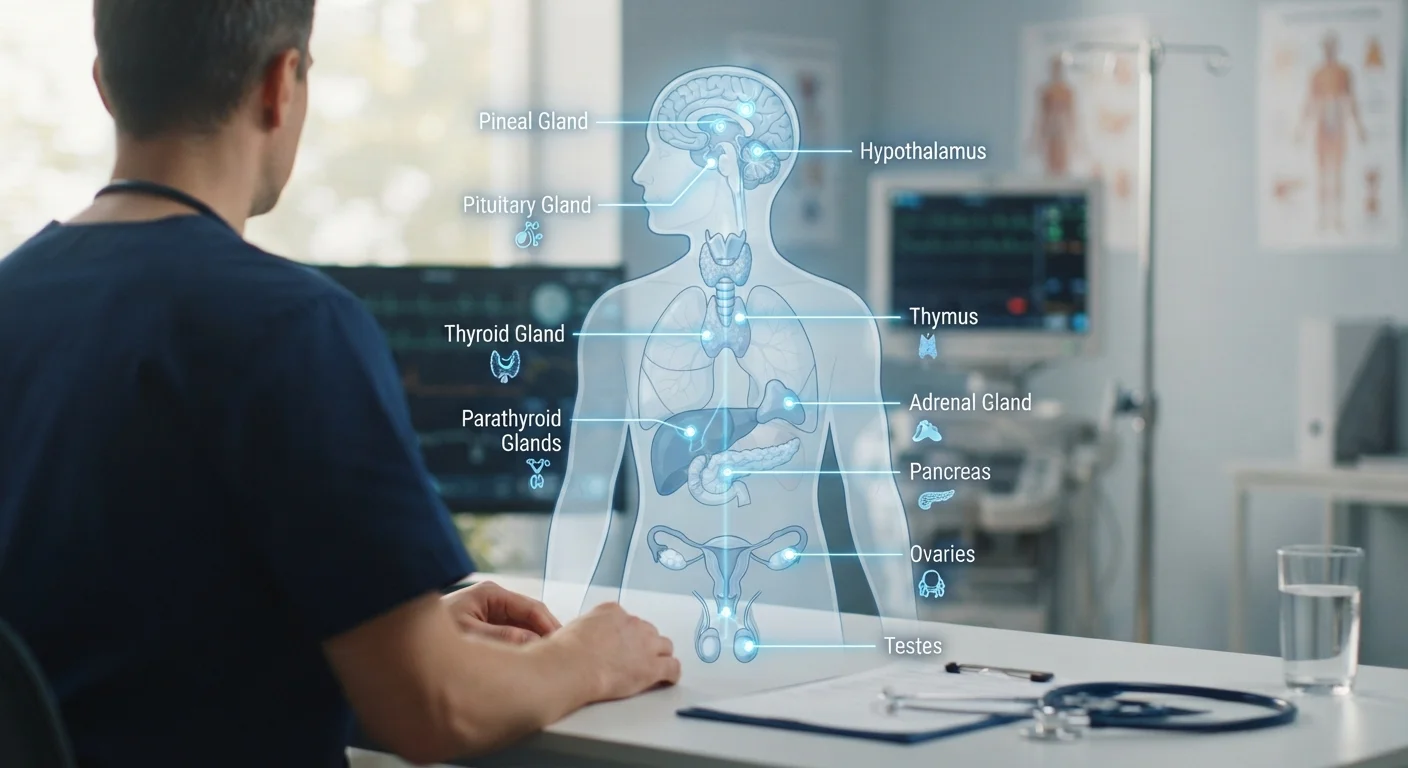
Why Hormones Matter in Cancer Development
Hormones do far more than regulate mood or reproduction. They serve as cellular signals, telling tissues to grow, divide, and maintain themselves. For most of a lifetime, this signaling is tightly regulated. But when cells in hormone-sensitive tissues — particularly the breast, uterus, ovaries, and prostate — are exposed to elevated or imbalanced hormone levels over extended periods, that growth signaling can become a risk factor for cancer.
It helps to distinguish between two types of hormone exposure. Endogenous hormones are those the body produces naturally. Exogenous hormones are those introduced from outside the body, such as through menopausal hormone therapy or hormonal contraceptives. Both categories have documented connections to cancer risk, though the strength of that evidence varies considerably by cancer type.
For older adults reviewing their own health picture, this distinction matters. Some exposures — like the age at which menstruation began or ended — are not within anyone's control. Others, such as the decision to use hormone therapy or the lifestyle factors that influence hormone metabolism, represent areas where informed choices are possible. See also cancer risk factors older adults commonly overlook for a broader view of how multiple risks interact.
~30%
Of breast cancers linked to hormone receptor sensitivity
The American Cancer Society notes that most breast cancers — roughly two-thirds to three-quarters — are hormone receptor-positive, meaning they are fueled by estrogen or progesterone.
5–7 years
Threshold where combined MHT risk becomes notable
Research from the Women's Health Initiative and subsequent analyses suggests that breast cancer risk associated with combined hormone therapy becomes more measurable after approximately five or more years of use.
#1
Most diagnosed cancer in U.S. men
According to the American Cancer Society, prostate cancer — a hormone-sensitive cancer — is the most commonly diagnosed cancer among American men, excluding skin cancers.
The Strongest Evidence: Breast, Uterine, and Ovarian Cancers
Estrogen's role in breast cancer is among the most studied relationships in oncology. Cumulative lifetime exposure to estrogen — influenced by factors such as early first menstruation, late menopause, and never having been pregnant — is associated with a higher risk of breast cancer. The National Cancer Institute and American Cancer Society both acknowledge this relationship as well-established.
Menopausal hormone therapy (MHT) adds a measurable layer of complexity. The landmark Women's Health Initiative study found that combined estrogen-progestin therapy was associated with an increased breast cancer risk, while estrogen-alone therapy showed a different — and in some analyses more favorable — pattern. The type, dose, and duration of therapy all influence the risk profile, which is why individualizing decisions with a physician is essential. For a deeper look at breast cancer risk factors in older women, see breast cancer after 60.
Endometrial (uterine) cancer has an even more direct connection. Estrogen that is not balanced by progesterone can cause the uterine lining to overgrow — a precondition for certain uterine cancers. This is why estrogen-only therapy is generally not prescribed to women who still have a uterus. Ovarian cancer risk is also associated with lifetime ovulatory cycles and certain hormone therapy regimens, though the mechanisms are less fully understood.
“The relationship between hormones and cancer risk is one of the clearest examples we have of biology meeting lifestyle. Understanding it gives patients and clinicians a real basis for shared decision-making.”
— National Cancer Institute, U.S. federal government's principal agency for cancer research and training
Prostate Cancer and Male Hormones
Prostate cancer is the hormone-sensitive cancer most relevant to older men. Testosterone and its more potent derivative, dihydrotestosterone (DHT), stimulate prostate cell growth. Most prostate cancers — particularly in early stages — depend on this hormonal stimulation to grow, a property clinicians call androgen sensitivity.
This relationship is so well-established that reducing testosterone levels, through a strategy called androgen-deprivation therapy, is a standard treatment for advanced prostate cancer. However, the relationship between circulating testosterone levels in healthy men and the initial development of prostate cancer is more nuanced and less settled. Age-related changes in testosterone are a normal part of aging; for context on how hormone shifts affect men more broadly, the Hormones and Aging hub offers relevant background.
Talk to Your Provider Before Adjusting Hormone Therapy
If you are currently using any form of hormone therapy and have concerns about cancer risk, do not stop or change your regimen without first speaking to a healthcare provider. The risks and benefits are highly individual, and abrupt changes can carry their own health consequences. A structured conversation using your personal medical history will lead to a better-informed decision than acting on general population statistics alone.
What Older Adults Can Do With This Information
Understanding hormone-related cancer risk does not require a medical degree, but it does require separating what is modifiable from what is not. Genetics, age of puberty, and reproductive history cannot be changed. What can be addressed includes body weight — since fat tissue produces estrogen and excess adipose tissue is linked to higher circulating estrogen levels — as well as alcohol consumption, which influences hormone metabolism.
For anyone currently using or considering hormone therapy for menopause symptoms, osteoporosis management, or other reasons, the most important step is an honest, informed conversation with a healthcare provider. Risk-benefit calculations are highly personal and depend on individual medical history, the specific hormones involved, and the intended duration of use. Genetic factors may also shape how an individual responds — a point explored further in our article on cancer risk and genetics.
Finally, no discussion of cancer risk is complete without emphasizing screening. Mammograms, Pap tests, and prostate-specific antigen (PSA) discussions with a provider remain critical tools for catching hormone-sensitive cancers at more treatable stages. Hormone exposure is one piece of a larger risk picture that also includes environmental exposures and certain infections.
This article is for general informational and educational purposes only and does not constitute medical advice. Always consult a qualified healthcare provider before making decisions about hormone therapy, cancer screening, or any aspect of your personal health care.