
Why Pancreatic Cancer Is Diagnosed So Late
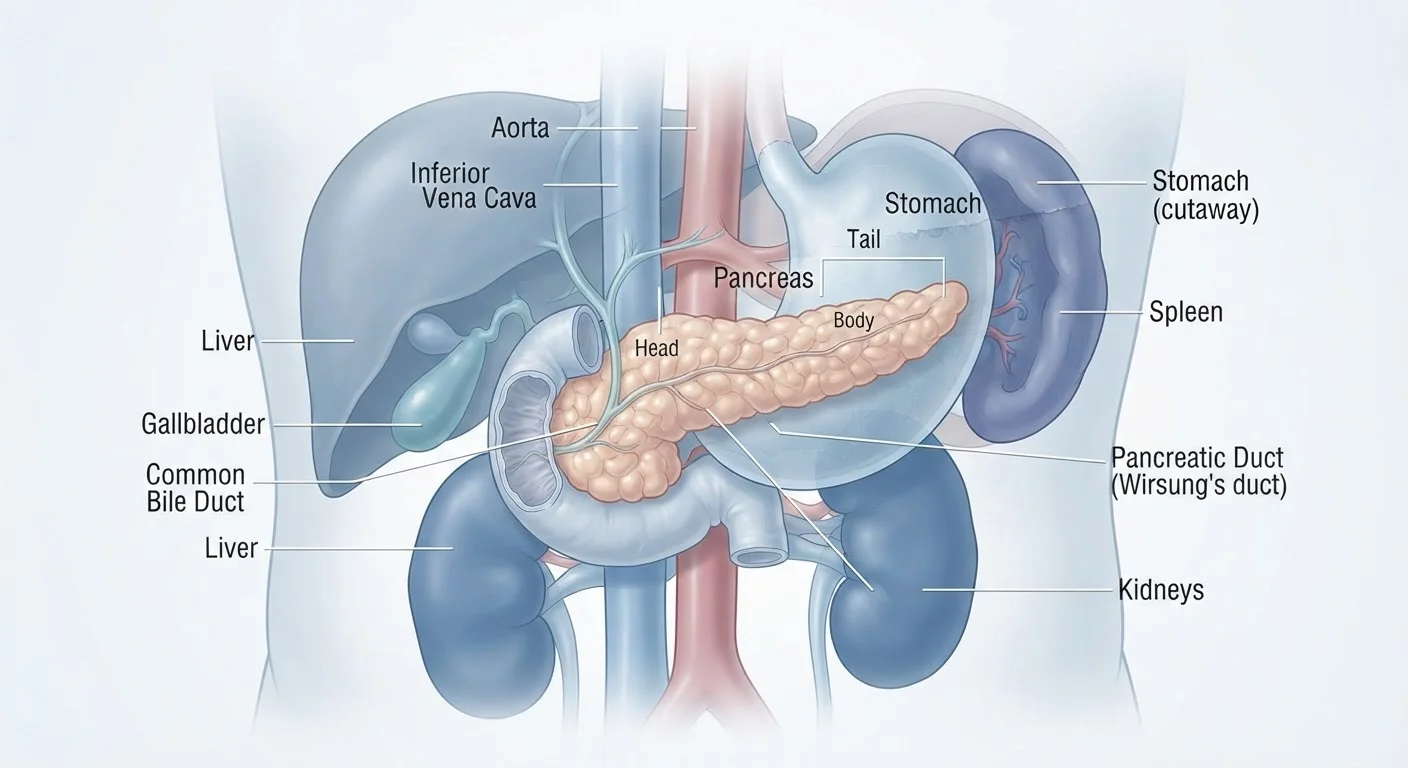
The pancreas sits tucked behind the stomach, the small intestine, and other abdominal organs. This anatomical position means that even a growing tumor may not press on nerves or block ducts until it has reached a significant size or spread to nearby tissue. Unlike some cancers that produce visible skin changes or palpable lumps, pancreatic tumors are essentially hidden from straightforward physical examination.
Compounding this challenge is the absence of a reliable, population-wide screening test. Colonoscopies catch colorectal cancer early; mammograms detect breast tumors before symptoms develop. No equivalent tool currently exists for the pancreas in average-risk individuals. The result is that roughly 80–85% of pancreatic cancers are diagnosed at a late stage, according to the American Cancer Society, when curative surgical options are often no longer available.
Symptom onset, when it occurs, is frequently vague — the kind of gradual discomfort that many older adults, and even their physicians, might initially attribute to digestive issues or normal aging. For more on how subtle warning signs get dismissed, see warning signs older adults most often mistake for normal aging.
~85%
Pancreatic cancers diagnosed at a late stage
According to the American Cancer Society, the vast majority of pancreatic cancer cases are found only after the disease has advanced beyond the pancreas.
2×
Elevated risk for smokers vs. non-smokers
Smokers face approximately double the risk of developing pancreatic cancer compared to non-smokers, per the National Cancer Institute.
~90%
Cases that are pancreatic ductal adenocarcinoma
Pancreatic ductal adenocarcinoma (PDAC) is by far the most common cell type, accounting for roughly 90% of all pancreatic cancer diagnoses according to the NCI.
Symptoms That Warrant Prompt Medical Attention
No symptom alone confirms pancreatic cancer, but the following warrant a timely conversation with a healthcare provider — particularly when they persist, worsen, or appear in combination:
- Jaundice: Yellowing of the skin and whites of the eyes occurs when a tumor blocks the bile duct, causing bile to accumulate. It is often accompanied by dark urine, pale stools, and itching.
- Unexplained weight loss: Losing significant weight without trying, especially alongside reduced appetite, is a flag that should always be investigated.
- Abdominal or back pain: A dull ache in the upper abdomen that radiates to the mid-back can result from a tumor pressing on nerves or surrounding organs.
- New-onset diabetes: A sudden diagnosis of type 2 diabetes in an older adult with no prior risk factors — or a sudden worsening of previously controlled diabetes — has been associated with pancreatic tumors in some cases.
- Digestive changes: Nausea, bloating, oily or pale stools, or a feeling of fullness after eating small amounts may reflect impaired pancreatic enzyme secretion.
These symptoms overlap with many common, non-cancerous conditions, which is precisely why they are so often dismissed. The appropriate response is evaluation, not assumption.
Keep a Symptom Log Before Your Appointment
If you notice any of the symptoms described above, write them down — noting when they started, how often they occur, and whether anything makes them better or worse. Bringing this information to your appointment helps your doctor assess patterns more accurately and avoids relying on memory alone during a short office visit.
Known Risk Factors and Who Is Most Affected
Understanding risk factors helps identify who should be especially attentive to symptoms and, in some cases, who may benefit from closer medical monitoring.
Non-modifiable risk factors include increasing age (the majority of diagnoses occur after age 65), male sex, African American ethnicity, and a family history of pancreatic cancer. Certain inherited gene mutations — including those in BRCA2, ATM, and PALB2 — are also associated with elevated risk.
Modifiable risk factors include cigarette smoking (smokers have roughly twice the risk of non-smokers), long-standing type 2 diabetes, chronic pancreatitis (ongoing inflammation of the pancreas), obesity, and heavy alcohol consumption.
For a broader look at cancer risk factors that older adults may not recognize, the article cancer risk factors older adults are most likely to overlook provides useful context. Individuals with multiple risk factors or a strong family history should discuss their situation with a physician, who may refer them to a specialist for surveillance imaging.
“Pancreatic cancer is often called a 'silent disease' because it rarely causes symptoms in its early stages. By the time most patients feel something is wrong, the cancer has usually grown or spread.”
— National Cancer Institute, U.S. federal government's principal cancer research agency
The Diagnostic Process and What to Expect
When a physician suspects pancreatic cancer, a combination of imaging and laboratory tests is typically used. Common initial steps include:
- CT scan or MRI: Cross-sectional imaging can identify the location, size, and extent of a pancreatic mass and reveal whether it has spread to nearby lymph nodes or other organs.
- Endoscopic ultrasound (EUS): A thin scope passed through the mouth allows high-resolution imaging of the pancreas and can guide a biopsy to obtain a tissue sample.
- Blood tests: A marker called CA 19-9 is elevated in many pancreatic cancer patients, though it is not specific enough to serve as a standalone screening tool — it is used primarily to monitor known disease.
A confirmed diagnosis requires tissue analysis (biopsy). Once confirmed, staging determines how far the cancer has spread, which guides treatment planning. Other cancers that share the challenge of late diagnosis are explored in articles on ovarian cancer and early detection challenges and kidney cancer from risk factors to diagnosis.
This article is for informational and educational purposes only and does not constitute medical advice. If you are experiencing symptoms or have concerns about your health, please consult a qualified healthcare professional.