
What Is Kidney Cancer?
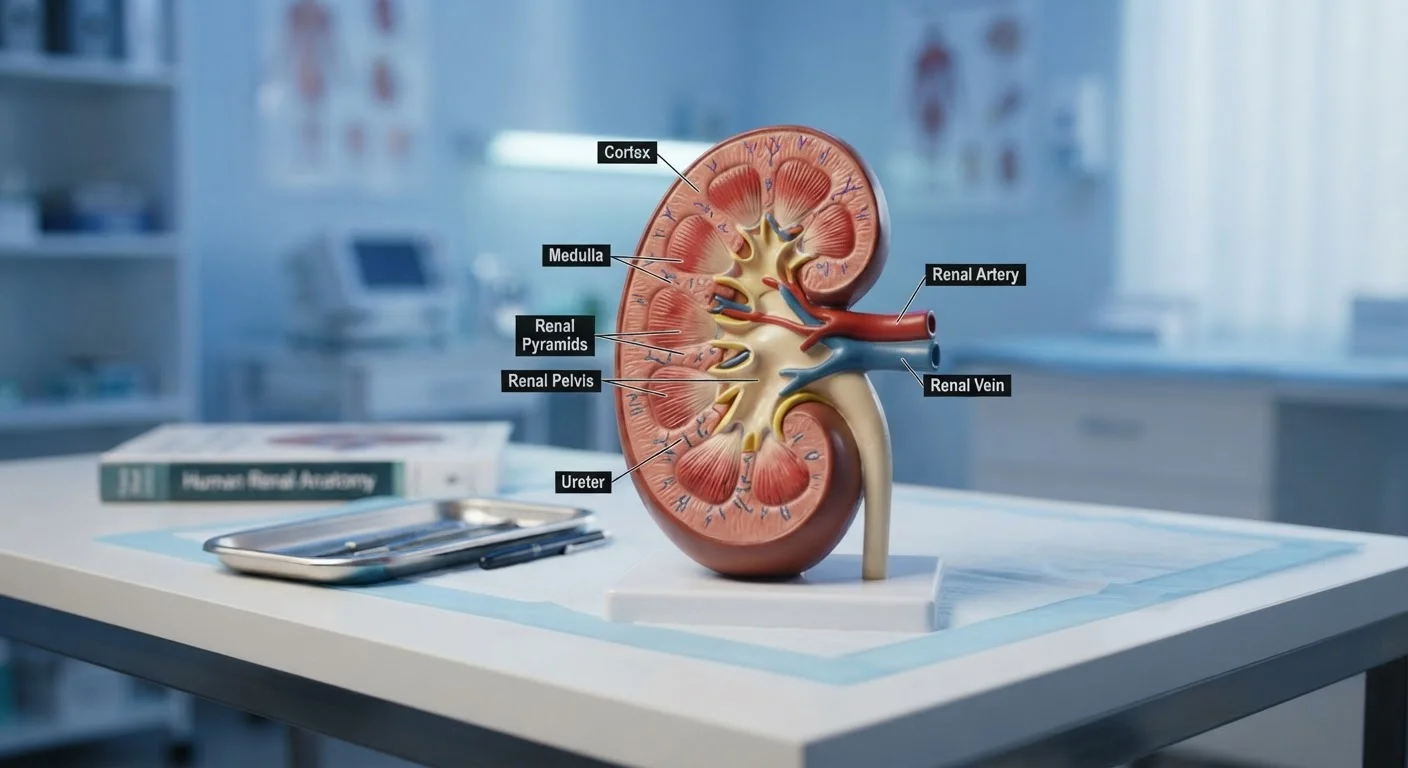
Kidney cancer develops when cells in one or both kidneys begin to grow abnormally and form a tumor. The kidneys are two bean-shaped organs located in the back of the abdomen; their primary roles include filtering waste from the blood and regulating fluid balance.
The most common form in adults is renal cell carcinoma (RCC), which originates in the lining of the small tubules inside the kidney. It represents approximately 90% of kidney cancer diagnoses. Less common types include transitional cell carcinoma, which forms in the renal pelvis, and Wilms tumor, which is far more typical in children than in older adults.
According to the American Cancer Society, kidney cancer is among the ten most common cancers diagnosed in both men and women in the United States. The disease tends to affect adults over age 45, with a median age of diagnosis in the mid-60s. For context on how another urologic cancer compares in presentation and management, see our complete overview of prostate health.
~90%
Kidney cancers that are renal cell carcinoma
The American Cancer Society identifies RCC as by far the most common kidney cancer type in adults.
2x
Higher diagnosis rate in men vs. women
Men are diagnosed with kidney cancer approximately twice as often as women, according to NCI data.
Top 10
Ranking among most common U.S. cancers
The American Cancer Society lists kidney cancer among the ten most frequently diagnosed cancers in both sexes.
Who Is at Risk?
Several well-established factors increase the likelihood of developing kidney cancer. Understanding them can support more informed conversations with a healthcare provider.
- Smoking: Tobacco use roughly doubles the risk of RCC. Risk decreases after quitting, but does not fully return to baseline for many years.
- Obesity: Excess body weight is independently linked to higher kidney cancer risk, likely through hormonal and metabolic pathways.
- High blood pressure (hypertension): Both the condition itself and certain medications used to treat it have been studied as potential contributing factors, though research is ongoing.
- Chronic kidney disease and dialysis: Long-term kidney disease is associated with increased risk, particularly in patients on dialysis for extended periods.
- Family history and genetics: Inherited syndromes such as Von Hippel-Lindau (VHL) disease, hereditary papillary renal carcinoma, and Birt-Hogg-Dubé syndrome markedly elevate risk. For a broader discussion of hereditary cancer risk, our article on cancer risk and genetics provides useful context.
- Workplace exposures: Prolonged exposure to substances such as trichloroethylene, cadmium, and asbestos has been associated with elevated risk in occupational studies.
Men are diagnosed with kidney cancer at roughly twice the rate of women, though the reasons for this disparity are not fully understood. For a broader picture of lifestyle and environmental contributors to cancer, visit our cancer risk factors hub.
If you have a first-degree relative diagnosed with kidney cancer before age 50 or multiple family members affected, ask your doctor whether a genetics referral is appropriate. Inherited syndromes account for a meaningful minority of cases.
Hereditary kidney cancer syndromes are underrecognized; identifying them early can guide surveillance that catches tumors at a more treatable stage.
Blood in the urine — even if it appears just once and goes away — should always prompt a medical evaluation. Intermittent hematuria does not mean the cause is minor.
Kidney tumors can cause transient bleeding; the absence of recurrent symptoms can falsely reassure patients and delay diagnosis.
Recognizing the Symptoms
Kidney cancer is frequently called a "silent" disease because it often produces no noticeable symptoms in its early stages. When symptoms do appear, they may include:
- Blood in the urine (hematuria): This is one of the most common presenting signs. The urine may appear pink, red, or cola-colored, though blood is sometimes only detectable through laboratory analysis.
- Persistent pain in the side or lower back: A dull ache or pressure that does not resolve is worth evaluating.
- A palpable lump or mass: A firm swelling in the abdomen or flank area that can be felt.
- Unexplained fatigue, weight loss, or fever: These general symptoms can accompany many conditions but should not be dismissed when they persist.
- Anemia: Low red blood cell counts sometimes appear before a formal diagnosis.
Do Not Dismiss Blood in the Urine
Blood in the urine is never a symptom to wait out on its own. While it has many benign causes, it can also be an early indicator of kidney cancer or another serious urological condition. Any episode of visible or laboratory-detected hematuria warrants prompt medical evaluation — do not delay seeking care.
Because these symptoms overlap with many other conditions — including urinary tract infections and kidney stones — a medical evaluation is the only reliable way to determine their cause. Kidney cancer's pattern of late symptom onset is a challenge shared by several other cancers; for comparison, see our overview of why pancreatic cancer is often detected late.
How Kidney Cancer Is Diagnosed
A significant proportion of kidney cancers are discovered incidentally — meaning a tumor is spotted on imaging ordered for an entirely different health concern, such as abdominal pain or a cardiovascular workup. This is increasingly common as CT scans and ultrasounds are used more routinely in medical care.
When kidney cancer is suspected, physicians typically use a combination of the following diagnostic tools:
- Urinalysis and blood tests
- These can detect blood or abnormal proteins in the urine and assess overall kidney function.
- Imaging studies
- Ultrasound, computed tomography (CT), and magnetic resonance imaging (MRI) are the primary methods for visualizing a suspicious mass, defining its size, and evaluating whether it has spread to nearby structures.
- Biopsy
- A small sample of tissue is extracted with a needle and examined under a microscope. Biopsy is not always required before treatment — imaging characteristics are sometimes sufficient — but it is often used to confirm the cancer type or when the diagnosis is uncertain.
There is currently no standard population-wide screening test for kidney cancer comparable to mammography for breast cancer. High-risk individuals — particularly those with inherited syndromes — may be offered surveillance imaging on a scheduled basis. A healthcare provider is best positioned to advise on whether any monitoring is appropriate for a given situation.
Staging and What It Means
Once kidney cancer is confirmed, it is staged to describe how far the disease has progressed. The most widely used framework is the TNM system, which considers tumor size (T), lymph node involvement (N), and the presence of distant metastasis (M).
- Stage I: Tumor is 7 cm or smaller and confined to the kidney.
- Stage II: Tumor is larger than 7 cm but still within the kidney.
- Stage III: Cancer has spread to nearby lymph nodes or major blood vessels but has not reached distant organs.
- Stage IV: Cancer has spread beyond the kidney to distant organs such as the lungs, liver, or bones.
Stage at diagnosis is a critical factor that oncologists consider when discussing the full range of potential treatment approaches — which may include surgery, targeted therapies, immunotherapy, or active surveillance depending on individual circumstances. The specifics of treatment planning are a conversation for a patient's care team, not a general resource.
Treatment Decisions Require Individualized Care
Kidney cancer treatment options — including surgery, targeted therapy, and immunotherapy — depend on multiple factors such as tumor stage, overall health, and kidney function. This article describes the diagnostic framework only. Individual treatment decisions should always be made in consultation with a qualified oncology team.
For another perspective on how staging affects cancer outcomes and clinical decisions, our article on lung cancer in older adults offers useful comparison.
Reducing Your Risk
While no prevention strategy eliminates risk entirely, research consistently supports several steps that may lower the likelihood of developing kidney cancer:
- Quit smoking or avoid starting: Tobacco cessation is among the most impactful steps supported by evidence across multiple cancer types.
- Maintain a healthy body weight: Gradual, sustainable weight management guided by a healthcare provider reduces risk associated with obesity.
- Manage blood pressure: Regular monitoring and appropriate treatment of hypertension, in partnership with a physician, supports overall kidney health.
- Limit occupational and environmental exposures: Workers in industries involving trichloroethylene or heavy metals should follow established safety protocols and use appropriate protective equipment.
- Stay current with medical checkups: Routine care provides opportunities to detect abnormalities early, even when no symptoms are present.
Those with a family history of kidney cancer or known inherited syndromes should discuss surveillance options with a healthcare provider. Notably, some kidney conditions — such as polycystic kidney disease — are hereditary but distinct from kidney cancer; our article on polycystic kidney disease clarifies those differences.
Routine Checkups Matter More Than You Think
Because kidney cancer rarely causes noticeable symptoms in its early stages, regular physical exams and blood or urine tests can flag abnormalities before a tumor grows large. Even without symptoms, staying current with recommended care gives your provider the best opportunity to catch problems early.
This article is for general informational and educational purposes only and does not constitute medical advice. Always consult a qualified healthcare provider regarding any symptoms, diagnoses, or treatment decisions.