
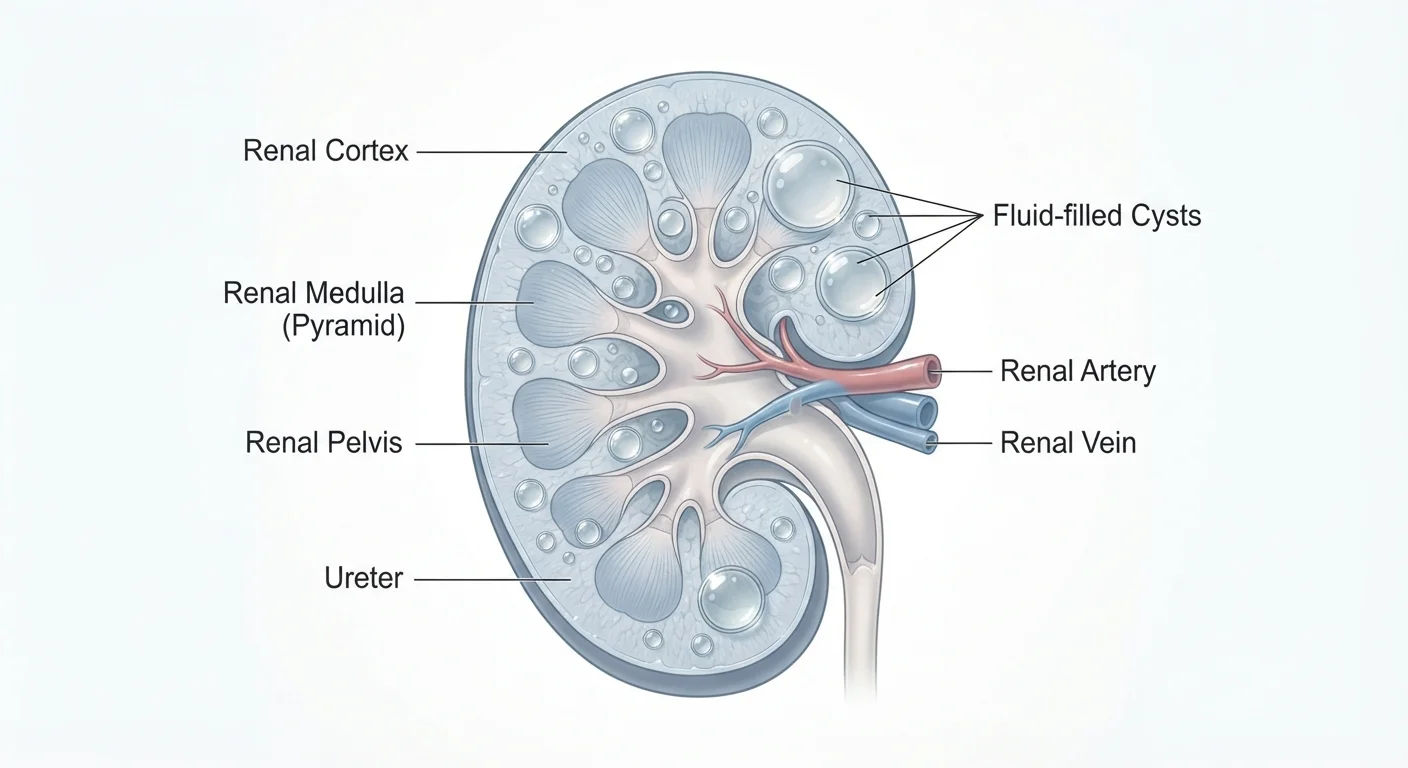
What Happens Inside the Kidneys
Healthy kidneys contain millions of tiny filtering units called nephrons. In polycystic kidney disease, certain cells within these units begin to divide abnormally, forming small pockets that fill with fluid. These pockets — the cysts — can number in the hundreds or thousands and gradually enlarge, sometimes reaching several centimeters in diameter.
As cysts accumulate, they crowd out healthy tissue. The kidneys themselves can grow to many times their normal size. Eventually, the kidneys may struggle to filter blood effectively, leading to a buildup of waste products. This progression toward chronic kidney disease (CKD) is the central concern in PKD management.
It is worth noting that PKD is distinct from conditions that simply cause growths in or near the kidneys. For context on how kidney-related conditions differ, see our article on kidney cancer risk factors and diagnosis, which covers a different set of mechanisms entirely.
The Two Forms of PKD and Their Genetic Roots
Autosomal dominant PKD (ADPKD) is responsible for roughly 90% of all PKD cases. A person needs to inherit only one faulty copy of either the PKD1 or PKD2 gene — from one parent — for the condition to develop. Symptoms typically surface between ages 30 and 50, though cysts may begin forming much earlier without causing noticeable problems.
Autosomal recessive PKD (ARPKD) is considerably rarer and more severe. A child must inherit a defective copy of the PKHD1 gene from both parents. ARPKD often manifests in infancy or early childhood and can affect the liver as seriously as the kidneys.
1 in 400–1,000
Global prevalence of ADPKD
ADPKD is estimated to affect between 1 in 400 and 1 in 1,000 individuals worldwide, making it one of the most common life-threatening genetic diseases.
~50%
Chance a child inherits ADPKD from an affected parent
Because ADPKD follows an autosomal dominant inheritance pattern, each child of an affected parent has approximately a 50% probability of inheriting the condition.
~50%
PKD patients reaching kidney failure by age 60
Research suggests roughly half of people with ADPKD will progress to kidney failure requiring dialysis or transplant by their early 60s, though this varies by gene mutation.
Understanding how hereditary risk operates across conditions can be valuable. Our piece on how family health patterns differ across major conditions offers useful comparative context for anyone navigating inherited disease risk.
Recognizing Symptoms and Getting Diagnosed
Because cysts grow slowly, ADPKD is often called a silent condition in early life. The most common first clue is elevated blood pressure, which can appear years before any kidney-related symptoms. Other signs that may eventually emerge include:
- Persistent pain in the back, sides, or abdomen
- Blood in the urine (hematuria)
- Frequent urinary tract or kidney infections
- A sensation of abdominal fullness or heaviness
- Kidney stones
Diagnosis typically begins with imaging. A renal ultrasound can reveal cysts reliably and is non-invasive. CT or MRI scans provide greater detail about cyst size and distribution. Genetic testing can confirm which gene mutation is involved, which is particularly relevant when imaging results are ambiguous or when younger family members want clarity about their risk.
Management and Living with PKD
There is no single treatment that stops PKD entirely, but several strategies can meaningfully slow its progression and protect quality of life. Blood pressure management is among the most critical interventions; sustained high blood pressure accelerates kidney damage. Diet, regular physical activity, and in some cases medication play roles in keeping blood pressure in a healthy range — though specific treatment plans should always be discussed with a healthcare provider.
Staying well hydrated, avoiding nephrotoxic substances (including certain over-the-counter pain relievers, which a doctor can identify), and promptly treating urinary tract infections are practical day-to-day priorities. Regular check-ins with a nephrologist — a kidney specialist — allow for monitoring of kidney function through blood and urine tests over time.
Share Your Family History with Your Doctor
If a parent or sibling has been diagnosed with PKD, inform your primary care physician even if you feel well. A simple ultrasound can detect cysts before symptoms appear, and early awareness gives you and your care team the best opportunity to monitor kidney health proactively. Genetic counseling is also available for families navigating inheritance questions.
For women managing additional hormonal or reproductive health concerns alongside PKD, it may help to understand related but distinct conditions. Our overview of polycystic ovary syndrome clarifies why PCOS and PKD, despite sharing the word "polycystic," are entirely separate conditions.
This article is for informational purposes only and is not a substitute for professional medical advice, diagnosis, or treatment. Always consult a qualified healthcare provider with questions about your health or any genetic condition.