Why Three Generations Matter
A single-generation snapshot of your health tells only part of the story. When clinicians can see patterns across three generations — you, your parents, and your grandparents — they gain a much richer picture of which conditions may run in your family and how strongly they cluster. Conditions such as heart disease, certain cancers, type 2 diabetes, and stroke often have both genetic and shared-environment components that become visible only when a family pattern emerges.
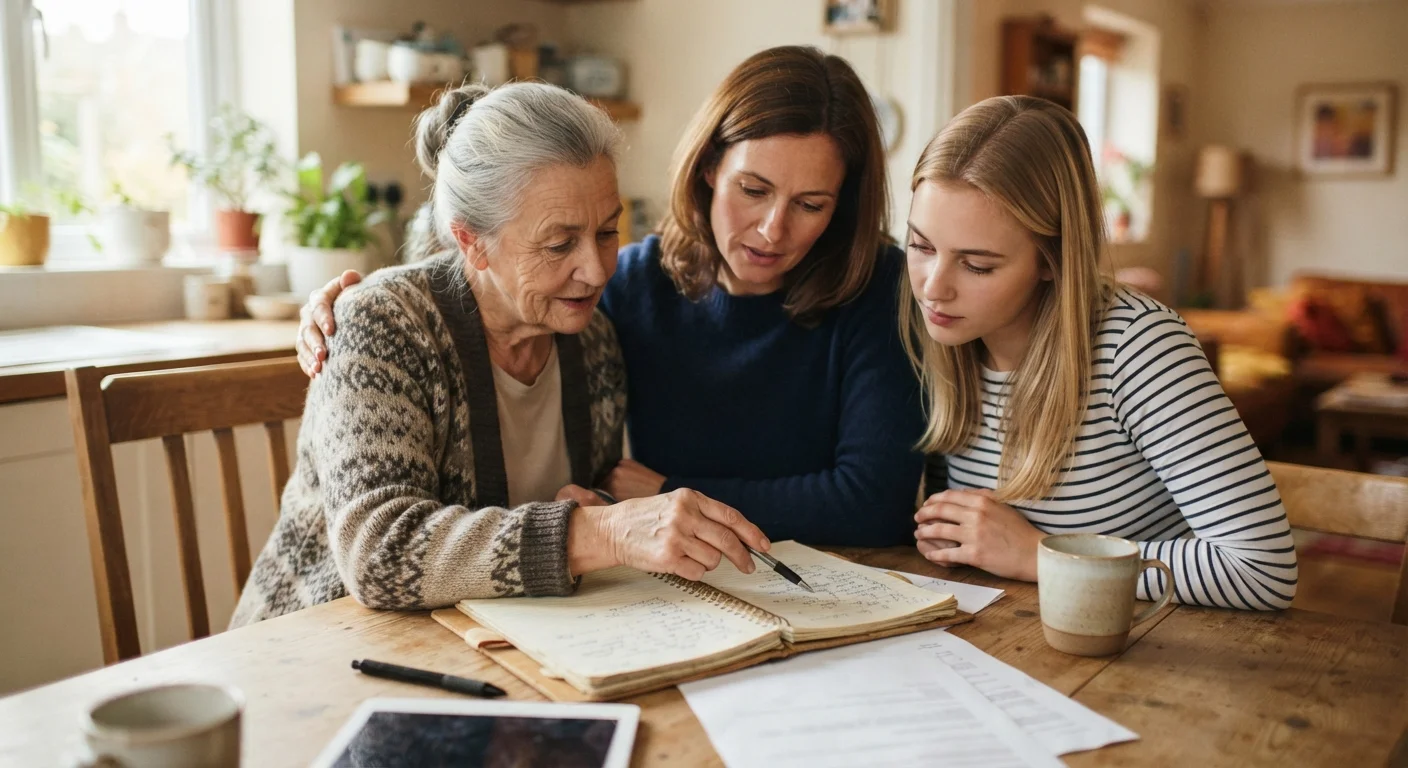
This checklist is designed to help you gather and organise that information systematically before your next appointment. You do not need a medical background to complete it. Think of yourself as a family health historian: your job is to collect facts, note gaps, and let your doctor interpret what the pattern may mean for your care.
If you are unsure where to start with conversations, our guide to key questions for family health history conversations can help you approach relatives thoughtfully. For a broader walkthrough of the gathering process, see Collecting Your Family Health History: A Step-by-Step Approach.
This Is Not a Diagnostic Tool
A family health portrait identifies patterns that may be worth discussing with a clinician — it does not diagnose any condition or confirm that you will develop any disease. Genetic risk is one factor among many, and most conditions involve a complex interplay of genes, lifestyle, and environment. Always bring your completed portrait to a qualified healthcare professional, such as your primary care physician or a genetic counsellor, for interpretation and personalised guidance.
Tools You Will Need
Before working through the checklist, gather the following resources. You do not need all of them — use what is available to you.
Blank family tree template or notebook
Provides a visual structure to map relatives and their health information across three generations.
Old family documents or obituaries
Obituaries and old medical paperwork often contain cause-of-death details that relatives may not recall accurately.
My Family Health Portrait (CDC tool)
A free, publicly available web tool from the U.S. Centers for Disease Control and Prevention designed specifically for collecting and organizing family health history.
Contact list of willing relatives
Identify one or two older relatives — often aunts, uncles, or a family historian — who are most likely to remember medical details about previous generations.
The Three-Generation Checklist
Work through each group below. Record what you know, note what is unknown, and flag items where information is uncertain. A partial record is far better than none.
Your Own Health Record
Parents (Both Sides)
Grandparents (All Four Lines)
Condition-Specific Details to Capture
Missing Information Is Normal — Don't Stop
Many people find that records for grandparents are incomplete, especially if they lived in another country or died decades ago. Do not let gaps stall the process. Record "unknown" clearly alongside what you do know. Clinicians are trained to work with partial histories, and even incomplete patterns can meaningfully guide screening decisions. See our article on building a health history with incomplete information for practical strategies.
Once your portrait is complete, the logical next step is bringing it to your care team. Our article on sharing your family health history with your doctor walks you through how to present this information so it directly shapes your screenings and prevention plan. For guidance on passing this record on to your own adult children, explore sharing family health information across generations.
This article is for general informational and educational purposes only and does not constitute medical advice. Always consult a qualified healthcare professional for guidance specific to your health situation.