
Why Low-Impact Exercise Matters for Joint Health
Joint pain — whether from osteoarthritis, rheumatoid arthritis, or age-related stiffness — is among the most common reasons older adults reduce their physical activity. Yet staying sedentary can accelerate joint deterioration, weaken the surrounding muscles that stabilise joints, and increase the risk of falls. Research consistently shows that appropriate movement reduces pain, improves function, and supports overall well-being in people with joint conditions.
The key word is appropriate. Low-impact exercise minimises the jarring, repetitive forces transmitted through joints during activities like running or jumping, while still delivering meaningful cardiovascular and muscular benefit. For a deeper look at what the evidence says, see how movement affects arthritis symptoms.
| Swimming / Water Aerobics | Stationary Cycling | Tai Chi | Chair Yoga | |
|---|---|---|---|---|
| Joint load | Very low (buoyancy offsets weight) | Low (weight supported by seat) | Low to moderate | Very low (seated support) |
| Cardiovascular benefit | High | High | Moderate | Low to moderate |
| Balance improvement | Moderate | Low | High | Moderate |
| Equipment / facility needed | Pool access required | Bike or gym access | Minimal — open floor space | Chair only |
| Suitable for severe mobility limits | Yes, with supervision | Partially (recumbent bike) | Partially | Yes |
| Evidence base for joint pain | Strong | Strong | Strong | Moderate and growing |
| Bone density benefit | Low | Low | Moderate | Low |
Comparing the Most Recommended Low-Impact Options
Four movement types consistently appear in clinical recommendations and exercise research for older adults with joint pain: aquatic exercise, cycling, tai chi, and chair yoga. Each has a distinct profile of benefits, practical requirements, and limitations worth weighing.
Swimming and Water Aerobics
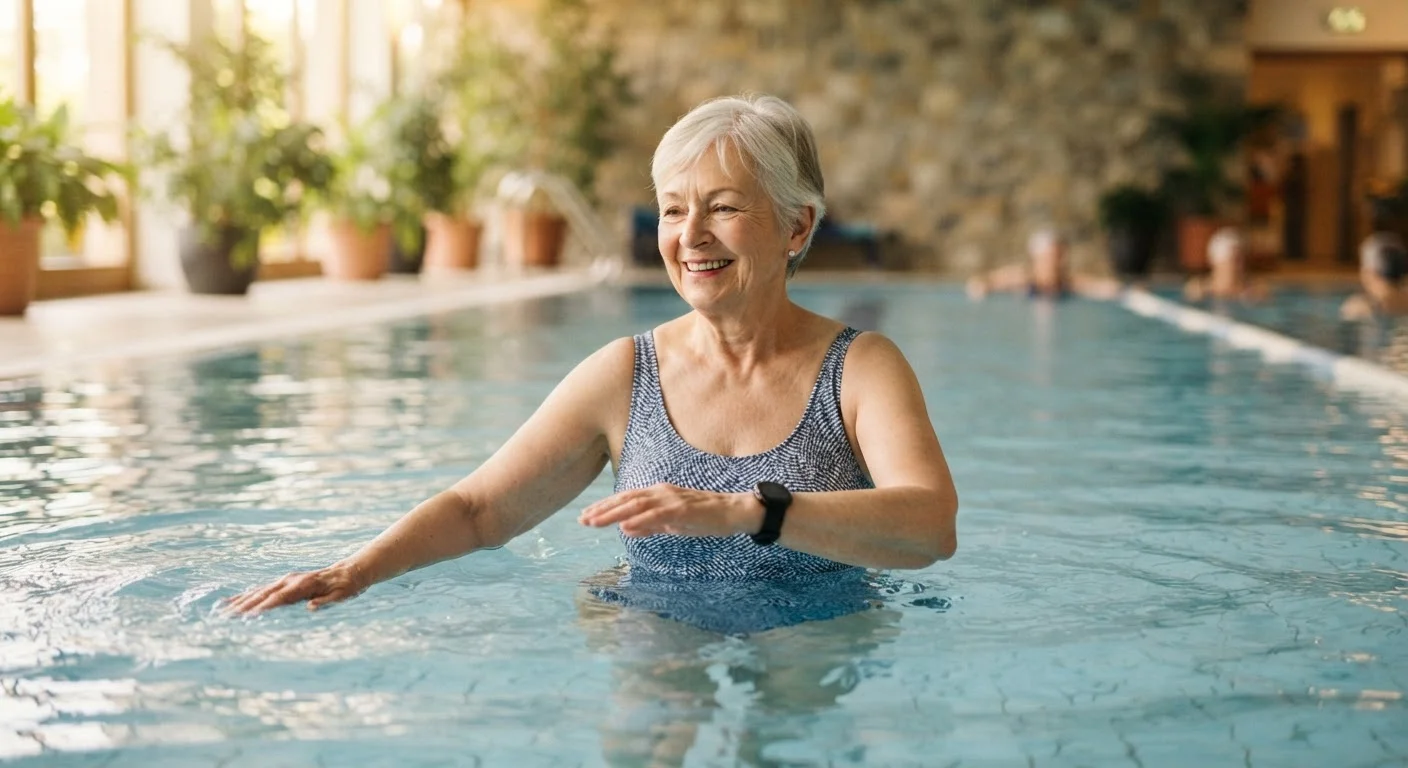
Water's buoyancy offsets up to 90% of body weight, dramatically reducing the load on hips, knees, and ankles. Warm-water pools add the benefit of heat, which helps relax muscles and ease stiffness before and during movement. Aquatic exercise feels different from land-based movement for good physiological reasons, and many people with severe joint pain find it the only form of aerobic exercise they can perform comfortably.
Stationary and Recumbent Cycling
Cycling keeps body weight supported while moving the knee joint through a smooth, circular range of motion — one that many physical therapists recommend specifically for knee osteoarthritis. Recumbent bikes offer back support and a lower entry point for those with balance concerns. Resistance and duration can be adjusted incrementally as strength and tolerance improve.
Tai Chi
This ancient Chinese movement practice emphasises slow, flowing transitions, deep breathing, and weight shifting. Multiple clinical trials have found tai chi reduces pain and stiffness in older adults with knee osteoarthritis and improves balance sufficiently to lower fall risk. It requires no equipment and can be practised at home once learned.
Getting Started With Tai Chi
Many community centres, YMCAs, and senior centres offer beginner tai chi classes specifically for older adults. Starting in a group setting allows an instructor to observe your form and adapt movements to your range of motion. Even two or three sessions a week have shown meaningful benefits in research on older adults with arthritis.
Chair Yoga
Chair yoga adapts traditional yoga postures to a seated or standing position using a chair for support. It builds flexibility, core stability, and breathing awareness — all meaningful contributors to joint health — without requiring floor-level transitions that can be difficult or risky for many older adults. For structured movement ideas, gentle movement routines designed for stiff joints offer a practical starting point.
Choosing What Works for Your Body
No comparison table can substitute for personal experience and professional guidance. Factors including which joints are affected, your current fitness baseline, available facilities, and personal preference all shape which activity you are most likely to continue. Consistency matters far more than intensity for long-term joint health.
If you are new to structured exercise or returning after a period of inactivity, starting safely when joint pain is a barrier is essential reading. Once you have found what suits you, building a sustainable daily movement routine will help you maintain the habit long-term.
~40%
Pain reduction with regular aquatic exercise
A Cochrane review of aquatic exercise trials found meaningful reductions in pain and physical disability in adults with hip or knee osteoarthritis.
29%
Fall risk reduction with tai chi
A meta-analysis published in the Journal of the American Geriatrics Society found tai chi reduced fall incidence by approximately 29% in older adults.
This article is for general informational purposes only and is not a substitute for personalised medical advice. If you have a joint condition or other health concern, consult a qualified healthcare provider before beginning any new exercise program.