
Why One Drug Isn't the Whole Story
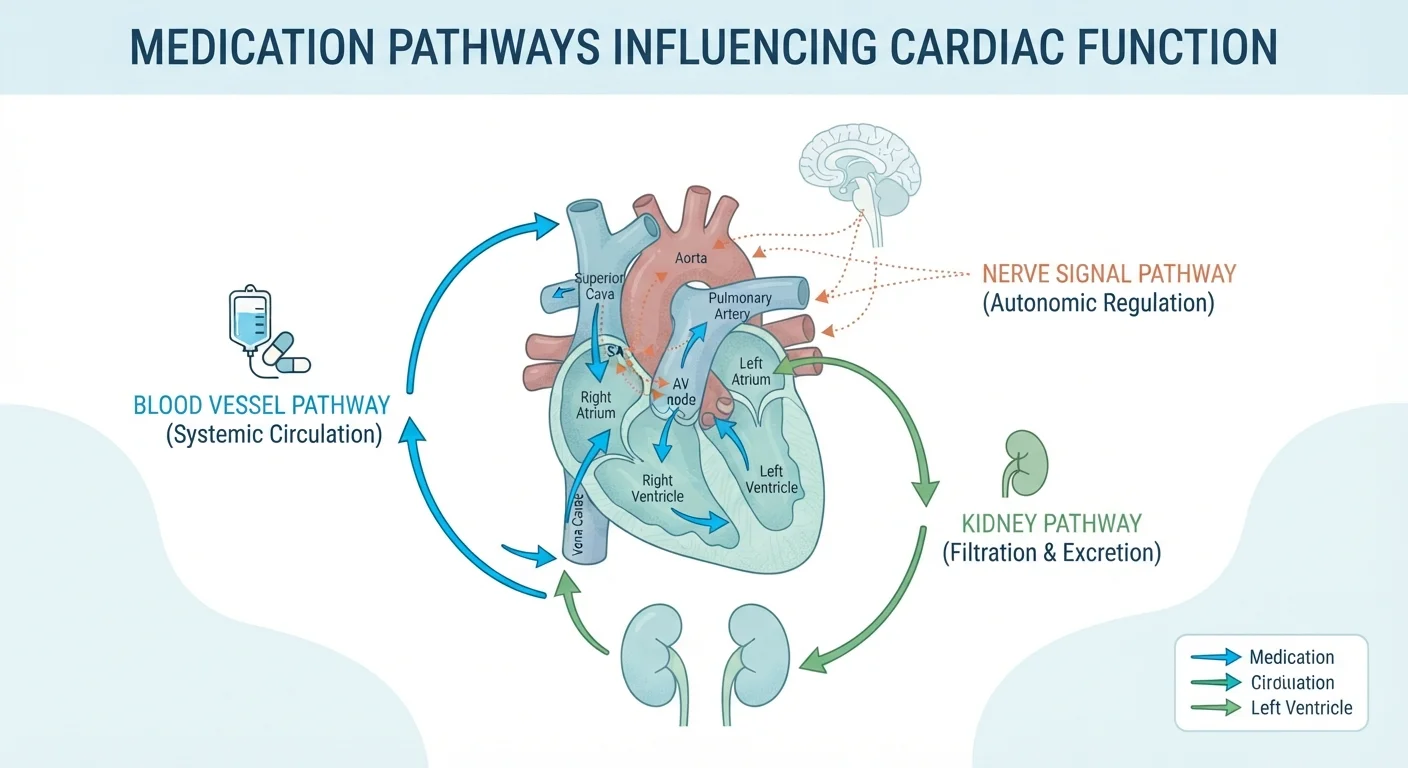
High blood pressure — or hypertension — doesn't have a single cause. Your blood pressure is shaped by how hard your heart beats, how much fluid flows through your vessels, how relaxed or constricted those vessels are, and signals from hormones and nerves. Because so many systems contribute, researchers have developed several classes of medications, each targeting a different piece of that puzzle.
Understanding what each class actually does can help you have more informed conversations with your doctor and feel less uncertain about what you're taking. For a broader foundation on how drug classes work in general, see our introduction to drug classes.
~47%
U.S. adults with high blood pressure
According to the Centers for Disease Control and Prevention (CDC), nearly half of American adults have hypertension, defined as readings at or above 130/80 mmHg.
2 or more
Medications often needed to reach target
Clinical guidelines note that many patients with hypertension require combination therapy — two or more drug classes — to achieve adequate blood pressure control.
1 in 4
Adults with hypertension who have it controlled
Despite widespread availability of effective medications, the CDC estimates that only about 1 in 4 adults with hypertension has it under control.
Diuretics: Lightening the Load
Often called "water pills," diuretics work primarily through the kidneys. They prompt your kidneys to excrete more sodium and water in urine, which reduces the total volume of blood circulating through your body. Less volume means the heart has less fluid to pump — and pressure drops as a result.
Thiazide diuretics are among the most widely used in hypertension treatment and are frequently a first step in guidelines. Loop diuretics act more powerfully and are often used when kidney function or heart failure is also a concern. Both types require monitoring of electrolytes — particularly potassium — because increased urination can deplete minerals the body needs.
Keep Electrolytes in Check on Diuretics
If you're taking a diuretic, your doctor may periodically order blood tests to monitor potassium and sodium levels. Low potassium (hypokalemia) can cause muscle cramps, weakness, and heart rhythm irregularities. Report any unusual muscle weakness or cramping to your healthcare provider promptly.
ACE Inhibitors and ARBs: Blocking a Pressure-Raising Hormone
The renin-angiotensin-aldosterone system (RAAS) is a hormonal chain your body uses to regulate blood pressure. One key player in this chain, a molecule called angiotensin II, causes blood vessels to narrow and triggers the retention of sodium — both of which raise pressure.
ACE inhibitors (such as the drug class ending in "-pril") block the enzyme that produces angiotensin II, preventing vessels from tightening. ARBs (angiotensin receptor blockers, often ending in "-sartan") take a slightly different approach: they don't stop angiotensin II from being made, but they block the receptors it would attach to, so its narrowing effect can't take hold.
Both classes are well-suited for people who also have diabetes or kidney disease, since they can offer protective effects on kidney function. A dry, persistent cough is a known side effect of ACE inhibitors; ARBs are often prescribed as an alternative for people who experience this.
Beta-Blockers: Slowing the Heart's Pace
Adrenaline (epinephrine) and related stress hormones normally bind to receptors in the heart called beta receptors, signaling it to beat faster and harder. Beta-blockers occupy those receptors, essentially blocking the signal. The result is a slower, less forceful heartbeat — which directly lowers blood pressure.
Beta-blockers are particularly useful when hypertension occurs alongside other heart conditions, such as heart failure or a history of heart attack. They are not typically a first-line choice for uncomplicated high blood pressure in older adults, though they remain an important option when specific cardiac conditions are present. Fatigue and cold hands or feet are among the more commonly reported side effects.
Older adults may be more sensitive to the heart-slowing effects of beta-blockers. Our article on how age affects medication response explains why this happens at a physiological level.
Calcium Channel Blockers: Relaxing the Vessel Walls
Calcium plays a key role in muscle contraction — including in the muscular walls of your arteries. Calcium channel blockers prevent calcium from entering these muscle cells, which causes the arterial walls to relax and widen. Wider vessels mean blood flows with less resistance, and pressure falls.
There are two main subtypes. Dihydropyridines (ending in "-dipine") act primarily on blood vessels and are commonly used for hypertension. Non-dihydropyridines affect both vessels and the heart's electrical system, slowing the heart rate as well. Ankle swelling is a frequently reported side effect of the vessel-focused subtype.
Grapefruit and Calcium Channel Blockers
Grapefruit and grapefruit juice contain compounds that interfere with an enzyme in the gut responsible for breaking down certain calcium channel blockers. This can cause drug levels in the blood to rise higher than intended, increasing the risk of side effects. If you take a calcium channel blocker, ask your pharmacist whether grapefruit is a concern for your specific medication.
Pairing medication with consistent lifestyle changes offers the most durable results. Explore the evidence behind everyday behaviors in our guide to daily habits that support healthy blood pressure.
This article is for general informational and educational purposes only and does not constitute medical advice. Always consult a qualified healthcare professional before starting, stopping, or changing any medication.