
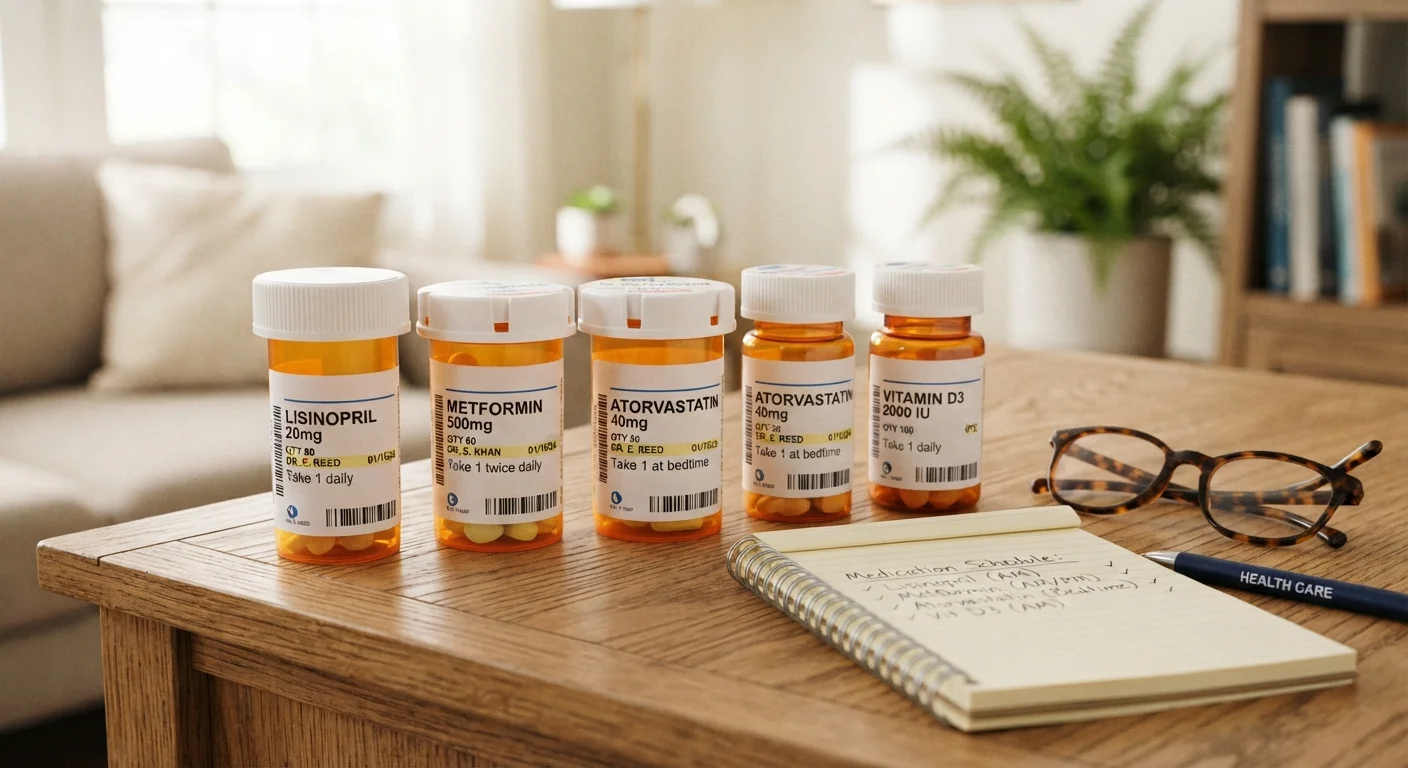
Why Drug Classes Exist
When a prescriber hands you a new medication, the name on the label rarely tells you much on its own. That's where drug classes come in. A drug class is a grouping of medications that share either a similar chemical structure, a comparable mechanism of action, or both. Organizing medications this way helps clinicians predict how a drug will behave in the body — and helps patients begin to make sense of what they're taking.
Think of it like organizing tools by function: hammers, screwdrivers, and wrenches each do different things, but all screwdrivers work on a similar principle. Medications grouped in the same class generally act on the same biological target or pathway. This means they often share side effect patterns and, importantly, interaction risks.
Drug class
A grouping of medications that share a similar way of working in the body. Drugs in the same class often treat related conditions and carry similar risks.
Mechanism of action
The specific way a drug produces its effect in the body — for example, by blocking a receptor, slowing an enzyme, or reducing a particular substance.
Drug interaction
What happens when one medication changes the way another medication works — sometimes making it stronger, weaker, or more likely to cause side effects.
Polypharmacy
The use of multiple medications by one person at the same time, which is common in older adults and requires careful management to avoid interactions.
Antihypertensive
Any medication used to lower high blood pressure. There are several subclasses, each working through a different mechanism in the body.
Anticoagulant
A medication that reduces the blood's ability to clot, commonly referred to as a blood thinner. Used to prevent stroke and dangerous clots.
For anyone just beginning to manage regular prescriptions — a common experience for older adults — understanding drug classes is a practical first step. It's the foundation that makes other information, like side effect warnings and dosing instructions, easier to interpret. For a broader orientation to managing several medications at once, see our introduction to medication management for older adults.
Common Drug Classes and What They Do
Below are several drug classes frequently prescribed to older adults in the United States. This is a general educational overview — not a treatment guide.
- Antihypertensives: A broad category covering several subclasses — including ACE inhibitors, calcium channel blockers, and diuretics — all used to help lower blood pressure. They work through different pathways, but share the goal of reducing cardiovascular strain.
- Statins: These medications reduce the liver's production of cholesterol and are widely prescribed to lower cardiovascular risk. Common side effects involve muscle discomfort, which your provider should know about immediately.
- Beta-blockers: They slow the heart rate and reduce the force of heart contractions by blocking the effects of adrenaline. Used for high blood pressure, heart failure, and certain rhythm disorders.
- Anticoagulants: Often called blood thinners, these medications reduce the blood's ability to clot. They are used to lower stroke risk in people with atrial fibrillation or to prevent clots after certain procedures. They require careful monitoring because of bleeding risks.
- Proton pump inhibitors (PPIs): These reduce stomach acid production and are commonly prescribed for acid reflux, ulcers, or to protect the stomach lining when taking other medications.
- Oral hypoglycemics: A class that includes several subgroups used to help manage blood sugar in people with type 2 diabetes. Different subclasses work through very different mechanisms.
Keep a Drug Class List With Your Medications
Ask your pharmacist to note the drug class beside each medication on your personal medication list. This single addition makes it easier for any provider — including emergency personnel — to quickly assess your regimen. It also helps you spot duplications if more than one prescriber is involved in your care.
The Side Effects & Safety hub provides more detail on what to expect from many of these medication types.
How Drug Classes Affect Safety and Interactions
Understanding a medication's class becomes especially important when you're taking more than one prescription — a situation that describes many older adults. When medications from different classes interact, the results can range from minor to serious. Some interactions reduce how well a drug works; others can amplify an effect to an unsafe degree.
Never Stop or Switch Medications on Your Own
Learning that two of your medications belong to the same class might make it tempting to stop one without asking. This can be dangerous — even within the same class, dosing, timing, and specific effects can differ significantly. Always consult your prescriber before making any change to your medication routine.
Drug interactions don't only happen between two prescription medications. Over-the-counter drugs, vitamins, supplements, and even certain foods can interact with prescription drug classes. For example, grapefruit juice is known to affect the metabolism of several medications, including some statins and calcium channel blockers, in ways that can be clinically significant.
Because drug class knowledge helps predict interaction patterns, it's worth knowing the class of each medication you take. Keeping an updated medication list — including supplements — is one of the most effective safety habits you can build. Learn more in the Managing Your Medications hub.
Using This Knowledge at the Pharmacy and Clinic
You don't need a medical degree to ask informed questions about your prescriptions. Knowing that a new medication belongs to, say, the anticoagulant class immediately tells you to ask about bleeding precautions, food interactions, and monitoring needs. That context shapes the entire conversation with your care team.
Some practical ways to apply what you've learned:
- When a new medication is prescribed, ask your prescriber or pharmacist: "What class does this belong to, and how does it work?"
- Request a medication review if you are taking five or more prescriptions — this is sometimes called a polypharmacy review and can catch unnecessary duplications or interaction risks.
- Use the medication guide that comes with each prescription; it typically identifies the drug class and lists common interactions.
Before your next appointment or pharmacy visit, consider reviewing questions worth asking every time you start a new medication. Understanding drug labels is another useful skill — our plain-English drug label reference explains the terminology you'll most often encounter.
This article is for general informational and educational purposes only. It is not medical advice and should not be used as a substitute for guidance from a qualified healthcare professional. Always consult your doctor, pharmacist, or another licensed provider before making any decisions about your medications.