
Why Drug Label Language Matters
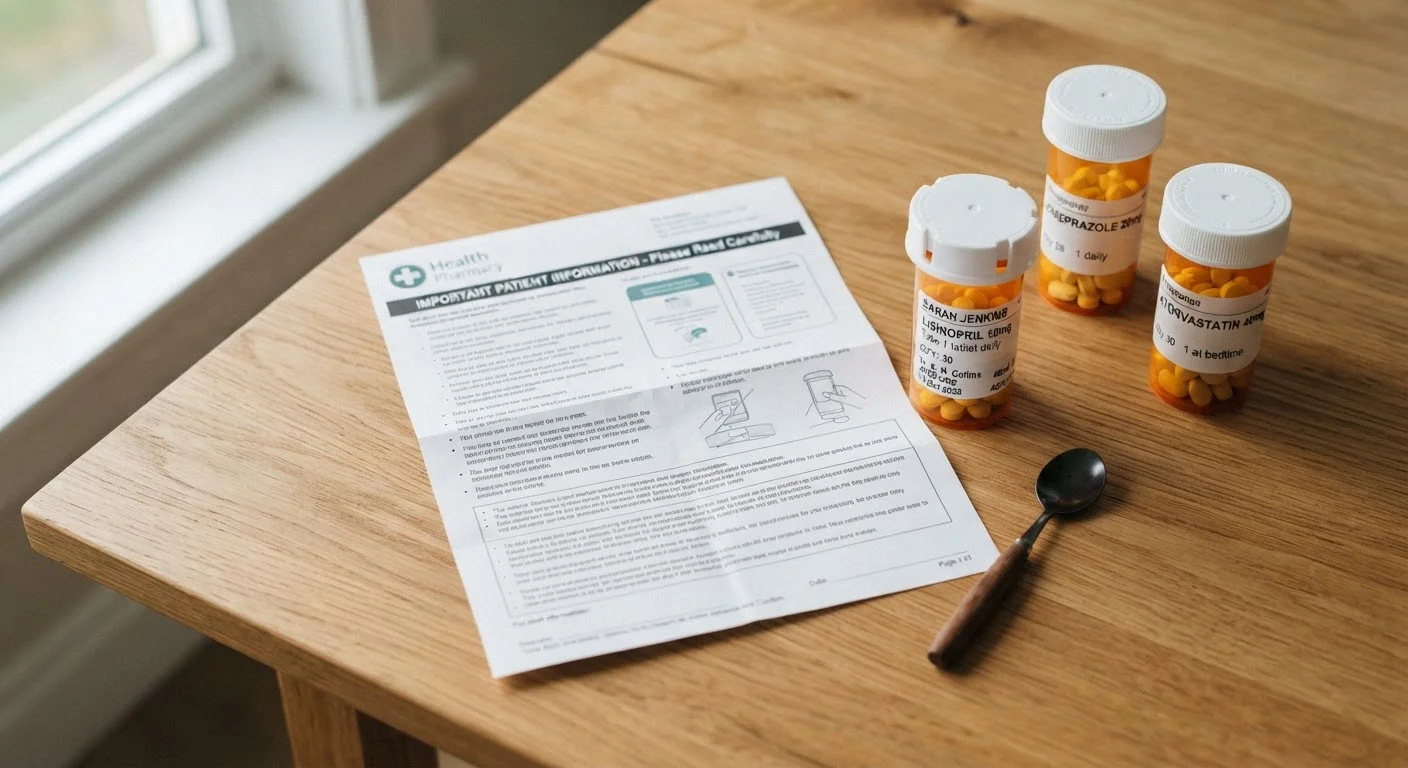
Prescription bottles, pharmacy leaflets, and medication guides are full of specialized terminology that can feel like a foreign language — especially if you're managing several medications at once. Misunderstanding even one term can lead to taking a dose at the wrong time, missing a drug interaction warning, or simply feeling anxious and confused about your treatment.
This reference is designed as a plain-English lookup guide for the terms you're most likely to encounter. It complements hands-on walkthroughs like Medication Labels Decoded and the guide to reading medication labels safely after 60. Bookmark this page and return whenever an unfamiliar word appears on a label or in a conversation with your pharmacist.
This article is for general health education only and is not a substitute for advice from your doctor, pharmacist, or other qualified healthcare professional.
| Most misread label term | "PRN" (as needed) — often confused with a scheduled dose (Institute for Safe Medication Practices) |
| Drugs with narrow therapeutic index | Examples include warfarin, lithium, and digoxin (FDA drug safety communications) |
| Why half-life matters for older adults | Aging slows drug metabolism, extending how long medications stay active (National Institute on Aging) |
| Common contraindication example | NSAIDs contraindicated in severe kidney disease (FDA prescribing information) |
| Titration purpose | Minimizes side effects while finding an effective dose (General pharmacology practice) |
Key Drug Label Terms Defined
The definitions below cover the terms most frequently encountered on prescription labels, patient information leaflets, and medication guides. They are organized alphabetically for easy lookup.
Adverse Effect
An unintended, harmful reaction to a medication taken at a normal dose. Unlike a side effect (which may be mild and expected), an adverse effect often requires medical attention.
Contraindication
A specific condition, drug, or circumstance that makes a medication unsafe to use. For example, a drug may be contraindicated if you have a particular allergy or kidney problem.
Half-Life
The time it takes for the amount of a drug in your body to reduce by half. A drug with a long half-life stays in your system longer, which affects how often you take it.
Indication
The approved medical reason for prescribing a drug. If a label says 'indicated for hypertension,' that means the drug is approved to treat high blood pressure.
Titration
The process of gradually adjusting a medication dose — usually starting low and increasing slowly — to find the most effective and tolerable amount for an individual.
Bioavailability
The proportion of a drug dose that actually enters your bloodstream and becomes active. A drug taken by injection typically has higher bioavailability than one taken by mouth.
Metabolism (Drug)
The process by which your body chemically breaks down a medication, primarily in the liver. Metabolism affects how quickly a drug is cleared from your system.
Pharmacokinetics
The study of how your body absorbs, distributes, metabolizes, and eliminates a drug. Doctors use pharmacokinetic principles to set appropriate dosing schedules.
PRN (Pro Re Nata)
A Latin phrase meaning 'as needed.' A PRN medication is taken only when a symptom occurs — such as pain or nausea — rather than on a fixed schedule.
Renal Clearance
The rate at which the kidneys filter a drug out of the blood and excrete it in urine. Reduced kidney function can slow this process, causing drugs to build up to higher levels.
Therapeutic Index
The range between the dose that produces a therapeutic (beneficial) effect and the dose that causes toxic effects. A narrow therapeutic index means small dose changes can have significant consequences.
Drug Interaction
When one drug changes the way another drug works in your body — making it stronger, weaker, or causing new effects. Interactions can also occur with certain foods, supplements, or alcohol.
For a broader look at how medications are organized by function — such as antihypertensives or anticoagulants — see Understanding Drug Classes. If you want to look up specific side effects by medication type, Common Drug Side Effects: A Plain-Language Reference Guide is a useful companion.
A Note on Off-Label Terms and Abbreviations
Prescription labels sometimes include abbreviations like 'QD' (once daily), 'BID' (twice daily), or 'TID' (three times daily). These Latin-derived shorthand terms are being phased out by many healthcare systems due to the risk of misreading, but you may still encounter them on older prescriptions or handwritten labels. If any abbreviation on your label is unclear, ask your pharmacist to write out the full instruction in plain English before you leave the pharmacy.
How to Use This Reference with Your Care Team
Knowing these terms helps you participate more actively in conversations with your doctor and pharmacist. If a word on your label isn't in this guide, write it down and bring it to your next appointment — your pharmacist is an excellent resource and is trained to explain medication information in plain language.
Managing multiple prescriptions adds another layer of complexity. The Managing Your Medications hub offers practical guidance on organizing, timing, and tracking your daily medications. Similarly, understanding side effects and safety as a broader topic can help you recognize when something unusual needs prompt attention.
When in doubt, always ask. No question about your medication is too small, and clarifying a term before taking a drug is always safer than guessing.
This article is for informational purposes only and is not medical advice. Always consult a licensed healthcare professional for guidance specific to your health situation.