
What Is Polypharmacy and Why Does It Matter?
Polypharmacy — generally defined as taking five or more medications simultaneously — is increasingly common among older adults managing multiple chronic conditions. It is not inherently unsafe, but it does require careful oversight. The more medications in a regimen, the greater the statistical likelihood of a drug interaction, a missed dose, or an adverse effect going unnoticed.
Older adults are particularly vulnerable because the body changes with age in ways that affect how medications behave. The kidneys and liver — the primary organs responsible for processing and clearing drugs — often work more slowly over time. Body composition shifts, affecting how drugs distribute through the body. For a thorough look at these physiological factors, see why older adults react differently to medications.
40%
Older adults taking 5 or more medications
Research published in medical literature consistently finds that roughly 40% of adults over 65 in the US take five or more prescription medications concurrently.
2x
Increased adverse drug event risk with polypharmacy
Studies in geriatric pharmacology indicate that taking five or more medications approximately doubles the risk of experiencing an adverse drug event compared to taking fewer.
1 in 3
Hospital admissions linked to medication issues
Estimates from geriatric medicine research suggest medication-related problems account for a significant proportion of preventable hospital admissions among older adults.
Understanding polypharmacy is the first step toward managing it well. The goal is not to avoid necessary medications, but to ensure every drug in a regimen still has a clear, current reason to be there.
Building a Complete Medication List
A complete, up-to-date medication list is arguably the single most important tool in safe medication management. It should cover every prescription drug, over-the-counter medication, vitamin, supplement, and herbal product you take — including dose, frequency, and the reason each was prescribed.
This list becomes critical at emergency room visits, specialist appointments, and any time a new prescription is written. Keeping a home medication list explains exactly what to include and how to keep it current.
Keep Your List Current After Every Visit
Update your medication list the same day as any appointment where a drug is added, changed, or discontinued. Outdated lists are one of the most common contributors to medication errors at follow-up visits and in emergencies. A list that is six months old may no longer reflect your actual regimen.
Store a printed copy somewhere accessible at home — such as on the refrigerator — and keep a photo of it on your phone. Make sure a trusted family member or caregiver knows where to find it.
Creating a Safe Daily Routine
Consistency is the cornerstone of safe medication use. Taking medications at the same time each day, tied to an existing habit like a meal or brushing your teeth, reduces the risk of both missed and accidental double doses.
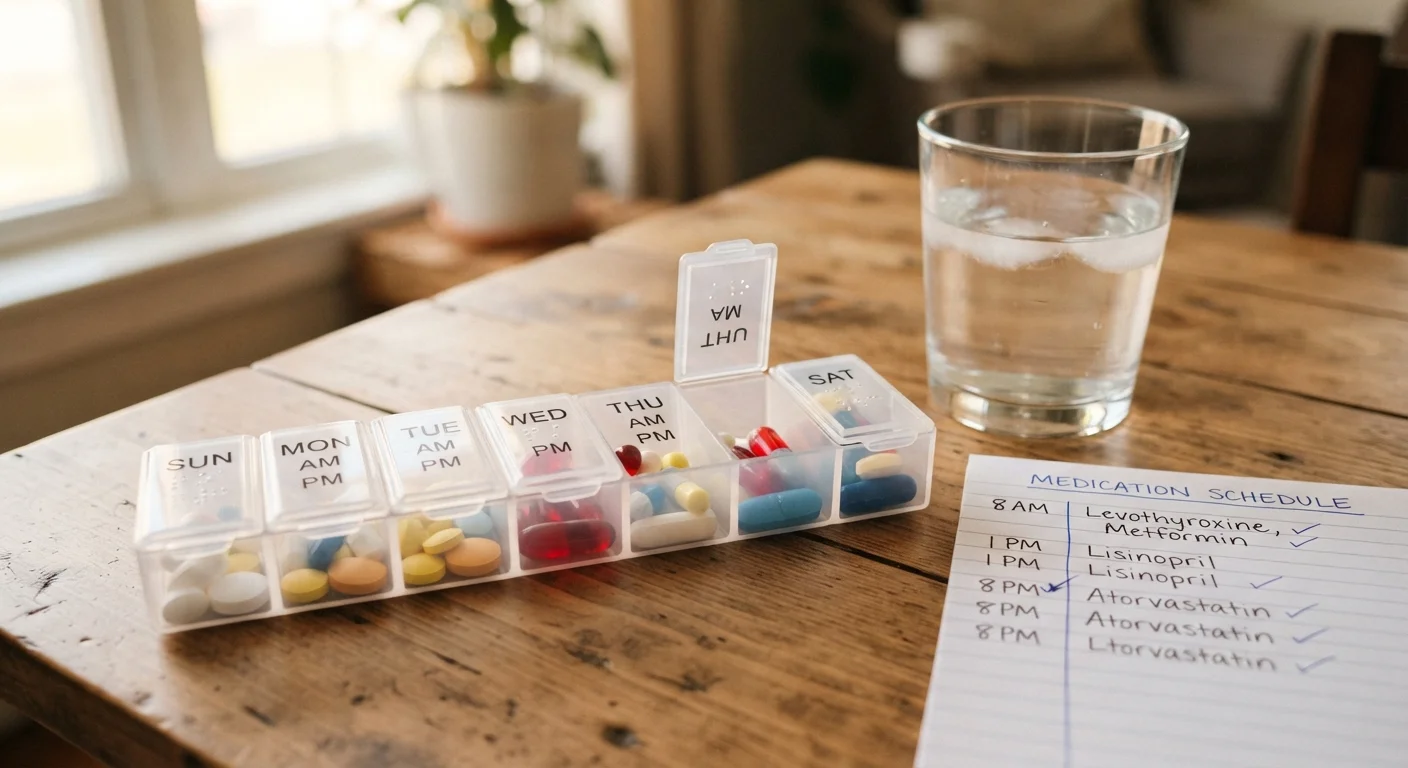
Pill organizers are practical aids — a weekly organizer with compartments for morning, noon, evening, and bedtime helps confirm at a glance whether a dose has been taken. Automatic pill dispensers with alarms offer a more hands-off solution. For a detailed checklist covering storage, timing, and refills, see keeping track of multiple prescriptions safely.
When filling a new prescription, ask the pharmacist to run it against your full medication list — not just what that pharmacy has on file. Bring your written list every time.
Pharmacies may not always have a complete cross-pharmacy picture of your medications, and a pharmacist review against your full list is the most reliable way to catch potential interactions before they cause harm.
If a medication causes a new symptom — such as dizziness, confusion, or digestive upset — document the timing and report it to your doctor before assuming it will pass on its own.
New symptoms in older adults are frequently medication-related, and early reporting allows for timely adjustments rather than a worsening of the effect or unnecessary additional prescriptions.
Proper storage also matters. Heat, humidity, and light can degrade some medications — the bathroom cabinet, despite being traditional, is often a poor choice. Most medications store best in a cool, dry location away from direct sunlight, unless the label or pharmacist specifies otherwise.
Understanding Drug Interactions
A drug interaction occurs when one substance alters the way another works in the body — either amplifying its effect, reducing it, or producing an unexpected reaction. Interactions can occur between two prescription drugs, between a prescription drug and a supplement, or between a medication and certain foods.
Common examples include blood thinners becoming more or less effective when combined with certain antibiotics or high doses of vitamin K-rich foods, and some cholesterol-lowering medications interacting with grapefruit juice. The risk profile grows with each additional medication added to a regimen. For a closer look at the most common interaction types, drug interactions older adults most often encounter is a useful reference.
Never Change Medications Without Consulting a Professional
Adding supplements, splitting pills, or stopping a drug without guidance can have serious health consequences. This applies to over-the-counter products and vitamins as much as it does to prescription drugs. Bring any concerns about your regimen to your doctor or pharmacist rather than making independent adjustments.
Never start, stop, or change any medication — including supplements and over-the-counter products — without first consulting your doctor or pharmacist. Even seemingly harmless additions can affect how existing medications perform.
Communicating Effectively With Your Care Team
Many older adults see multiple specialists in addition to their primary care provider. Each prescriber may not have full visibility into what others have ordered. Bringing your complete medication list to every appointment — and updating it after every visit — helps bridge those gaps.
Your pharmacist is one of the most accessible and underused members of your care team. They are trained to identify potential interactions and can clarify instructions that feel unclear. Talking with your pharmacist about how your medications work offers practical guidance on making the most of those conversations.
New to Managing Multiple Medications?
If you are just beginning to navigate a regimen involving several drugs, it helps to start with the fundamentals. Understanding why medications are prescribed, how they work together, and what habits reduce risk will give you a much stronger foundation. A good starting point is linked in the section above.
If you are new to managing multiple medications and want to build foundational habits, getting started with medication management provides a solid introduction to core principles and safety practices.
When to Review Your Medications
Medications are often prescribed in response to a specific health event and may not need to remain indefinitely. A formal medication review — sometimes called a brown bag review, where you bring all your medications to a single appointment — allows your doctor to assess whether each drug still has a current, necessary purpose, check for duplications, and identify anything that may now carry more risk than benefit.
Most clinical guidelines suggest a comprehensive medication review at least once annually, and after any significant health change such as a hospitalization, new diagnosis, or noticeable side effect. For a broader understanding of how medications are categorized and why certain types behave the way they do, the How Medications Work hub is a useful resource.
Do Not Adjust Medications Without Guidance
Stopping a medication abruptly or reducing a dose without medical direction can cause withdrawal effects or allow an underlying condition to worsen. Always discuss any desire to change your regimen with your prescribing doctor or pharmacist first.
Do not stop or reduce any medication on your own based on this article or any other general health information. Changes to your regimen should always be made in consultation with a qualified healthcare provider who knows your full medical history.
This article is for general informational and educational purposes only and does not constitute medical advice. Always consult a qualified healthcare professional before making any changes to your medications or health routine.