
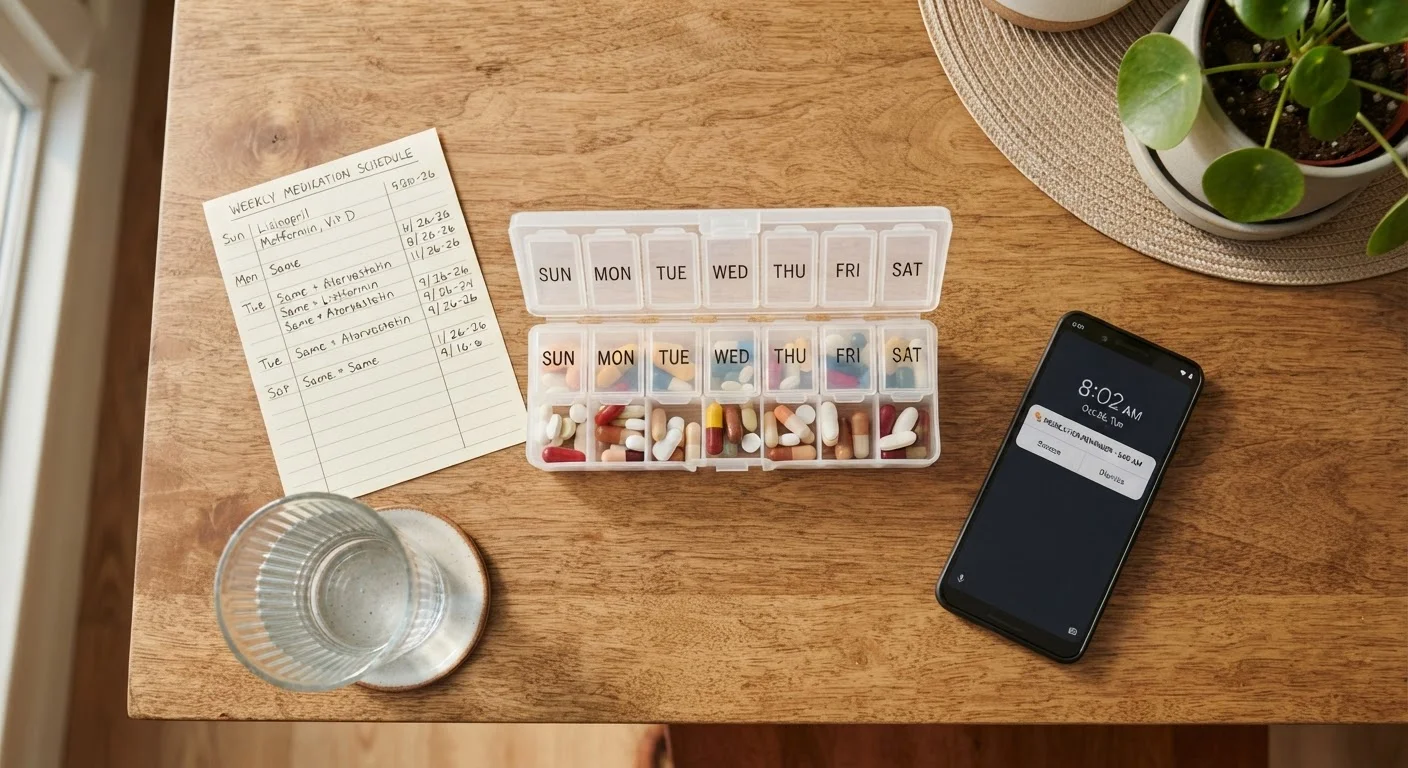
Why Managing Multiple Medications Demands a System
Taking five or more medications daily — a situation called polypharmacy — is common among adults over 65. Each drug has its own dosing schedule, storage requirements, refill timeline, and potential for interacting with other drugs. Without a deliberate system, it is easy to miss a dose, double up accidentally, or run out of a critical medication over a holiday weekend.
This checklist is designed to help you audit your current setup, close any gaps, and build habits that make multi-medication management safer and less stressful. Work through it at your own pace — you do not need to do everything at once. For a broader look at the challenges polypharmacy presents, see our practical guide for older adults managing multiple medications.
Build and Maintain Your Medication Record
Organise Daily Dosing
Store Medications Correctly
Manage Refills Proactively
Coordinate Across All Providers
Tools That Make This Checklist Easier
No single tool works for everyone, but the right combination can remove much of the mental load from daily medication management. The options below range from low-tech to digital — choose what fits your comfort level and lifestyle.
Weekly Pill Organizer
Divides your daily doses into labeled compartments so you can see at a glance whether each dose has been taken.
Written or Printed Medication List
Serves as a portable, shareable record for every provider and caregiver involved in your care.
Smartphone Medication Reminder App
Sends timed alerts for each scheduled dose and can log when doses are taken or skipped.
Pharmacy Medication Synchronization Service
Aligns all your refill dates to a single pickup day each month, reducing the chance of running out unexpectedly.
For a side-by-side look at reminder options, our article on pill organizers, apps, and alarms walks through the trade-offs in detail.
Communicating Your Medication List to Every Provider
One of the most preventable sources of medication error is fragmented information — when your cardiologist does not know what your rheumatologist prescribed, or your pharmacist is unaware of a supplement you started. Every clinician involved in your care needs a complete, current picture.
Never Assume One Provider Knows What Another Prescribed
Electronic health record systems do not always communicate across different hospital systems, clinics, or pharmacy chains. It is your responsibility — or that of a trusted caregiver — to carry a current medication list to every appointment. Do not rely on providers to pull up a complete history automatically.
Before any medical appointment, bring a printed or written copy of your full medication list — including over-the-counter drugs, vitamins, and herbal supplements. Our medication review checklist for doctor appointments can help you prepare that summary efficiently. For questions to raise once you are in the room, see the medication safety conversation checklist.
Maintaining a single authoritative record at home that you update whenever anything changes is the simplest way to stay consistent. Learn why every older adult should keep a home medication list and what it should contain.
This article provides general health information for educational purposes only and is not a substitute for personalized medical advice. Always consult your doctor, pharmacist, or another qualified healthcare professional before making any changes to your medications or health routine.