
What the FDA Actually Requires of Generic Drugs
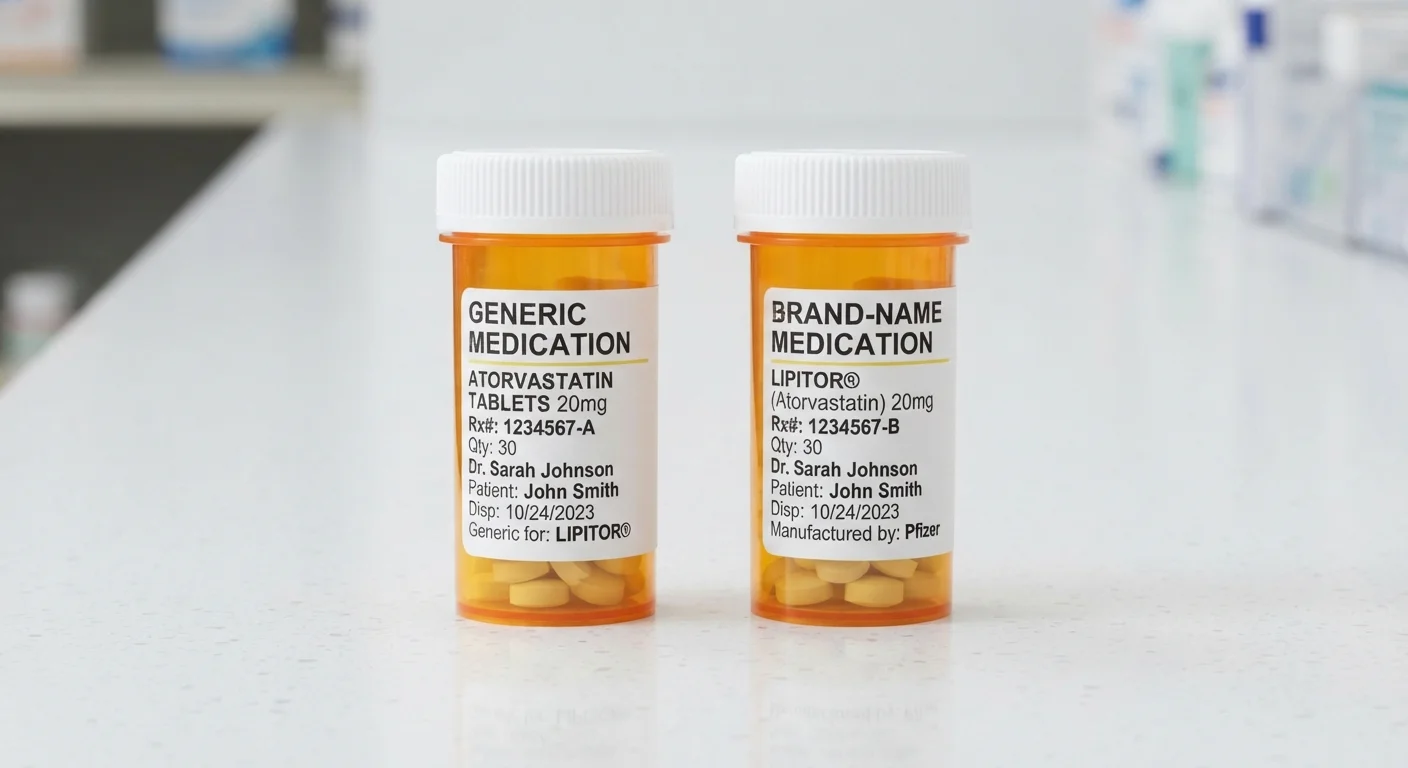
The U.S. Food and Drug Administration (FDA) requires that a generic drug contain the same active ingredient, in the same strength and dosage form, as its brand-name counterpart. Manufacturers must also demonstrate bioequivalence — meaning the generic delivers the active ingredient into the bloodstream at a rate and extent comparable to the original.
What the FDA does not require is that the inactive ingredients — called excipients — be identical. Excipients include fillers, binders, dyes, coatings, and preservatives. These components affect how a tablet looks and feels, how quickly it dissolves, and occasionally how it is absorbed. They are not pharmacologically active in the traditional sense, but for sensitive individuals they can matter.
For a deeper look at what is and isn't the same between formulations, see our evidence-based overview of generics vs. brand-name medicines.
| Criterion | Brand-Name Drugs | Generic Drugs |
|---|---|---|
| Active ingredient | Original formulation | Identical — FDA required |
| Inactive ingredients | Fixed, proprietary formula | May differ by manufacturer |
| Bioequivalence standard | Reference standard | Must meet FDA equivalence |
| Side effect profile | Established over decades | Generally equivalent; excipient reactions possible |
| Narrow therapeutic index risk | Baseline reference | Requires monitoring if switched |
| Allergen/sensitivity risk | Known, consistent fillers | Varies; check excipient list |
When Inactive Ingredients Become Relevant to Side Effects
For the vast majority of people, differences in excipients have no noticeable effect. However, certain individuals may experience reactions to specific dyes (such as FD&C Yellow No. 5, known as tartrazine), lactose used as a filler, or gluten-containing starches. These reactions are not caused by the active drug — they are responses to the filler itself.
Additionally, excipient differences can subtly affect how quickly a tablet breaks down in the stomach, which may influence the speed of absorption. For most medications this variation falls well within acceptable limits. But for drugs with a narrow therapeutic index — meaning the difference between an effective dose and a harmful one is small — even modest absorption differences may deserve attention. Examples include levothyroxine (used for thyroid conditions), warfarin (a blood thinner), and certain anti-seizure medications.
~90%
Of prescriptions in the US filled as generics
According to FDA data, generic drugs account for approximately 90% of all prescriptions dispensed in the United States.
~80%
Of generics made by the same manufacturers as brand-name drugs
The FDA has noted that a significant proportion of generic drugs are produced in the same facilities as their brand-name counterparts.
If you've noticed a change in how you feel after switching formulations, that experience is worth reporting to your prescriber or pharmacist. It does not automatically mean the generic is inferior, but it warrants investigation. You can also consult our guide to why side effects vary from person to person for more context.
Practical Guidance for Older Adults Navigating a Switch
Older adults may be more sensitive to formulation changes due to age-related shifts in how the body processes medications. Kidney function, liver metabolism, and digestive absorption all change with age, which can amplify the impact of even small pharmacokinetic differences. Learn more about how aging affects medication response to understand why this matters for your own medication routine.
Here are practical steps if you or a family member switches between generic and brand-name versions of a medication:
- Tell your pharmacist immediately if you've had a reaction after a switch — they can identify which excipients changed.
- Keep a simple symptom log for the first two to four weeks after any formulation change.
- Don't stop a medication without guidance — if you suspect a problem, call your doctor or pharmacist rather than discontinuing on your own.
- Ask about consistency — pharmacies sometimes switch between multiple generic manufacturers. You can request to stay with the same manufacturer if stability is a concern.
For a broader reference on side effects by medication class, our plain-language side effects guide is a useful starting point.
A Note on Narrow Therapeutic Index Medications
Drugs classified as having a narrow therapeutic index — such as levothyroxine, warfarin, lithium, and certain anti-epileptics — require particularly consistent blood levels to remain both effective and safe. If you take any of these medications, discuss any planned or unplanned switch between generic and brand-name versions with your prescriber. Closer monitoring may be appropriate in the weeks following any change.
This article is for general informational purposes only and does not constitute medical advice. Always consult a qualified healthcare professional before making any changes to your medications.