
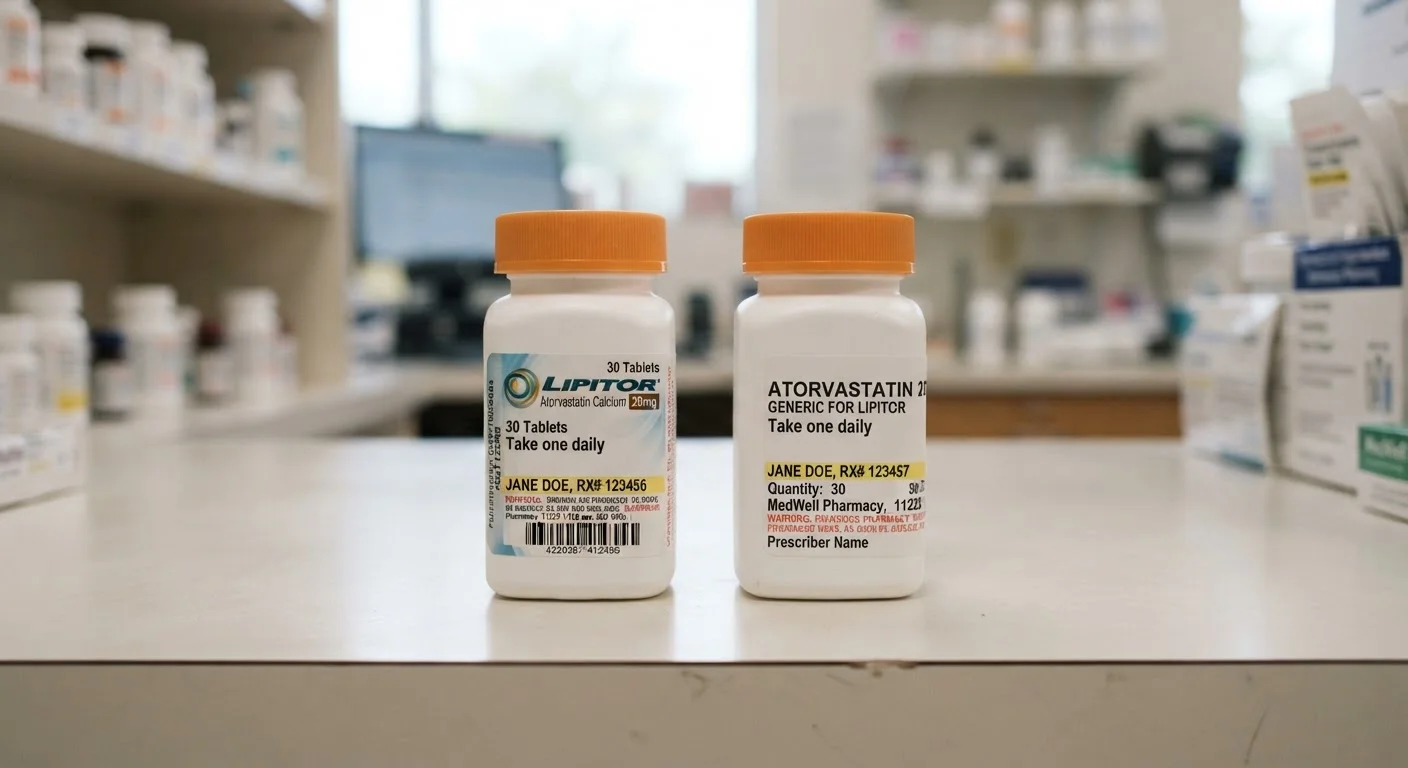
What Makes a Medicine 'Generic' or 'Brand-Name'?
When a pharmaceutical company develops a new drug, it receives a patent that grants exclusive rights to sell that medication under a brand name for a set period — typically around 20 years from the original filing date. During that window, no competitor can legally produce the same drug.
Once the patent expires, other manufacturers can apply to the U.S. Food and Drug Administration (FDA) to produce a generic version. A generic medicine must contain the same active ingredient — the chemical that actually produces the therapeutic effect — in the same strength, dosage form (such as tablet or capsule), and route of administration as the original.
What can differ are the inactive ingredients: binders, fillers, dyes, and coatings that hold the pill together or affect its appearance. These do not alter how the drug works, but they can matter for individuals with specific allergies or intolerances. See our detailed look at how inactive ingredients can affect patients for more on this nuance.
How the FDA Ensures Generics Work the Same Way
The most important concept here is bioequivalence. Before a generic can be approved, the FDA requires manufacturers to demonstrate that it delivers the same amount of active ingredient into the bloodstream, at roughly the same rate, as the brand-name version. This is tested in human subjects under controlled conditions.
90%+
Share of U.S. prescriptions dispensed as generics
According to the FDA, more than 90% of prescriptions filled in the United States are dispensed as generic drugs.
80–125%
FDA-accepted bioequivalence absorption range
The FDA's bioequivalence standard requires generic drug absorption to fall within this statistical range compared to the reference brand product.
~80–85%
Typical cost reduction with generics
The FDA estimates that generic drugs generally cost 80 to 85 percent less than their brand-name counterparts on average.
FDA guidelines allow for a defined statistical range of variation in absorption — typically within 80–125% of the brand drug's measured levels. This range may sound wide, but it is the same variation accepted between two different batches of the same brand-name drug. In practice, most approved generics fall very close to 100% of the reference product.
This regulatory standard means that for the vast majority of medications, a generic performs clinically identically to its brand-name equivalent. As the FDA itself has stated in public guidance, approved generics are considered therapeutically equivalent and can be substituted without loss of efficacy or safety for most patients.
Where Real Differences Can Exist
For most medications, the brand-versus-generic distinction has no meaningful clinical impact. However, two situations deserve careful attention.
| Criterion | Brand-Name Medicine | Generic Medicine |
|---|---|---|
| Active ingredient | Original proprietary compound | Identical active compound |
| FDA approval standard | Full clinical trial data | Bioequivalence testing required |
| Inactive ingredients | Manufacturer's specific formula | May differ in fillers, dyes, coatings |
| Typical cost | Higher (patent exclusivity) | Lower (open competition) |
| Manufacturing standards | FDA cGMP regulated | Same FDA cGMP regulated |
| NTI drug considerations | Consistent formulation | May vary by manufacturer batch |
| Appearance | Fixed by brand design | May differ in color or shape |
Narrow therapeutic index (NTI) drugs are medications where even small differences in blood concentration can tip from therapeutic to toxic — or from effective to ineffective. Examples include levothyroxine (used for thyroid conditions), warfarin (a blood thinner), and certain anti-seizure medications. For these drugs, consistency of formulation may matter more than for others, and some prescribers recommend staying on the same manufacturer's version once stabilized.
The second situation involves inactive ingredient sensitivities. A patient with celiac disease, lactose intolerance, or a dye allergy may react to a filler present in one formulation but not another. This is uncommon, but it is a legitimate reason to discuss specific formulations with your pharmacist or prescriber. Our article on what the brand-versus-generic difference actually means explores these nuances in further depth.
Addressing Common Concerns Older Adults Raise
Many people wonder whether a lower-cost generic signals lower quality. The answer, grounded in FDA oversight, is no. Manufacturing standards — called cGMP — apply equally to all drug producers, brand-name or generic. Both are subject to facility inspections, testing requirements, and recall processes.
Another frequent concern: "My medication looks different now — is it still the same drug?" Color, shape, and size are not regulated to be identical because these are determined by inactive ingredients and manufacturer design, not therapeutic content. If your pill looks different after a refill, your pharmacist can confirm whether the active ingredient and dose remain the same.
When to Talk to Your Pharmacist Before Switching
If your prescription has been automatically substituted for a generic at the pharmacy — or vice versa — and you notice a change in how you feel, speak with your pharmacist before stopping or adjusting your dose. For most drugs, the switch is seamless. For a small number of high-sensitivity medications, your care team may want to monitor your response more closely after a change in formulation.
If you have broader questions about medications you've been taking, our guide to widespread medication misconceptions among older adults addresses many related concerns in plain language. And if you're starting something new, consider the questions worth asking every time you begin a new medication.
This article is for general informational purposes only and does not constitute medical advice. Always consult your prescriber or pharmacist before making any changes to your medication regimen.