
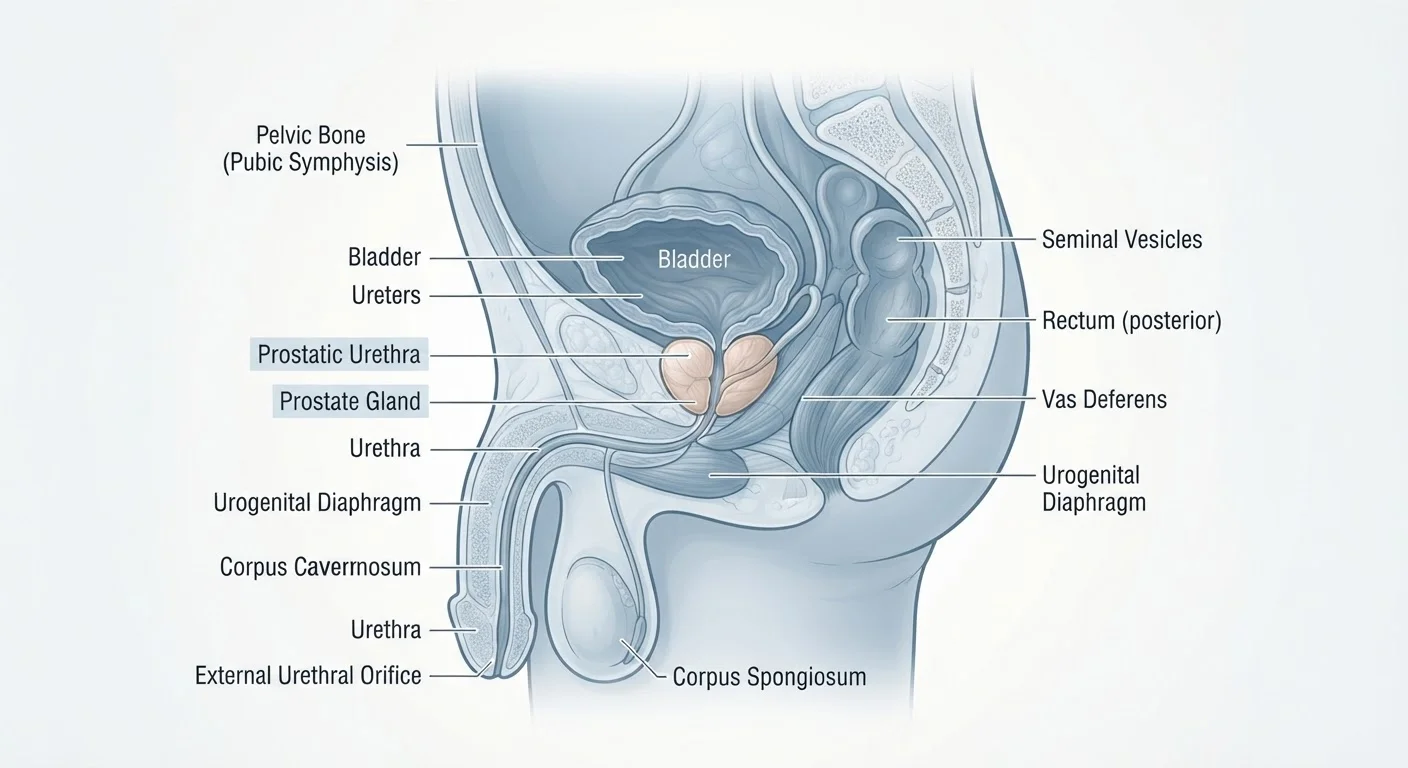
What the Prostate Does and How It Changes With Age
The prostate is a walnut-sized gland located just below the bladder and in front of the rectum. Its primary function is to produce fluid that nourishes and transports sperm. The urethra — the tube that carries urine from the bladder out of the body — passes directly through the prostate, which is why prostate changes so often affect urination.
From a man's mid-40s onward, the prostate tends to grow gradually. This is a normal biological process driven in part by hormonal shifts, particularly changes in how testosterone is metabolized. As explained in our Hormones & Aging hub, these hormonal transitions shape many aspects of men's health beyond just the prostate. The gland's increasing size can eventually press on the urethra, leading to urinary symptoms that many older men recognize but may not immediately connect to prostate changes.
Not every man with an enlarged prostate experiences symptoms, and prostate size alone does not determine the severity of problems. Understanding this variability is essential — what matters clinically is how symptoms affect quality of life and whether they signal an underlying condition requiring attention.
Common Prostate Conditions: BPH, Prostatitis, and Cancer
Benign Prostatic Hyperplasia (BPH) is the most common prostate condition among older men. The term simply means a non-cancerous enlargement of the prostate. Symptoms include a weak urine stream, frequent urination — especially at night — difficulty starting urination, and a sense that the bladder hasn't fully emptied. BPH is not cancer and does not increase cancer risk, but it can significantly disrupt daily life.
Prostatitis refers to inflammation of the prostate. It presents differently depending on type. Acute bacterial prostatitis comes on suddenly with fever, pelvic pain, and urinary difficulty and requires prompt medical care. Chronic prostatitis — the most common form — may cause ongoing pelvic discomfort, urinary symptoms, or sexual dysfunction, often without a clear bacterial cause. It can affect men of any age.
Prostate cancer is the most commonly diagnosed cancer in American men after skin cancer. Many prostate cancers are slow-growing and may never cause symptoms or require aggressive treatment. Others are more aggressive. Early-stage prostate cancer typically produces no symptoms, which is why screening conversations matter. Our article Prostate Conditions Across the Lifespan explains how risk and warning signs shift by decade.
If you notice any change in urinary habits — frequency, urgency, stream strength, or nighttime waking — bring it up at your next routine appointment rather than waiting for symptoms to worsen.
Early reporting gives clinicians more options and avoids the normalization of symptoms that are often very treatable.
Before any prostate screening or biopsy, ask your doctor specifically about what the results would mean for your treatment choices — not just whether a number is elevated.
PSA results exist on a spectrum; understanding what follow-up would actually look like helps men make genuinely informed decisions about whether to screen.
Screening and Diagnosis: What to Expect
Prostate cancer screening typically involves two tools: the PSA blood test and the digital rectal exam (DRE). PSA is a protein produced by prostate tissue; elevated levels may indicate cancer, BPH, prostatitis, or other benign conditions. The test is useful but not definitive — false positives and false negatives both occur.
Screening Is a Conversation, Not a Mandate
There is no universal, one-size-fits-all recommendation for prostate cancer screening. The decision to have a PSA test should be made jointly between you and your doctor, weighing your age, family history, ethnicity, overall health, and personal values. An elevated PSA does not automatically mean cancer — and a normal PSA does not completely rule it out. Informed shared decision-making is the standard of care.
Major medical organizations, including the American Cancer Society, recommend that men discuss screening with their doctor starting at age 50 for average-risk individuals, earlier for those with a family history or African American heritage, who face higher risk. There is no universal recommendation to screen everyone — the decision is individualized.
If PSA or DRE results are concerning, follow-up may include imaging such as an MRI, a prostate biopsy, or both. A biopsy involves removing small tissue samples from the prostate, typically guided by ultrasound, which are then examined for cancer cells. Pathologists use the Gleason score to grade cancer aggressiveness, which helps guide treatment planning.
Treatment Approaches and What They Involve
Treatment depends entirely on the condition, its severity, and the individual's overall health and preferences. For BPH, options range from lifestyle adjustments and medications that relax the prostate or reduce its size, to minimally invasive procedures and surgery for more severe cases. No single approach suits everyone.
For prostate cancer, the main strategies include:
- Active surveillance: Regular monitoring without immediate treatment for low-risk cancers. Many slow-growing cancers never require intervention.
- Radiation therapy: External beam radiation or internal radiation (brachytherapy) that targets cancer cells.
- Surgery (prostatectomy): Surgical removal of the prostate, often performed using minimally invasive robotic techniques.
- Hormone therapy: Reducing testosterone levels to slow cancer growth, typically used for more advanced disease.
- Chemotherapy and newer systemic therapies: Reserved for cancers that have spread or become resistant to hormone therapy.
Side effects vary by approach and may include changes in urinary control, sexual function, and energy levels. Discussing these trade-offs honestly with a urologist or oncologist is critical before making a decision. As with cardiovascular disease — explored in our Complete Overview of Cardiovascular Health in Older Men — treatment decisions require weighing both clinical factors and personal priorities.
Daily Life, Lifestyle Habits, and Long-Term Management
Whether managing BPH symptoms, recovering from prostate cancer treatment, or simply maintaining prostate health as you age, daily habits matter. Evidence suggests that plant-forward diets rich in vegetables, fruits, and whole grains are associated with better prostate health outcomes, while diets high in red and processed meats may carry higher risk. That said, diet alone is not a preventive cure, and no specific food guarantees protection.
Regular physical activity supports urinary function, healthy weight maintenance, and overall wellbeing. Obesity has been associated with more aggressive prostate cancer and worse BPH symptoms. Moderate, consistent exercise is broadly supported by clinical guidance for older men.
Time Your Fluids Strategically
Aim to drink most of your daily fluids in the morning and early afternoon. Tapering off fluid intake two to three hours before bedtime can reduce nighttime urination without causing dehydration. This simple adjustment can meaningfully improve sleep quality for men managing BPH or urinary urgency.
Fluid management is often overlooked. Drinking adequate water throughout the day supports urinary tract health, but reducing fluid intake in the hours before bed can help minimize nighttime bathroom trips. For deeper guidance on these habits, see our article on Lifestyle Habits That Support a Healthy Urinary Tract.
Stress, sleep quality, and mental health also intersect with prostate and urinary health. Men managing chronic prostatitis or navigating cancer treatment often benefit from psychological support alongside physical care. Open, ongoing dialogue with healthcare providers — including primary care physicians, urologists, and oncologists — remains the cornerstone of sound long-term management.
This article is for general informational and educational purposes only and is not a substitute for personalized medical advice. Always consult a qualified healthcare professional regarding any health concerns, symptoms, or medical decisions.