
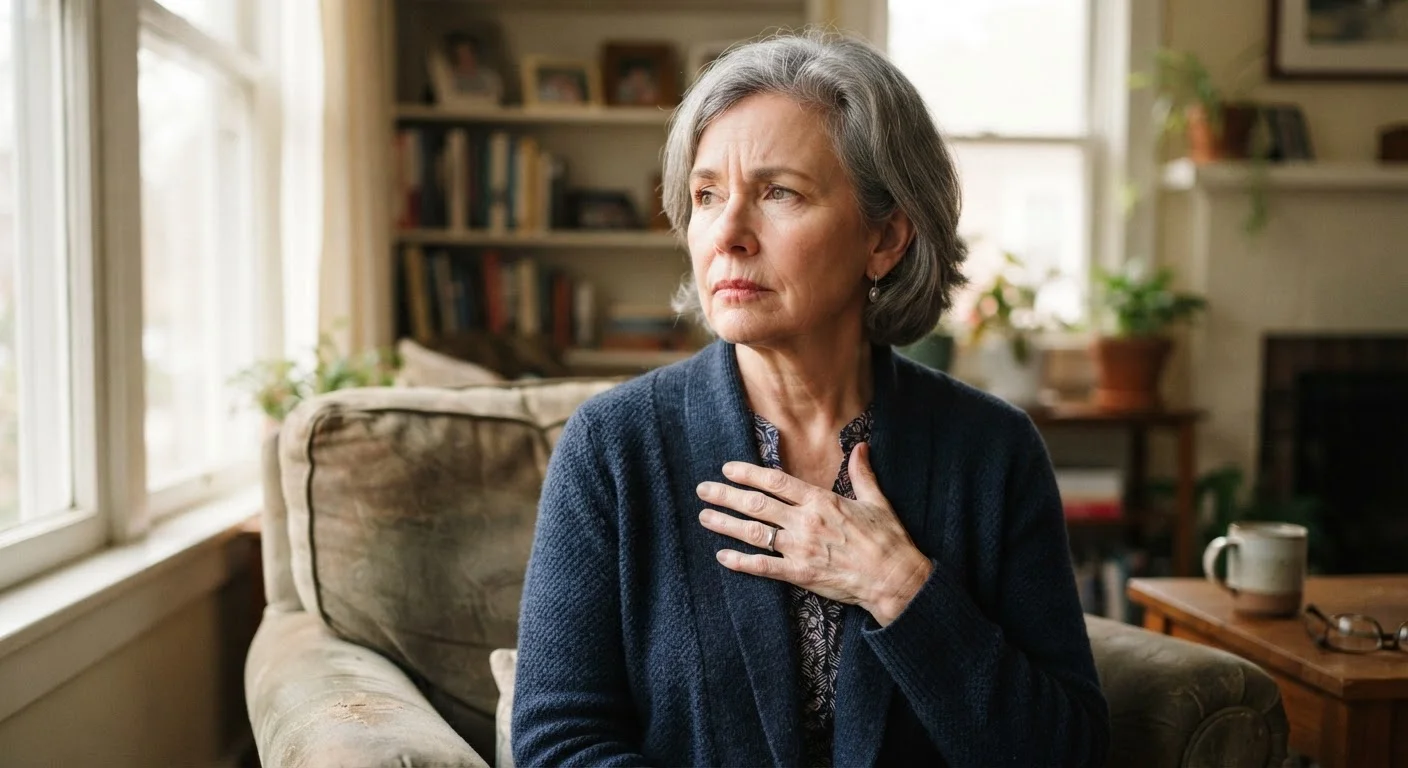
Why Women's Heart Attack Symptoms Get Missed
When most people picture a heart attack, they imagine a sudden, severe crushing pain in the chest. For many women, the reality is far more ambiguous — and that ambiguity costs lives. Women are more likely than men to experience what clinicians call atypical symptoms: those that don't fit the textbook description and are easy to attribute to something far less urgent.
This isn't simply a matter of perception. As the evidence on how heart disease differs in women makes clear, the underlying biology — including differences in coronary artery involvement and hormonal influences — can produce a genuinely different symptom pattern. Knowing what to look for can make a life-saving difference.
#1
Leading cause of death in U.S. women
According to the Centers for Disease Control and Prevention, heart disease is the leading cause of death for women in the United States.
~45%
Women unaware heart disease is their top risk
Research published in journals including Circulation has found that fewer than half of U.S. women recognize heart disease as their greatest health threat.
7+ min
Longer average EMS delay for women
Studies have found that women wait longer on average than men before calling emergency services when experiencing cardiac symptoms, contributing to worse outcomes.
The Mistakes That Delay Emergency Care
The following common errors help explain why women so often wait too long — or never call at all — when a cardiac event is underway. Recognizing these patterns in advance is one of the most practical steps you can take to protect yourself and the women in your life.
Attributing jaw, neck, or shoulder pain solely to tension or musculoskeletal causes.
Why it happens: Pain radiating to the jaw, neck, or left shoulder doesn't fit most people's mental image of a heart attack, so it's easy to blame poor posture, stress, or a strained muscle instead.
Dismissing profound fatigue as overexertion, poor sleep, or normal aging.
Why it happens: Unusual, overwhelming tiredness is one of the most underreported heart attack symptoms in women, yet it mimics everyday exhaustion so closely that many women assume they simply need rest.
Chalking nausea, indigestion, or upper abdominal discomfort up to a digestive issue.
Why it happens: Gastrointestinal symptoms feel familiar and unthreatening, and women are more likely than men to experience them during a cardiac event, making a stomach bug or acid reflux the natural first conclusion.
Waiting too long to call 911 because symptoms don't match the "classic" chest-crushing picture.
Why it happens: Cultural depictions of heart attacks almost always show sudden, dramatic chest pain. Women whose symptoms are subtler often question whether what they are experiencing is "really" serious enough to call emergency services.
Minimizing symptoms to avoid seeming dramatic in front of family or in a medical setting.
Why it happens: Many women feel social pressure to downplay pain or discomfort, worry about inconveniencing others, or have had past experiences where symptoms were not taken seriously by healthcare providers.
It's also worth noting that persistent myths about women and heart disease — such as the belief that heart disease is primarily a man's problem — can compound these individual errors, creating further hesitation.
Don't Assume It's Just Stress or Anxiety
Feelings of dread, impending doom, or extreme anxiety without an obvious trigger have been reported by some women before a cardiac event. These sensations are sometimes mistaken for panic attacks, causing delays in seeking emergency care. When these feelings appear suddenly alongside any physical symptom, treat it seriously and seek help.
What to Do When You're Unsure
Uncertainty itself is important information. If you feel something is wrong — even without a clear cluster of named symptoms — trust that instinct and seek evaluation. Conditions like symptoms mistaken for normal aging can sometimes overlap with cardiac warning signs, making careful clinical assessment all the more valuable.
Act Immediately — Don't Wait
If you or someone nearby experiences sudden unexplained symptoms — including unusual fatigue, jaw discomfort, shortness of breath, or chest pressure — call 911 right away. Do not drive yourself to the hospital or wait to see if symptoms resolve. Every minute without treatment can mean greater damage to the heart muscle.
It also helps to understand the distinction between different cardiac emergencies. Our guide to heart attack versus cardiac arrest explains the key differences, which can help you describe what you're witnessing to emergency services clearly and quickly.
This article is for general informational and educational purposes only and does not constitute medical advice. Always consult a qualified healthcare professional regarding any symptoms, health concerns, or medical decisions.