
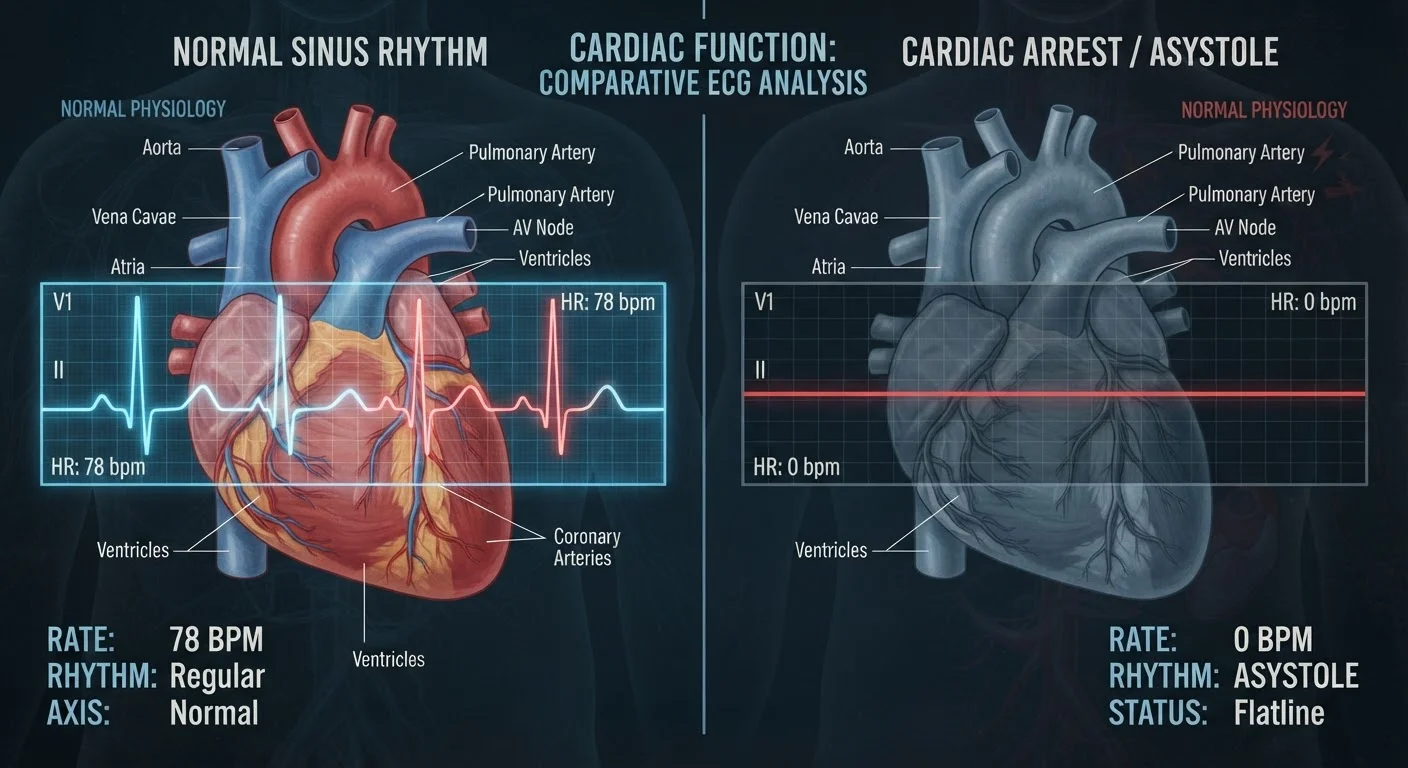
Two Distinct Emergencies, Frequently Confused
The terms "heart attack" and "cardiac arrest" are used interchangeably in everyday conversation — but clinically, they describe two fundamentally different events. Mixing them up isn't just a vocabulary error; in an emergency, the confusion can cost precious minutes.
A heart attack (medically called a myocardial infarction) is a plumbing problem. A coronary artery becomes blocked — typically by a ruptured cholesterol plaque — and blood flow to a section of heart muscle is cut off. The heart continues to beat, but starved muscle begins to die with each passing minute. Most heart attack patients remain conscious and can describe their symptoms.
Cardiac arrest, by contrast, is an electrical problem. The heart's electrical system malfunctions, causing the organ to quiver uselessly (a condition called ventricular fibrillation) or stop altogether. The heart can no longer pump blood to the brain or body. The person collapses, loses consciousness, and has no detectable pulse. Without immediate intervention, death follows within minutes.
Importantly, the two can be linked: a heart attack can disrupt the heart's electrical system and trigger cardiac arrest. This is one reason why rapid response to any cardiac emergency matters so much. For context on how symptoms can differ across individuals, see why heart disease looks different in women than in men.
| Criterion | Heart Attack | Cardiac Arrest |
|---|---|---|
| Core problem | Blocked blood supply to heart muscle | Electrical system failure; heart stops pumping |
| Consciousness | Usually conscious and communicative | Sudden collapse; unresponsive |
| Heartbeat present? | Yes — heart is still beating | No effective heartbeat |
| Immediate treatment | 911, aspirin if directed, hospital intervention | CPR and defibrillation (AED) immediately |
| Common cause | Coronary artery blockage (plaque rupture) | Ventricular fibrillation, often triggered by heart disease |
| Can one cause the other? | Yes — heart attack can trigger cardiac arrest | Cardiac arrest may follow an untreated heart attack |
| Survival window | Hours — but faster treatment saves more muscle | Minutes — brain damage begins within 4–6 minutes |
Recognizing Symptoms and Responding Correctly
Knowing which emergency you're facing shapes your immediate response.
Heart Attack Warning Signs
- Chest pain, pressure, squeezing, or tightness lasting more than a few minutes
- Pain radiating to the arm, jaw, neck, or back
- Shortness of breath, with or without chest discomfort
- Cold sweat, nausea, or light-headedness
Symptoms can be subtle, particularly in older men — warning signs older men often overlook before a cardiac event include fatigue and jaw discomfort that are easy to dismiss.
Cardiac Arrest Warning Signs
- Sudden loss of consciousness
- No normal breathing (gasping or no breath at all)
- No pulse
- Unresponsive to voice or touch
What to Do
For either event, call 911 immediately. For a suspected heart attack, keep the person still and calm. For cardiac arrest, begin hands-only CPR at once — push hard and fast in the center of the chest at a rate of about 100–120 compressions per minute — and use an automated external defibrillator (AED) as soon as one is available. AEDs are designed for public use and provide audio instructions.
~805,000
Heart attacks in the U.S. each year
According to the CDC, approximately 805,000 Americans experience a heart attack annually, with older adults representing the majority of cases.
~10%
Out-of-hospital cardiac arrest survival rate
The American Heart Association estimates that fewer than 10% of people who experience out-of-hospital cardiac arrest survive, highlighting the critical importance of bystander response.
7–10%
Survival decline per minute without CPR
Survival odds from cardiac arrest decrease by approximately 7–10% for every minute that passes without CPR or defibrillation, per established resuscitation research.
It's also worth understanding related electrical rhythm disorders. How atrial fibrillation differs from a normal irregular heartbeat explains why not every arrhythmia carries the same risk level.
Learn CPR Before You Need It
Bystander CPR dramatically improves survival outcomes in cardiac arrest. The American Heart Association and American Red Cross offer in-person and online CPR training courses for the general public. Hands-only CPR — without rescue breaths — is an evidence-supported option that most bystanders can perform effectively. Consider discussing cardiac risk and emergency preparedness with your primary care provider, especially if you have existing heart disease or multiple risk factors.
This article is for general informational purposes only and is not a substitute for professional medical advice, diagnosis, or treatment. Always consult a qualified healthcare provider regarding any symptoms or medical concerns, and call emergency services immediately in a crisis.