
What Separates Osteopenia from Osteoporosis?
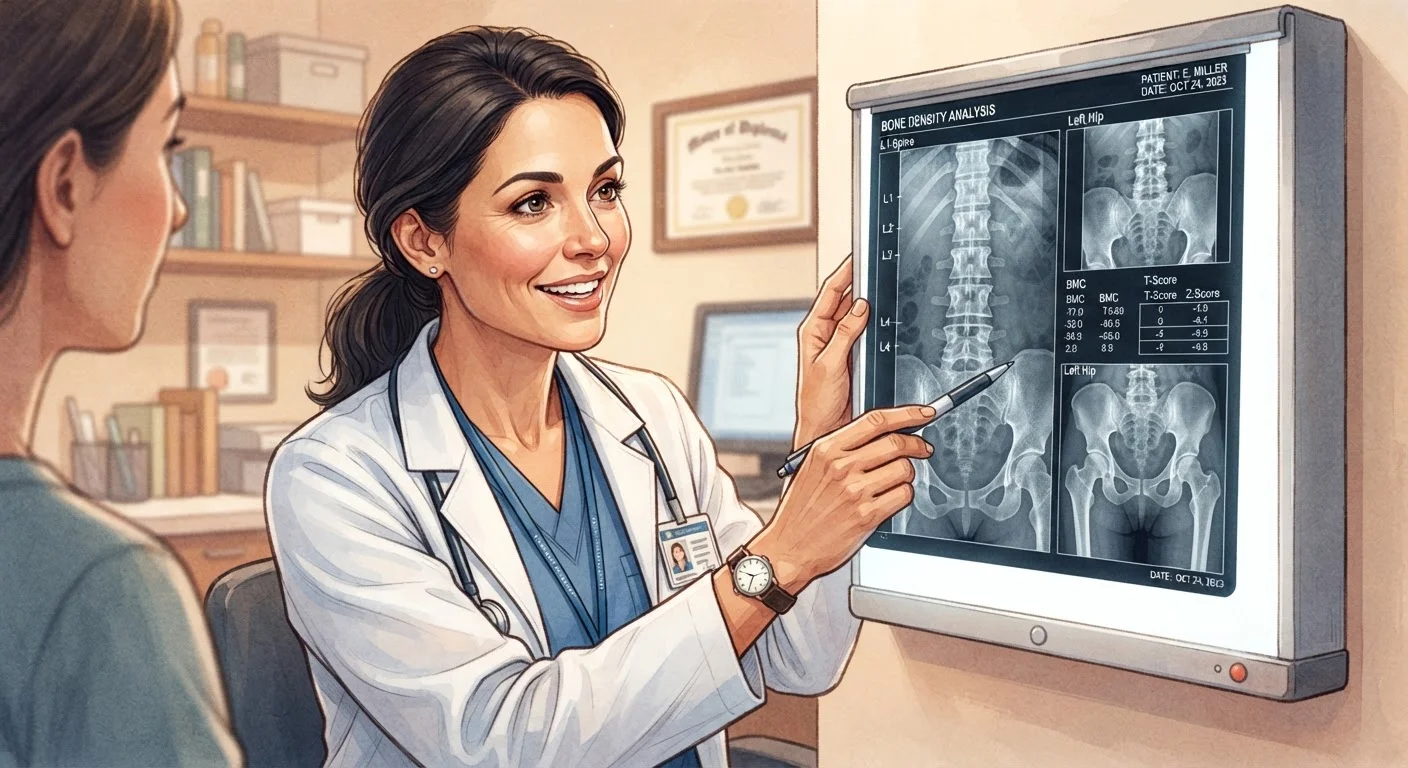
Bone health is measured along a spectrum, and both osteopenia and osteoporosis represent different points on that spectrum — not entirely separate diseases. The key tool for telling them apart is the DEXA scan (dual-energy X-ray absorptiometry), which measures bone mineral density (BMD) and produces a score called a T-score.
A T-score compares your bone density to that of a healthy young adult. Here is how the numbers break down:
- Normal: T-score of -1.0 or above
- Osteopenia: T-score between -1.0 and -2.5
- Osteoporosis: T-score of -2.5 or lower
Think of osteopenia as a yellow light — your bones are less dense than optimal, and attention is warranted, but the risk of fracture is still relatively modest. Osteoporosis is the red light: bones have become brittle enough that even minor falls or everyday stress can cause a fracture.
| Criterion | Osteopenia | Osteoporosis |
|---|---|---|
| T-score range | -1.0 to -2.5 | -2.5 or lower |
| Fracture risk | Mildly elevated | Significantly elevated |
| Symptoms | Usually none | Usually none until fracture |
| Typical management | Lifestyle changes, monitoring | Lifestyle changes plus possible medication |
| Urgency | Act preventively | Prompt medical management recommended |
| Diagnosed by | DEXA scan | DEXA scan or fragility fracture |
This distinction matters because it shapes the conversation you will have with your healthcare provider about next steps — from lifestyle adjustments to potential medical therapy.
Who Is Most at Risk, and Why?
Bone loss is a natural part of aging, but several factors can accelerate it significantly. Women are disproportionately affected, largely because of estrogen's protective role in maintaining bone density. After menopause, estrogen levels drop sharply, which can accelerate bone resorption (breakdown) faster than the body can rebuild. To understand how this fits into the broader picture of women's health, see our article on heart and bone health risks across women's life stages.
~54 million
Americans with low bone mass or osteoporosis
According to the National Osteoporosis Foundation, around 54 million Americans are affected by low bone density or osteoporosis.
80%
Of osteoporosis cases occurring in women
The National Osteoporosis Foundation estimates that approximately 80% of the 10 million Americans with osteoporosis are women.
1 in 2
Women over 50 expected to experience an osteoporosis-related fracture
According to NOF data, one in two women over age 50 will break a bone due to osteoporosis in their lifetime.
Additional risk factors for both conditions include:
- Family history of osteoporosis or hip fractures
- Small or thin body frame
- Long-term use of corticosteroid medications
- Smoking and heavy alcohol use
- Low dietary intake of calcium and vitamin D
- Sedentary lifestyle
- Certain medical conditions, including rheumatoid arthritis and thyroid disorders
It is worth noting that estrogen's relationship with bone health connects to broader hormonal patterns. Our overview of estrogen dominance vs. low estrogen explains how hormonal shifts can affect multiple body systems simultaneously.
Bone Loss Can Be Silent for Years
One of the most important things to understand about both osteopenia and osteoporosis is that they rarely cause symptoms until a fracture occurs. There is no pain signal that bone density is declining. This is precisely why routine screening is so valuable — catching bone loss early, before a fall or fracture, gives you and your doctor more options. If you have risk factors, bring them up at your next appointment even if you feel fine.
Monitoring, Prevention, and What Comes Next
Because neither osteopenia nor osteoporosis typically causes pain or obvious symptoms, many women only learn about their bone density status after a fracture — or through routine screening. The U.S. Preventive Services Task Force recommends DEXA screening for all women aged 65 and older, and for younger postmenopausal women with identified risk factors.
If you are diagnosed with osteopenia, your doctor may recommend watchful waiting with lifestyle adjustments rather than immediate medication. These changes include weight-bearing exercise, fall prevention strategies, quitting smoking, and ensuring adequate calcium and vitamin D intake. Our guide on eating for bone health offers a practical overview of dietary strategies. For a deeper look at the evidence around supplementation, calcium, vitamin D, and bone health for older women is worth reading alongside your doctor's guidance.
For osteoporosis, a physician may also discuss medications that help slow bone loss or support bone formation. The right approach depends on your individual health profile, other medications, and personal risk factors — decisions best made in partnership with your healthcare team.
Neither diagnosis is a foregone conclusion of fracture or decline. Understanding where you stand on the bone density spectrum is the first and most empowering step.
This article is for informational purposes only and is not a substitute for professional medical advice, diagnosis, or treatment. Always consult a qualified healthcare provider with questions about your bone health or any medical condition.