
Why Calcium and Vitamin D Work Together
Calcium is the mineral your bones are largely built from, but it doesn't do much on its own. Vitamin D is what allows your body to actually absorb calcium from the food you eat. Without adequate vitamin D, even a calcium-rich diet may not translate into stronger bones — a nuance that's easy to miss when the two nutrients are discussed separately.
This relationship becomes especially important after menopause. Declining estrogen levels accelerate bone loss, increasing the risk of osteoporosis. Understanding how these nutrients interact is a meaningful first step toward supporting long-term skeletal health. For a deeper look at what drives this process, see how bone loss accelerates after menopause.
| Primary role of calcium | Structural mineral in bones and teeth; also supports muscle and nerve function |
| Primary role of vitamin D | Enables intestinal absorption of calcium; supports immune and muscle function |
| Recommended calcium intake (women 51+) | 1,200 mg per day from all sources combined (National Institutes of Health, Office of Dietary Supplements) |
| Recommended vitamin D intake (adults 70+) | 800 IU (20 mcg) per day (National Institutes of Health, Office of Dietary Supplements) |
| Best test for vitamin D status | Serum 25-hydroxyvitamin D blood test |
| Key risk period for bone loss | First 5–10 years following menopause (National Osteoporosis Foundation) |
What the Evidence Says About Supplementation
The picture around calcium and vitamin D supplements is more complicated than many people expect. Research — including large-scale trials — has produced mixed findings, particularly regarding supplements versus food-based sources of calcium. Some studies have raised questions about whether high-dose calcium supplements may carry cardiovascular risks for certain individuals, though this area remains under active investigation and is not settled science.
What the evidence does consistently support is obtaining calcium through dietary sources wherever possible, and having vitamin D levels checked through a straightforward blood test. Many older women are low in vitamin D without knowing it, particularly those who spend limited time outdoors or live in northern climates. A healthcare provider can interpret results and recommend an appropriate course of action tailored to individual circumstances.
~10 million
Americans estimated to have osteoporosis
According to the National Osteoporosis Foundation, the majority are women.
~40%
Women over 50 who will experience an osteoporosis-related fracture
Cited by the U.S. Surgeon General's report on bone health.
41%
U.S. adults estimated to be vitamin D insufficient
Based on NHANES data analyzed by researchers and published in nutrition literature.
It's also worth noting that vitamin D has roles beyond bone health — including immune function and muscle strength — which may have indirect implications for fall prevention. For more on that connection, see fall prevention strategies supported by evidence.
This article is for informational purposes only and does not constitute medical advice. Always consult a qualified healthcare professional before making changes to your diet, supplements, or health management plan.
Dietary Sources and Practical Considerations
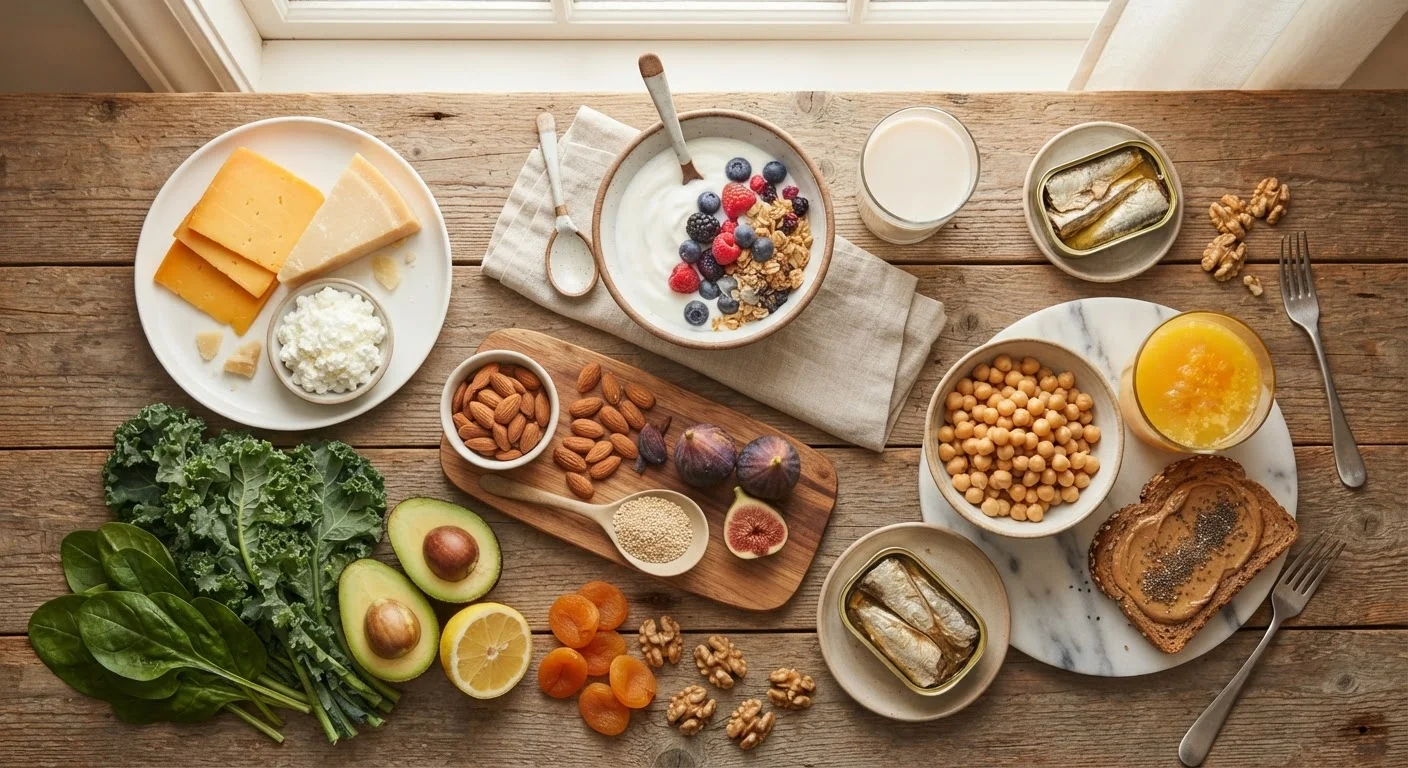
For most older women, dietary calcium remains the preferred foundation. Dairy products are well-known sources, but they're far from the only option. Fortified plant-based milks, canned fish with soft bones, tofu made with calcium sulfate, and leafy greens such as kale and bok choy all contribute meaningfully. For a broader look at bone-supporting nutrition, eating for bone health beyond calcium and vitamin D offers a useful companion read.
Vitamin D from food is harder to obtain in adequate amounts. Fatty fish, egg yolks, and fortified foods provide some, but sun exposure — which triggers the skin to produce vitamin D — remains a significant source for many people. The amount of sun needed varies with skin tone, age, geography, and season, which is why blood testing is more reliable than estimating from lifestyle alone.
Osteoporosis
A condition in which bones lose density and become fragile, increasing the risk of fractures. It often develops silently over many years before a break occurs.
Calcium absorption
The process by which the digestive system takes calcium from food or supplements into the bloodstream. Vitamin D is essential for this process to work effectively.
25-hydroxyvitamin D
The form of vitamin D measured in a blood test to assess a person's vitamin D status. It reflects both dietary intake and sun-derived production.
Bone mineral density (BMD)
A measure of the amount of mineral — primarily calcium — packed into a segment of bone. Lower BMD indicates greater fracture risk and is assessed by a DEXA scan.
Estrogen
A hormone that plays a key protective role in maintaining bone density. Its decline during and after menopause is a primary driver of accelerated bone loss in women.
Nutrition doesn't operate in isolation. Habits that protect bone health often benefit cardiovascular health too — a connection explored in lifestyle habits that support both heart and bone health. And if you're considering bone density testing to better understand your current skeletal status, what a DEXA scan actually measures explains the process in plain language.