
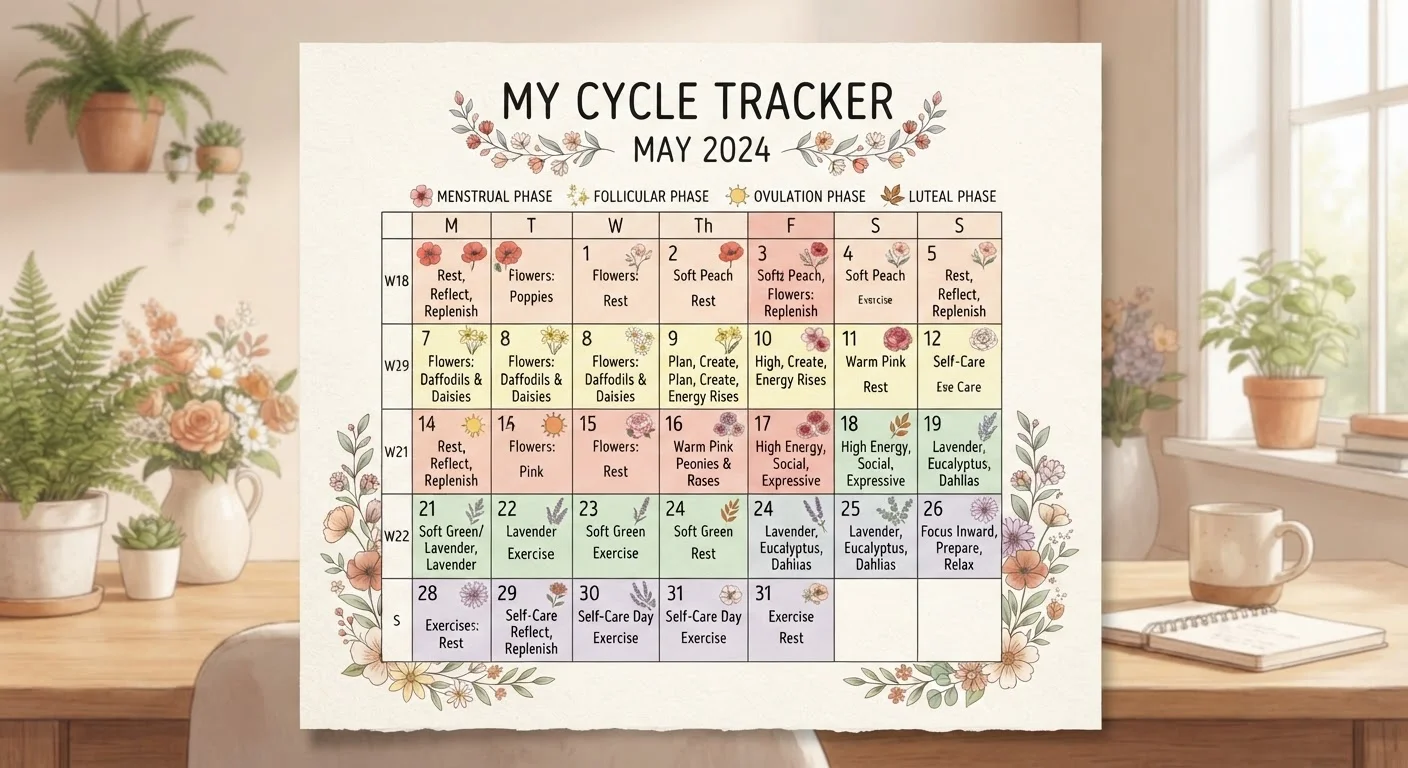
Phase 1: Menstrual Phase
The cycle begins with menstruation — the shedding of the uterine lining that built up during the previous cycle. This happens when a pregnancy has not occurred, causing estrogen and progesterone levels to drop. The result is the familiar period, which typically lasts between 3 and 7 days.
During this phase, many women experience cramping, bloating, lower back discomfort, and fatigue. These symptoms arise because the uterus contracts to help expel its lining. Prostaglandins — hormone-like compounds — trigger these contractions, and higher prostaglandin levels are associated with more intense cramping.
Bleeding volume varies widely among individuals. While some spotting is normal at the start or end of a period, consistently very heavy flow — soaking through a pad or tampon every hour for several hours — warrants a conversation with your healthcare provider.
Phase 2: Follicular Phase
The follicular phase overlaps with menstruation but extends well beyond it, running from day one of your period until ovulation. During this time, the pituitary gland releases follicle-stimulating hormone (FSH), which prompts several follicles in the ovaries to begin maturing. Each follicle contains a potential egg.
As the follicles develop, they produce increasing amounts of estrogen. This rising estrogen does two key things: it thickens the uterine lining in preparation for a potential fertilized egg, and it eventually triggers the hormonal surge that leads to ovulation. Typically, one dominant follicle outpaces the others and is selected for release.
21–35 days
Normal menstrual cycle length range
According to the American College of Obstetricians and Gynecologists, cycles outside this range consistently may warrant evaluation.
~14 days
Average follicular phase duration
The follicular phase length varies more between individuals than the luteal phase, which remains relatively stable.
12–24 hours
Window an egg is viable after ovulation
This brief window underscores how timing plays a critical role in the biology of conception each cycle.
Many women feel a lift in energy, mood, and mental clarity during this phase, which is consistent with estrogen's influence on brain chemistry. For a deeper look at how these hormonal shifts affect how you feel day to day, see how each cycle phase affects your body.
Phase 3: Ovulatory Phase
Ovulation is the cycle's pivotal event. A sharp surge in luteinizing hormone (LH) causes the dominant follicle to rupture and release a mature egg. This egg travels down the fallopian tube toward the uterus and is viable for approximately 12 to 24 hours.
Some women notice physical signs around ovulation, including a change in cervical mucus (becoming clearer and more stretchy, similar to egg whites), mild one-sided pelvic discomfort called mittelschmerz, and a slight rise in basal body temperature. These cues are the basis of many natural fertility awareness methods.
Notice Your Body's Ovulation Signals
Paying attention to changes in cervical mucus and mild mid-cycle pelvic sensations can help you understand your body's natural patterns. These observations are most useful when recorded consistently over several months. Share any patterns you notice with your healthcare provider, especially if you're monitoring cycle regularity.
If you're interested in learning to observe and record these patterns, cycle-tracking methods and what the data can tell you offers a practical overview of approaches that can support conversations with your doctor.
Phase 4: Luteal Phase
After ovulation, the ruptured follicle transforms into a temporary structure called the corpus luteum, which secretes progesterone. This hormone stabilizes the thickened uterine lining, making it receptive to implantation if fertilization occurs. The luteal phase typically lasts 12–14 days and is the most consistent phase in length across individuals.
If a fertilized egg does not implant, the corpus luteum breaks down, progesterone and estrogen fall, and the cycle resets with menstruation. It's during this falling-hormone window that many women experience premenstrual symptoms (PMS) — including mood changes, breast tenderness, and bloating. Research suggests these symptoms are linked to hormonal fluctuations rather than absolute hormone levels. Why your mood shifts with your hormones explores this connection in more detail.
As women move into their late 30s and 40s, the luteal phase may shorten and cycles may become less regular — early indicators that the transition to perimenopause may be beginning. For more on what that transition looks like, see perimenopause and menopause explained.
This article is for general informational and educational purposes only and is not a substitute for professional medical advice, diagnosis, or treatment. Always consult a qualified healthcare provider with any questions you may have about your menstrual health or reproductive wellness.