
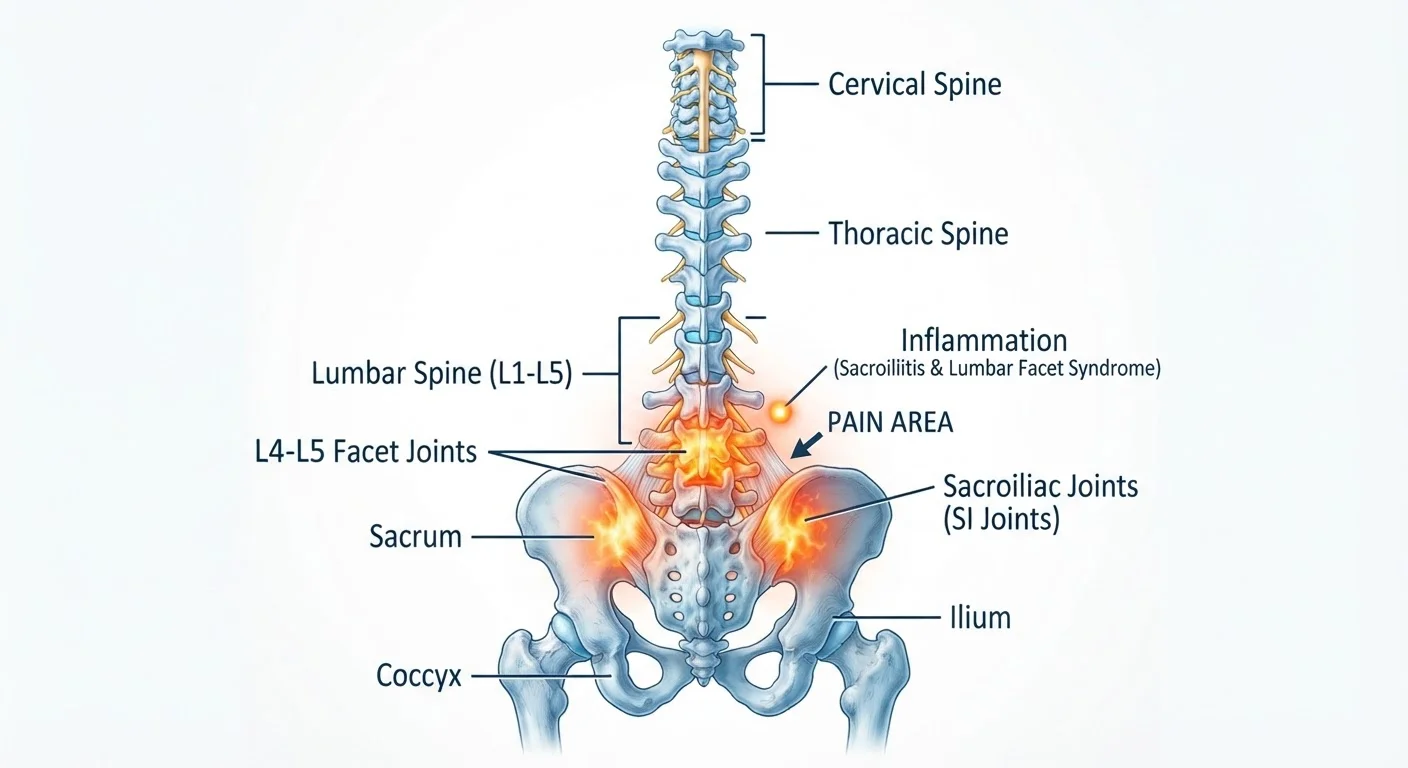
What Makes Ankylosing Spondylitis Different from Other Arthritis Types
Most people associate arthritis with the knees or hands, but ankylosing spondylitis (AS) breaks that pattern by targeting the axial skeleton — the spine and the sacroiliac joints at the base of the back. This distinction matters because it shapes everything from how symptoms present to how the condition is diagnosed and managed.
Unlike osteoarthritis, which results from cartilage breakdown over time, AS is driven by immune system activity — placing it in the same broader family as rheumatoid arthritis, though with its own distinct characteristics. It belongs specifically to a group called spondyloarthropathies, which also includes psoriatic arthritis and reactive arthritis.
In AS, inflammation at the attachment points of tendons and ligaments to bone — called entheses — is a defining feature. Over years, repeated cycles of inflammation and healing can prompt new bone growth, causing vertebrae to gradually fuse. This fusion process, known as ankylosis, is where the condition gets its name.
Axial vs. Peripheral Spondyloarthritis
Ankylosing spondylitis is now classified under the umbrella term 'axial spondyloarthritis' (axSpA) in current clinical guidelines. This category includes both AS (with visible changes on X-ray) and non-radiographic axSpA (where MRI may show inflammation before structural changes appear). The distinction matters for diagnosis timing and treatment eligibility, and a rheumatologist is best placed to differentiate between them.
Recognizing the Symptoms: More Than Just Back Pain
The hallmark symptom of ankylosing spondylitis is inflammatory back pain — a specific pattern that clinicians use to distinguish it from mechanical causes. Key features include:
- Onset before age 45
- Gradual development over at least three months
- Improvement with physical activity but not with rest
- Morning stiffness lasting more than 30 minutes
- Night pain that improves with movement
Beyond the spine, AS can cause pain and swelling in the hips, shoulders, and the heel (Achilles tendon area). Approximately one in three people with AS experience uveitis — inflammation of the eye — which may cause redness, pain, and light sensitivity. Though less common, inflammation affecting the heart valves or lung function can develop in longstanding cases.
Because AS symptoms overlap with ordinary back problems, the average time from symptom onset to diagnosis has historically been several years. Awareness of the inflammatory pain pattern is a critical step toward earlier evaluation.
~90%
AS patients carrying the HLA-B27 gene
According to established rheumatology references, approximately 90% of people diagnosed with ankylosing spondylitis test positive for the HLA-B27 genetic marker.
7–10 years
Average delay from symptoms to diagnosis
Research published in rheumatology literature has documented an average diagnostic delay of roughly 7–10 years from symptom onset, largely due to overlap with common back pain.
0.1–0.5%
Estimated prevalence in the general population
Estimates from rheumatology epidemiology studies suggest AS affects between 0.1% and 0.5% of the general population, with variation by geographic region and genetic background.
Who Develops Ankylosing Spondylitis and Why
AS typically appears between the late teens and mid-40s — earlier than most people expect from an arthritis diagnosis. The condition has a strong genetic component: roughly 90% of people with AS carry the HLA-B27 gene variant, according to established rheumatology literature. However, most people with this gene never develop AS, indicating that other genetic and environmental factors also play a role.
Historically, AS was thought to be far more common in men, but updated research indicates that women develop the condition more frequently than once believed — they may simply present with different symptom patterns that lead to delayed or missed diagnoses. A family history of AS, or related conditions such as psoriatic arthritis or lupus-related arthritis, increases individual risk.
“Ankylosing spondylitis is one of the most underdiagnosed conditions in rheumatology. Improving awareness of its inflammatory back pain pattern — especially in younger patients — is essential to reducing the years many people spend without a proper diagnosis.”
— Spondylitis Association of America, U.S. nonprofit organization dedicated to AS education and advocacy
How Ankylosing Spondylitis Progresses Over Time
AS follows a variable course — some people experience mild symptoms with long periods of remission, while others face more persistent inflammation and greater structural changes. The most significant long-term concern is spinal fusion, which, if severe, can cause the spine to curve forward in a posture called kyphosis.
Progression is not inevitable. Early diagnosis combined with appropriate treatment and consistent physical activity gives individuals the best opportunity to preserve spinal flexibility and quality of life. Rheumatologists may use imaging tools such as MRI and X-ray to monitor changes to the sacroiliac joints and spine over time.
It is worth noting that AS is distinct from juvenile idiopathic arthritis, though both can involve the spine in younger patients. Understanding each condition's unique trajectory helps patients and families set realistic expectations and make informed care decisions.
Movement Is Medicine for AS
Staying physically active is one of the most evidence-supported strategies for managing ankylosing spondylitis. Regular stretching and spine-focused exercises can help maintain flexibility and slow stiffness. Working with a physical therapist who has experience with AS allows for a personalized approach that avoids injury while keeping the spine mobile.
This article is for general informational purposes only and does not constitute medical advice. Please consult a qualified healthcare professional for diagnosis, treatment, or any questions related to your health.