
What Causes Reactive Arthritis?
Reactive arthritis develops when the immune system mounts an unusually strong response to a bacterial infection — and that response inadvertently targets joint tissue. The joints are not infected themselves; rather, they become inflamed as a kind of immune system misfiring.
The bacterial infections most frequently linked to reactive arthritis fall into two broad categories:
- Gastrointestinal infections: Caused by bacteria such as Salmonella, Campylobacter, Shigella, and Yersinia, often acquired through contaminated food or water.
- Genitourinary infections: Most notably Chlamydia trachomatis, a sexually transmitted bacterium.
Symptoms typically appear one to four weeks after the triggering infection — sometimes after the person feels they have fully recovered from the original illness. This delayed onset is one reason reactive arthritis is often not immediately recognized for what it is.
Understanding reactive arthritis as an inflammatory condition — rather than a mechanical or degenerative one — is important. For a broader look at how inflammatory arthritis differs from wear-and-tear types, see our article on inflammatory vs. non-inflammatory arthritis.
Not Everyone With the Infection Gets Arthritis
Reactive arthritis develops in only a fraction of people who contract the triggering bacteria. Genetic factors — particularly the HLA-B27 gene — appear to increase susceptibility, but most people who test positive for this gene will never develop reactive arthritis. The condition is not predictable based on infection alone.
Recognising the Symptoms
Reactive arthritis can present with a cluster of symptoms that extend beyond the joints. Clinicians sometimes refer to the classic triad — joint inflammation, eye inflammation, and urinary symptoms — though not every person experiences all three.
Joint Symptoms
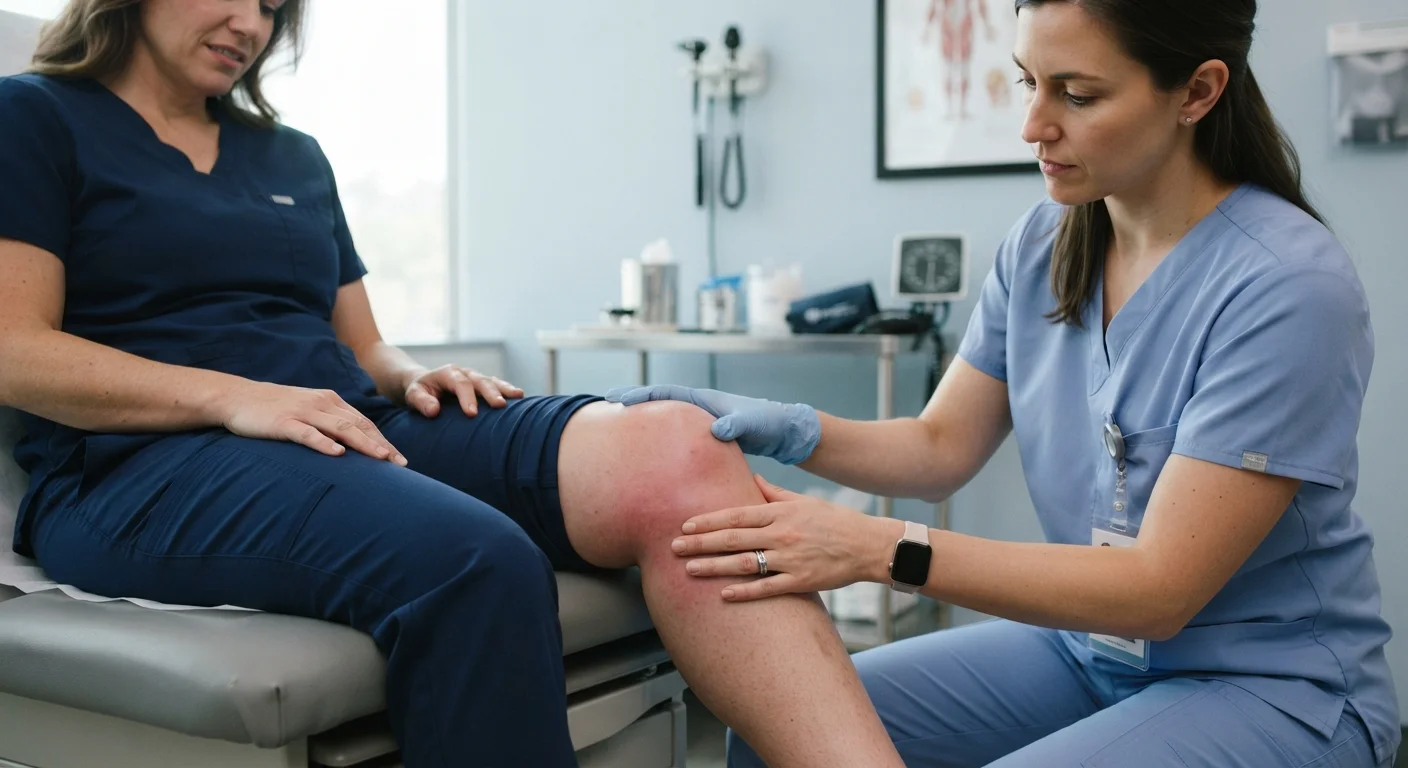
Inflammation typically affects large joints of the lower body: the knees, ankles, heels, and toes. The joints may be warm, swollen, and painful, often asymmetrically (affecting one side more than the other). Lower back pain or stiffness, particularly in the sacroiliac joints, is also common — a feature shared with ankylosing spondylitis, another spondyloarthropathy.
Eye and Skin Involvement
Conjunctivitis (redness and irritation of the eyes) occurs in some people. A minority develop uveitis, a more serious eye inflammation that warrants prompt medical attention. Skin changes — including mouth sores and a rash on the palms or soles — can also appear.
Urinary Symptoms
Burning or frequent urination may occur even in cases where the original triggering infection was gastrointestinal rather than genitourinary.
1–4 weeks
Typical delay before joint symptoms appear
Joint inflammation in reactive arthritis generally develops one to four weeks after the triggering bacterial infection, according to rheumatology clinical literature.
~75%
Patients who recover within 12 months
Most clinical reviews suggest the majority of reactive arthritis cases resolve within six to twelve months, though outcomes vary by individual and infection type.
30–50%
Cases with recurring or chronic symptoms
A notable minority of patients experience recurrent flares or chronic joint symptoms, particularly those who carry the HLA-B27 genetic marker.
How It Is Managed and What to Expect
There is no single treatment that cures reactive arthritis, but most symptoms can be managed effectively while the condition runs its course. A healthcare provider — ideally a rheumatologist — will tailor an approach based on symptom severity and individual health history.
General management strategies include:
- Nonsteroidal anti-inflammatory drugs (NSAIDs): Commonly used to reduce joint pain and swelling. A doctor will advise on appropriate options given your overall health profile.
- Antibiotic treatment: If the original bacterial infection is still active or confirmed to be ongoing, antibiotics may be prescribed. Antibiotics do not directly treat the arthritis itself, however.
- Corticosteroid injections: For severe joint inflammation, a doctor may recommend an injection directly into the affected joint.
- Physical therapy: Gentle, guided movement can help maintain joint function and reduce stiffness during recovery.
The outlook for most people is positive. The majority of cases resolve within three to twelve months, with joints returning to normal function. A smaller group — particularly those carrying the HLA-B27 genetic marker — may experience recurring episodes or longer-term symptoms.
Reactive arthritis is distinct from other forms of inflammatory joint disease. For comparison, rheumatoid arthritis is a chronic autoimmune condition not linked to a triggering infection, while gout arises from uric acid crystal deposits — a very different mechanism entirely.
Keep a Record of Recent Illnesses
If you develop joint pain and have had a gastrointestinal or urinary infection in the past one to four weeks, note the timeline and share it with your doctor. This history is one of the most important clues for diagnosing reactive arthritis accurately. Bring any lab results or treatment records from the original infection to your appointment.
This article provides general health information only and is not a substitute for professional medical advice. If you are experiencing joint pain following a recent infection, consult a qualified healthcare provider for an accurate diagnosis and appropriate care.